

Major hyperloop developer Hardt declared bankrupt
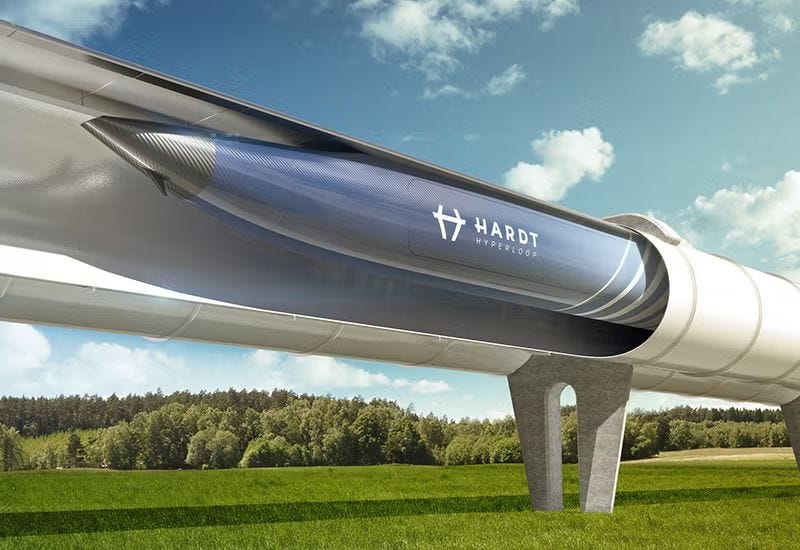
NETHERLANDS: Dutch hyperloop developer Hardt has been declared bankrupt by the court in The Hague. The bankruptcy was registered on 4 March 2026 in the Dutch Central Insolvency Register.
The insolvency removes one of Europe’s most visible private-sector actors attempting to move hyperloop from research programmes toward commercial deployment.
Hardt had been closely associated with test and validation work at the European Hyperloop Center in the Netherlands, a facility intended to support technology trials and industry collaboration.
The collapse highlights the continuing gap between experimental transport concepts and the governance, financing and regulatory frameworks required for large-scale infrastructure deployment.
Rail Baltica signs joint deals for core track materials
CROSS-BORDER: Rail Baltica’s central coordinator RB Rail says framework agreements for key track materials are being finalised to support construction across Estonia, Latvia and Lithuania.
The joint procurement covers rails, sleepers and fastening systems used to build the standard-gauge track structure across the corridor.
The framework model allows the Baltic countries to draw on common contracts as construction accelerates along different sections of the railway.
Leo Express enters Polish domestic market
POLAND: Czech open-access operator Leo Express has entered Poland’s domestic passenger market by extending its Prague–Kraków services to Warsaw, adding a new competitor on one of the country’s main intercity corridors.
The extension turns the service into a longer operating corridor linking Prague with Poland’s two largest cities.
Trains now serve three Warsaw stations before continuing south to Kraków on Poland’s high-speed main line.
Turkey’s own high-speed train enters testing
TURKEY: On-track testing will begin this week for a new domestically developed 225 km/h high-speed train built by state manufacturer Türasaş for TCDD Taşımacılık.
The completed eight-car trainset is moving from production into operational trials on the national rail network.
Testing will validate performance, safety systems and integration with Turkey’s existing high-speed routes.
Sweden proposes new rail link to Denmark across Øresund
CROSS-BORDER: A Swedish government inquiry has recommended studying a new rail connection between Landskrona and northern Copenhagen to add long-term capacity across the Øresund.
The proposal would create an additional rail crossing between Sweden and Denmark alongside the existing Øresund bridge corridor.
The report suggests a joint Danish-Swedish study starting in 2027 to examine routing, engineering options and traffic demand.
Contract signed for Setúbal port rail upgrade
PORTUGAL: Portugal has signed a EUR 40m contract to modernise rail access to the port of Setúbal, aiming to increase freight capacity and shift more transport from road to rail.
The works will upgrade rail infrastructure linking the port with the national network south of Lisbon.
Authorities expect the improvements to support higher freight volumes and more regular rail operations at the port.
Thank you for reading The Rail Agenda — and if you found it useful, please share it with someone who might, too.