

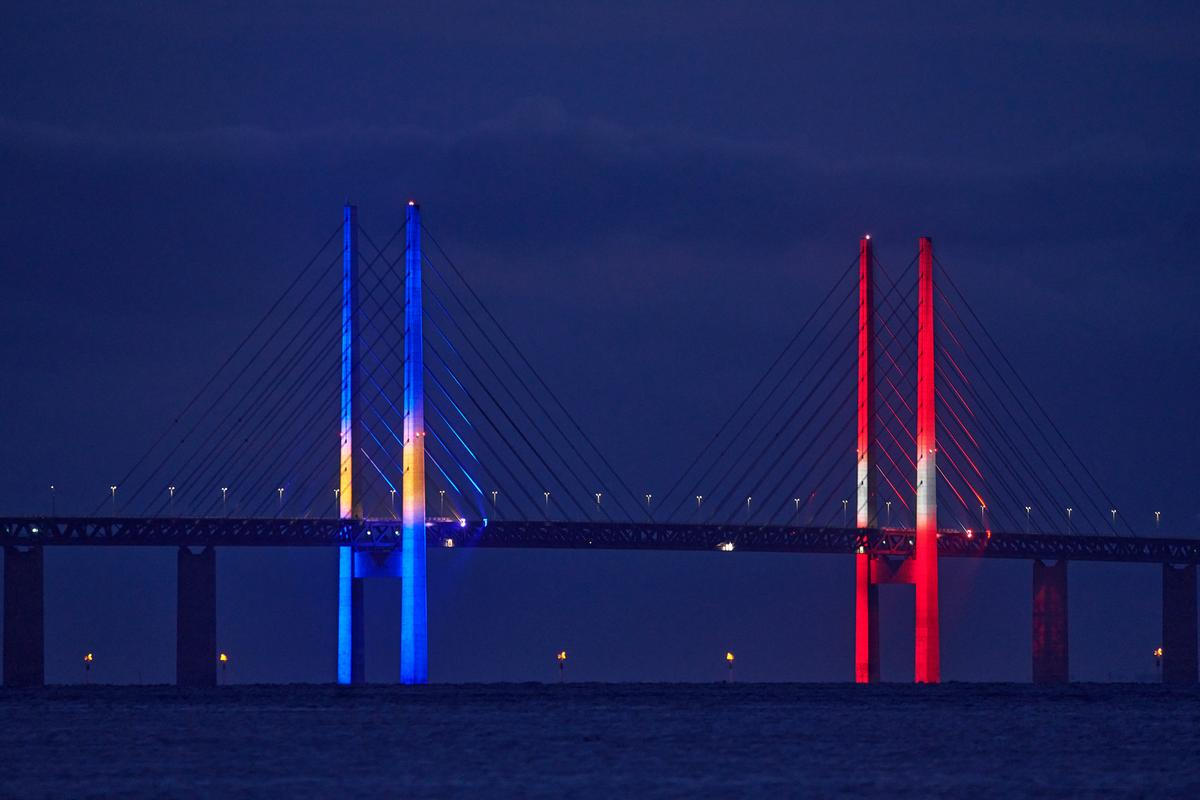
CROSS-BORDER: A Swedish government inquiry has recommended studying a new rail connection between Landskrona and northern Copenhagen to add long-term capacity across the Øresund.
The proposal is set out in the report Öresundsförbindelser 2050 (SOU 2026:17), published on 2 March. It calls for Denmark and Sweden to prepare a joint study in 2027 examining routes, engineering options and long-term traffic demand.
The inquiry highlights a tunnel between Landskrona and northern Copenhagen as one option for a new fixed link. Unlike the existing rail route via the Øresund Bridge, the line could enter Copenhagen near Østerport, close to the city centre and the Danish national rail network.
Øresund Bridge carries all rail traffic today
All rail traffic between Denmark and Sweden currently runs across the Øresund Bridge, which opened in 2000 and remains the only fixed connection between the two countries.
The bridge carries both road and rail traffic, with passenger services between Copenhagen and southern Sweden sharing the line with long-distance and freight trains. Continued growth in cross-border commuting and freight flows could place increasing pressure on the single cross-border rail corridor.
The inquiry says planning for additional capacity should begin well before the existing infrastructure reaches its limits.
Northern alignment would create a second entry to Copenhagen
A crossing further north would change how trains enter the Danish capital. Today, cross-border services approach Copenhagen from the south via Copenhagen Airport before continuing to the central station.
A tunnel from Landskrona could instead bring trains directly into the northern part of Copenhagen’s rail network, with an entry point near Østerport station. From there, trains would be only a short distance from Copenhagen Central Station and the wider Danish main line network.
The report notes that this would create a second rail entry into the capital, potentially distributing traffic more evenly across the metropolitan network.
Fehmarnbelt link expected to increase north–south flows
The discussion comes as construction continues on the Fehmarnbelt fixed link between Denmark and Germany, one of the largest infrastructure projects in northern Europe.
When the tunnel opens later this decade it will create a faster rail corridor between Scandinavia and Central Europe. Planners expect this to increase north–south traffic through Denmark and onward across the Øresund.
The Swedish study says this wider European context strengthens the case for examining future capacity across the strait.
Connection also sits near the Helsingborg corridor
The proposed location at Landskrona would also place a new crossing closer to the Helsingborg–Helsingør corridor, where a separate fixed-link project has long been discussed.
Although the report does not treat the two projects as a single plan, it notes that a northern Øresund connection could influence traffic flows along Sweden’s west coast and towards Norway.
The proposal is therefore framed not only as a regional commuting link for the Copenhagen–Skåne area, but as part of longer-term planning for rail flows between Scandinavia and continental Europe.
Joint Danish–Swedish project framework proposed
The inquiry recommends that Denmark and Sweden prepare a joint project framework during 2026, allowing a formal cross-border study to begin the following year.
Such a study could run for two to three years and would examine possible alignments, engineering options and the long-term role of additional fixed links across the Øresund.