

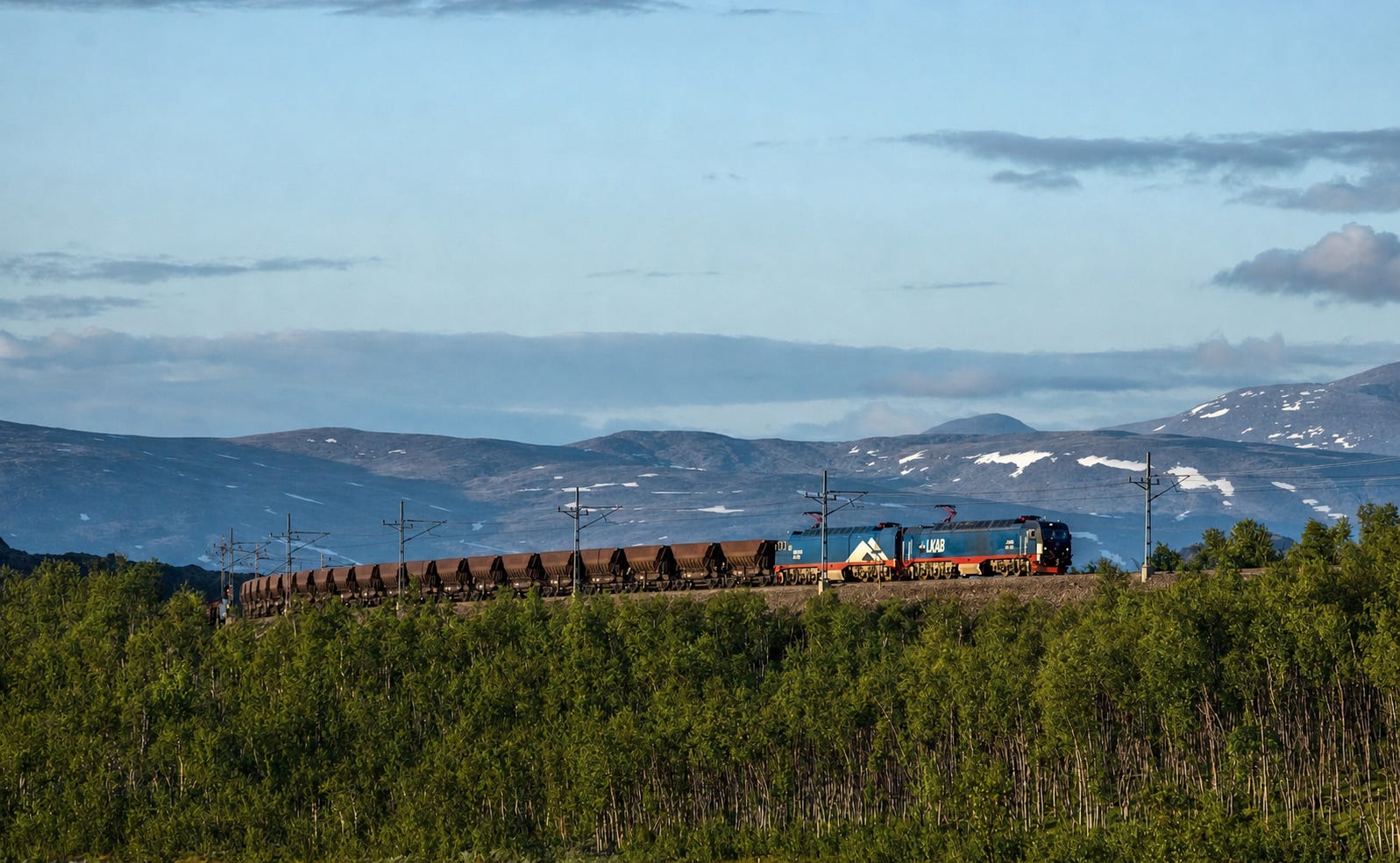
Sweden cuts freight track charges by 20% from 2028
SWEDEN: Sweden’s infrastructure manager Trafikverket has cut track access charges for rail freight by an average of 20% from 2028, after a new study found the sector’s infrastructure costs had been systematically overstated.
The revision corrects a decade-long overestimate of freight’s share of track wear, shifting part of the charge base to passenger operations. A revised marginal-cost model — based on data through 2023 — underpins the change.
The cut reverses part of a cumulative increase that peaked at 37–44% for ore and heavy freight at the 2025 timetable change. Industry had set a one-third reduction as the minimum threshold for restoring rail freight’s competitiveness against road haulage.
New rates take effect with Timetable 2028 in December 2027.
EIB signs EUR 266m loan for Bucharest tram upgrade
ROMANIA: The European Investment Bank has signed a EUR 266m loan with the city of Bucharest to modernise a tram network that the bank says carries 500,000 passengers a day, with approximately 50 km of track and 63 new vehicles in scope.
The loan covers track renewal, Colentina depot modernisation, and new vehicle procurement — all with a 2030 completion deadline. The 63 new light rail vehicles remain untendered; Bucharest’s procurement plan listed a January–June 2026 tender window, which has not yet opened.
Swiss regional routes risk funding loss
SWITZERLAND: The Federal Office of Transport (FOT) has proposed a minimum revenue threshold for subsidised regional rail services — high-frequency routes must cover at least 30% of costs from their own revenue or lose federal funding from 2029/2030.
The threshold applies to services running more frequently than every 30 minutes. Routes below it face a binary choice before the next ordering cycle: cut frequency to remain under the existing 20% requirement, or lose federal subsidy. The public consultation runs until 29 May.
French Senate forces SNCF Connect to list rivals’ tickets
FRANCE: The French Senate has voted to require SNCF Connect to sell tickets from competing rail operators by the end of 2027, a structural shift in French rail distribution with direct consequences for open access operators including Trenitalia and Renfe.
The full transport framework bill passed the Senate on 28 April by 310 to 19 and now moves to the Assemblée nationale for its first reading. The rule is not yet law — the lower house can amend or remove it entirely.
The Lisbon FSR ruling was never about the price
The European Commission’s ruling that Chinese supplier CRRC had to leave the Lisbon metro consortium settled the question of fair competition — or at least, a specific version of it. It said nothing about whether the price was right, whether European suppliers could have matched it, or whether China’s rail industry has simply become better than Europe’s.
The consortium’s bid held at EUR 598.8m after CRRC was replaced by Pesa. The FSR test was not whether the bid was low — it was whether the state support behind it could be traced and assessed. The Commission found it could not.
That’s The Rail Agenda for today. If you found this newsletter useful and relevant, please forward it to someone you know.