

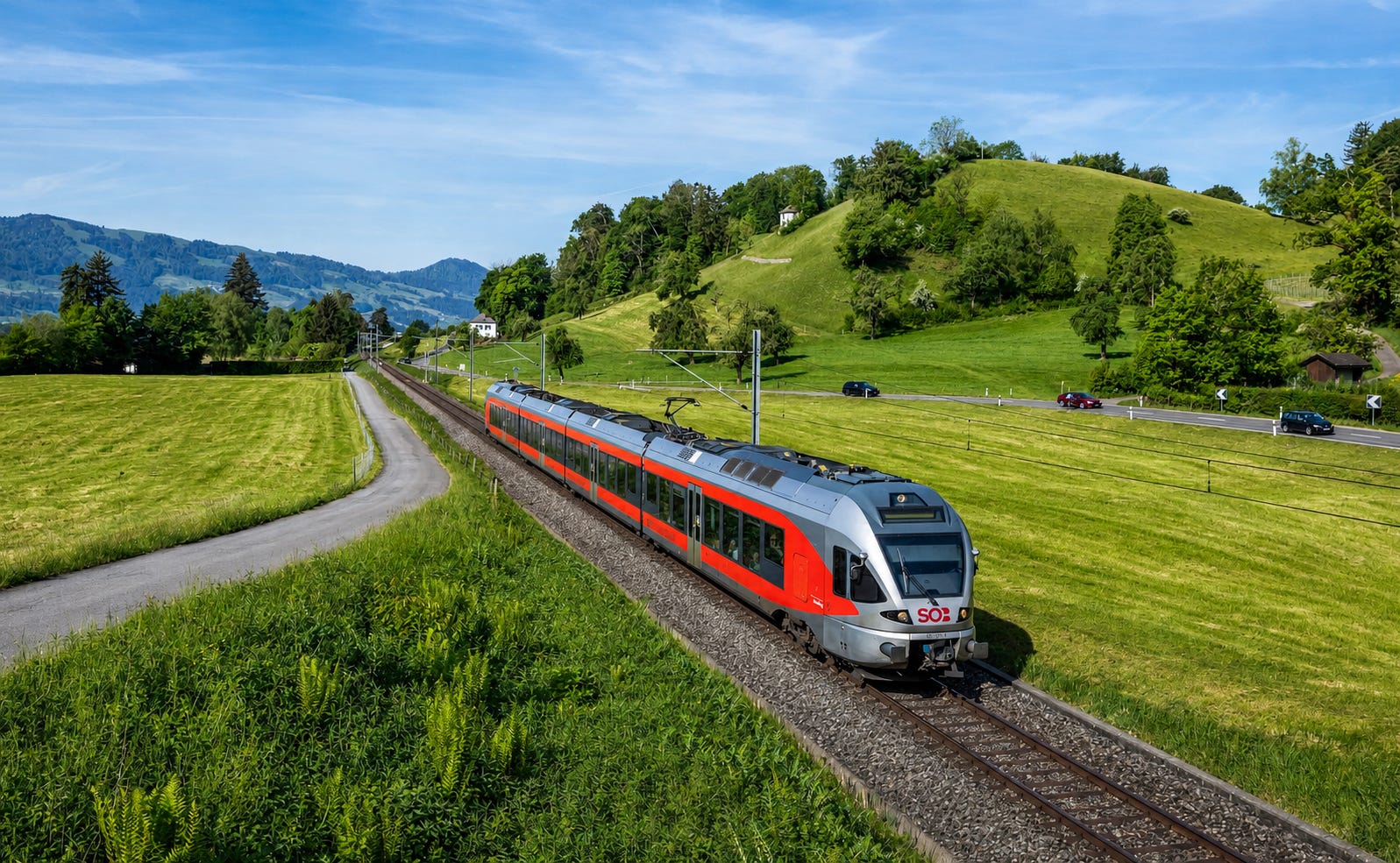
SWITZERLAND: The Federal Office of Transport (FOT) has proposed a minimum revenue threshold for subsidised regional rail services — high-frequency routes must cover at least 30% of costs from their own revenue or lose federal funding from 2029/2030.
The FOT has opened a public consultation on the measure, which applies to services running more frequently than every 30 minutes. Routes that fall below the threshold face a choice: cut frequency to meet the existing 20% cost-coverage requirement, or lose federal subsidy.
The proposal targets services where cantonal and operator decisions have kept frequency high without corresponding commercial return. Routes that limit service to half-hourly intervals remain under the current 20% threshold.
Revenue floor targets high-frequency services from 2029/2030
The threshold applies to the ordering period beginning in 2029/2030, when cantonal authorities and operators will need to demonstrate that high-frequency services generate sufficient revenue to meet the 30% floor. The existing 20% requirement remains in place for routes operating at half-hourly intervals or less.
Federal and cantonal governments share the cost of Switzerland’s regional passenger rail network. The federal government’s contribution runs at around CHF 1.1 billion per year, supporting commercially weak routes across the country.
The FOT says the measure will create an incentive for operators and cantonal authorities to improve profitability. Both will have the option of reducing service frequency to retain federal support under the existing threshold.
Budget pressure drives the threshold
The proposal sits within a broader Swiss federal budget consolidation. The Federal Council’s relief package 27 includes a 5% reduction in planned uncovered costs for regional passenger transport from 2027 — part of a spending reduction plan targeting between CHF 2.7 billion and CHF 3.6 billion from the federal budget.
The revenue threshold adds a financial condition to that plan: routes that cannot demonstrate commercial return face a direct choice before the next ordering cycle begins.
The public consultation runs until 29 May. No decision has been taken.