

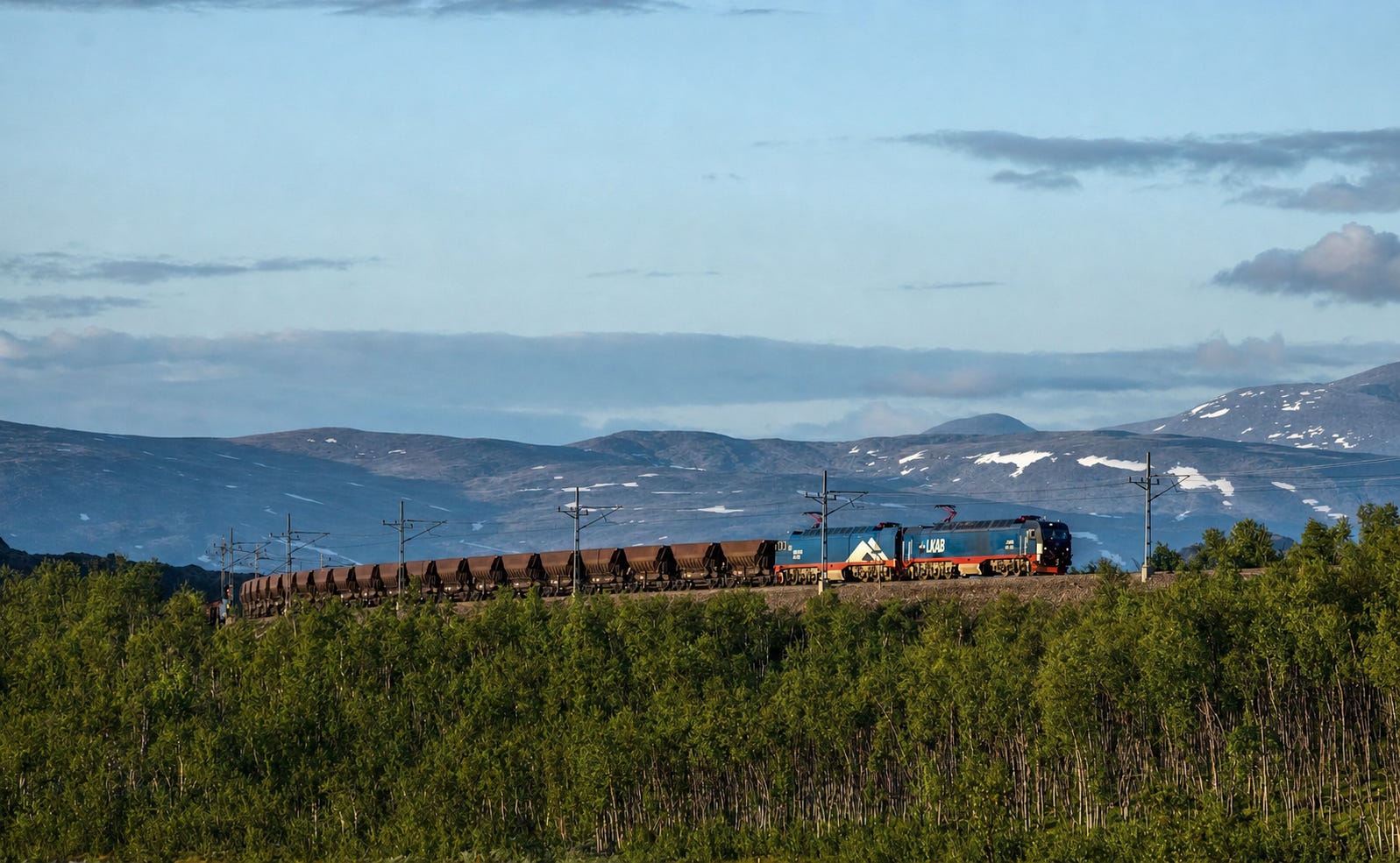
SWEDEN: Sweden’s infrastructure manager Trafikverket has cut track access charges for rail freight by an average of 20% from 2028, after a new study found the sector’s infrastructure costs had been systematically overstated.
Trafikverket announced the reduction on 4 May, reversing part of a cumulative increase that pushed average freight charges up by around 37% at the 2025 timetable change, with ore trains facing rises of up to 44%. Passenger charges will rise by an average of 15% under the same revision.
The new rates correct a decade-long overestimate of freight’s share of track wear costs, with Trafikverket’s revised marginal-cost model redistributing the charge base between freight and passenger operations.
Revised cost model drives the rebalancing
Trafikverket’s previous marginal-cost calculations, which underpinned successive charge increases, were based on wear data running only to 2016. The revised study, completed as part of a government commission delivered in June 2025, used data through 2023 and found that heavy freight trains cause less incremental damage to infrastructure than earlier models assumed.
The correction shifts a significant portion of the charge base to passenger operations, which the new model shows were undercharged relative to their actual infrastructure impact. Passenger TAC will rise 15% from 2028 as a result.
Relief falls short of industry threshold
The reduction lands below the level Sweden’s freight sector had called for. Operators and major industrial transport buyers had set a minimum one-third reduction as the threshold needed to restore rail freight’s competitiveness against road haulage.
The steepest single increase came at the 2024–2025 timetable change: Trafikverket’s own calculations showed an average rise of 37% across the freight segment and 44% for ore trains, while industry bodies representing heavy timber and mining shippers cited rises of up to 55% for the most weight-intensive traffic categories. Iron ore services on Malmbanan were among the hardest hit.
Sweden’s transport regulator Transportstyrelsen had formally ordered Trafikverket in 2022 to bring charges into line with the EU framework requiring charges to reflect marginal infrastructure costs — the same legal baseline the revised model now applies.
Freight competitiveness and the road comparison
The revision brings Sweden’s charge structure closer to the EU baseline, but the gap with road haulage remains the underlying competitive question. Road transport in Sweden does not pay charges reflecting its full external costs, and successive freight TAC increases had pushed freight from rail to road — a trend that operators, industrial shippers and environmental groups had all flagged as a consequence of the charge trajectory.
The 20% reduction reduces that pressure without eliminating it. For freight operators running heavy trains on routes such as Malmbanan, the effective cost relief will depend on how the average translates to their specific traffic profile. Trafikverket has not published a breakdown by freight segment.
Timetable 2028 takes effect in December 2027.