

Hungary considers buying 100 Chinese trainsets
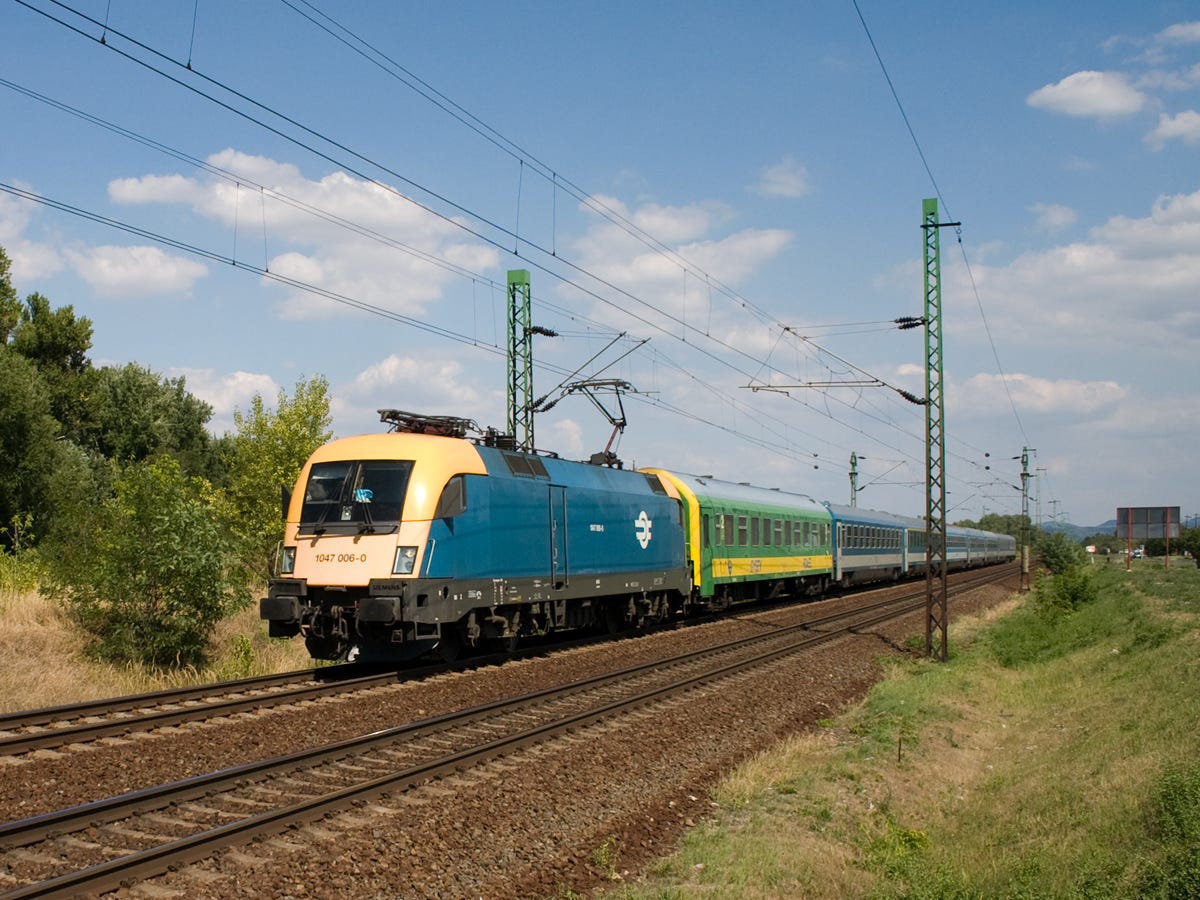
Hungary is considering buying 100 trainsets from China as it looks for a fast fleet fix, saying the move is driven by European bottlenecks that slow new rolling stock into service.
Transport Minister János Lázár said Hungary is in talks and suggested entry into service could be possible in around two years. He argued the main constraint is manufacturing capacity — factory slots and long lead times — rather than financing.
After delivery, authorisation, interoperability work and the maintenance setup determine when trains actually add capacity. The timing also intersects with the Budapest–Belgrade upgrade as reopening nears.
SNCF orders 15 more TGV M
SNCF Voyageurs has ordered 15 additional Avelia Horizon (TGV M) high-speed trainsets from Alstom, in a deal valued at around EUR 600m.
The order builds on SNCF’s existing TGV M programme, with deliveries scheduled from 2029. Alstom says the trains will be quad-voltage, allowing operation on multiple electrification systems and improving flexibility for international deployment where required.
Poland: Małaszewicze control shifts
Poland’s infrastructure manager has completed the takeover of Cargotor, transferring control of Małaszewicze’s line, terminal and last-mile assets from the PKP Cargo group to PKP PLK.
The transaction involves 100% of Cargotor’s shares and closed at a price of PLN 28.8m. PKP Cargo linked the sale to its need to secure funds amid restructuring.
The company said the deal progressed faster than expected and was completed after securing the required approvals, including restructuring approval and competition clearance.
Channel Tunnel begins ETCS rollout
Eurotunnel has launched the first phase of its ERTMS programme, beginning the migration from TVM cab signalling to ETCS in the Channel Tunnel.
The initial phase involves fitting onboard equipment to 57 LeShuttle locomotives operating between Folkestone and Coquelles. Eurotunnel has selected Compagnie des Signaux (CSEE), part of MERMEC Group, to supply a dual-standard ETCS/TVM solution.
The approach uses a bridge architecture that allows ETCS and TVM to operate in parallel during the transition, rather than a full system switch. Eurotunnel describes the rollout as the first step in a wider signalling modernisation programme for the Fixed Link.
TEN-T megaprojects overrun budgets
Europe’s target to complete the TEN-T core network by 2030 will not be met, the European Court of Auditors says, after reviewing eight TEN-T “megaprojects” — including four major rail schemes.
Across the eight projects, the auditors report an 82% cost increase versus original estimates (inflation-adjusted), up from 47% in their 2020 review. They also note an additional EUR 7.9bn in EU grants since 2020, taking total EU grant contributions to EUR 15.3bn.
Two rail schemes account for a large share of the escalation. The auditors put Rail Baltica’s first phase at EUR 23.06bn, a 160% increase over six years. The Lyon–Turin new line and base tunnel is estimated at EUR 15bn, up 23% since 2020.
Where comparable baseline data are available, the auditors report an average delay of 17 years versus original timelines.
Thank you for reading The Rail Agenda’s newsletter. If you found it valuable, consider sharing it with someone who might find it useful.