

Slovakia’s high-speed rail: Bratislava first
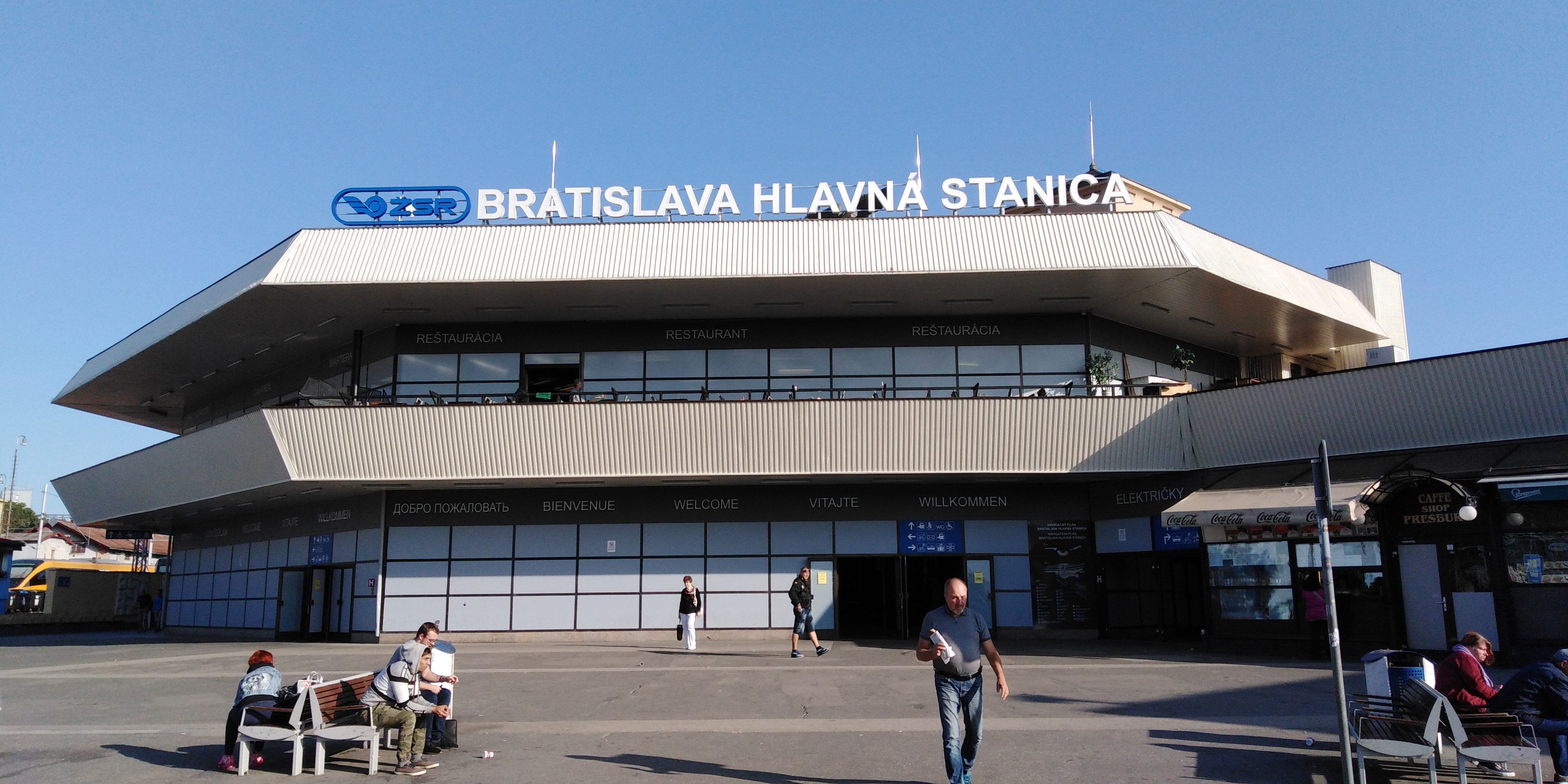
Slovakia’s infrastructure manager has outlined a two-stage high-speed rail programme that starts with capacity works around Bratislava, before extending to the Czech and Austrian borders.
The preferred sequencing is set out in a feasibility study, with total costs estimated at around EUR 3.1bn.
Stage 1 focuses on relieving bottlenecks on the capital’s approaches to secure capacity and reliability. Stage 2 adds the cross-border high-speed links, but still depends on political decisions, financing, and coordination with neighbours.
Puster Valley Line reopens after year-long works
Passenger services have resumed on the Puster Valley Line in South Tyrol after a year-long closure for renewal on the Fortezza–Brunico section. Operations restarted on 27 January after completion of track, overhead line, and station works.
The closure allowed RFI to bundle multiple interventions into one possession, limiting repeated disruption.
Munich–Prague PSO tender relaunched
Bavaria’s rail authority and the Czech transport ministry have relaunched the PSO tender for Munich–Prague services after the first procedure failed to attract bids. The new tender was launched on 2 February.
Authorities say the revised terms respond to the delivery constraints that blocked the first attempt — from rolling stock availability and approvals to timetable limits and cross-border operational interfaces.
The relaunch also adjusts risk allocation and contractual scope to reduce bidder risk.
Germany brings back the Hermann Hesse line
The Calw–Weil der Stadt “Hermann Hesse” line in Baden-Württemberg has reopened, restoring passenger trains on a route closed since 1983. The 23 km reactivation reconnects the area into the Stuttgart regional network via Weil der Stadt.
Services launch with battery-electric multiple units, enabling operation without continuous electrification.
Rail CEOs emphasise military mobility for 2026
CER has approved a 2026 agenda that emphasises military mobility alongside funding and implementation files.
The decisions were taken at CER’s General Assembly in Brussels on 3 February. CER’s paper calls for predefined rules on how rail capacity would be prioritised in an emergency, how displacement of civilian services would be handled, and how operators and infrastructure managers would be compensated.
A parallel paper argues vehicle authorisation is becoming a bottleneck and pushes for tighter timelines ahead of an expected retrofit wave.
Pfaffensteig funded — timing still depends on approvals
Germany has secured federal funding for the Pfaffensteig Tunnel, a long-planned missing link intended to enable the remaining capacity and network effects around the Stuttgart hub.
The tunnel is one of the last major components still required before those effects can be realised in full.
Funding is secured; timing now depends on approvals, construction sequencing, and interfaces with the wider Stuttgart 21 works. Deutsche Bahn said in November 2025 it could no longer meet the December 2026 commissioning target and did not set a new date.
That makes the revised Stuttgart 21 timeline the key dependency for when Pfaffensteig can deliver additional capacity.
Thank you for reading The Rail Agenda’s newsletter. If you found it valuable, consider sharing it with someone who might find it useful.