

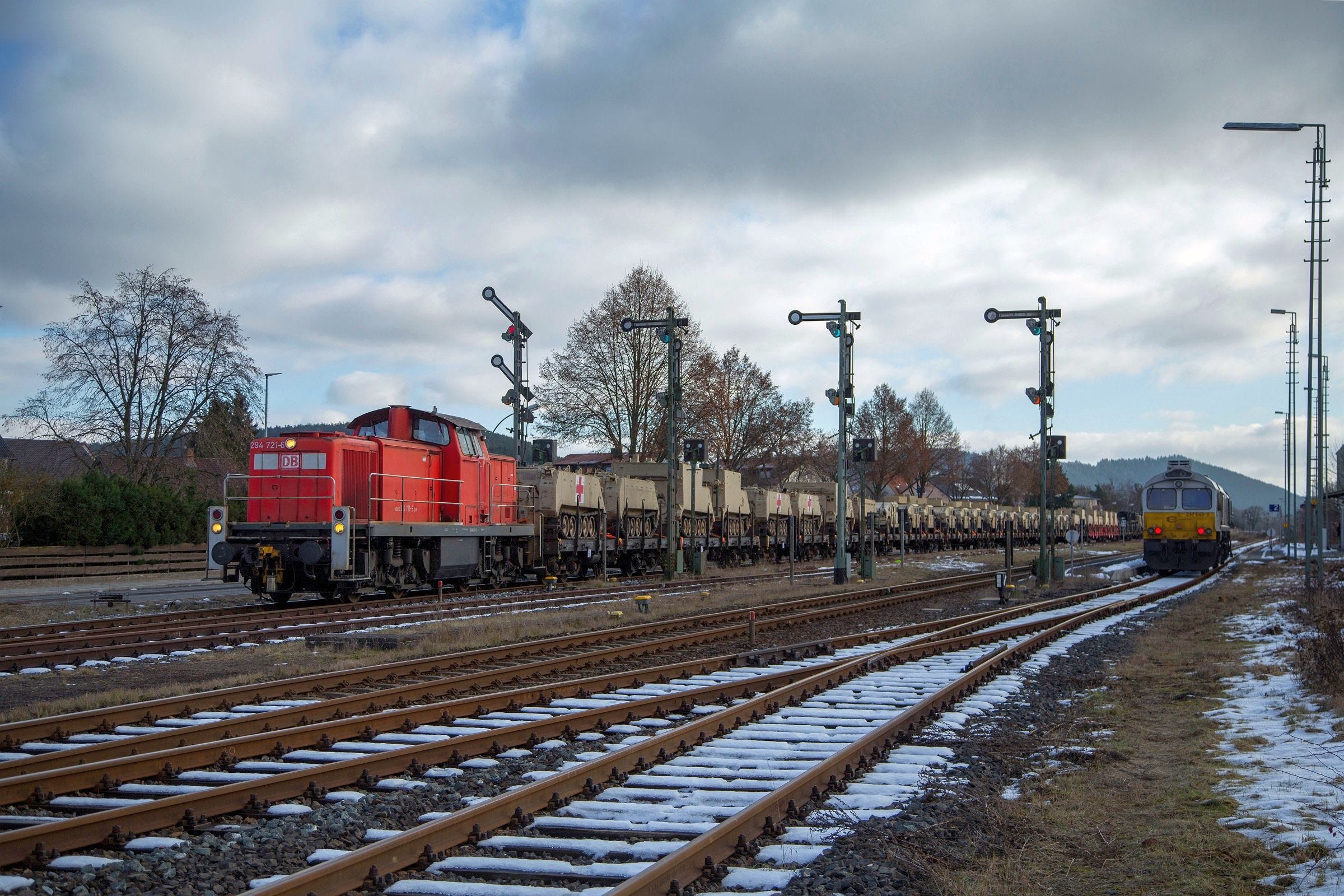
The Community of European Railway and Infrastructure Companies (CER) has approved a 2026 agenda that highlights military mobility and EU funding. It has also endorsed two policy papers on military mobility and vehicle authorisation, ahead of negotiations on the EU’s next long-term budget.
The decisions were taken at CER’s General Assembly in Brussels on 3 February.
CER is an industry body bringing together chief executives from railway undertakings and infrastructure managers. It represents its members’ positions towards EU institutions such as the European Commission, Parliament and Council.
Military mobility: priority rules and who pays
The military mobility paper focuses on rules for prioritising rail capacity in an emergency, including compensation. CER points to the need for clear rules on how capacity would be prioritised, how displacement of civilian services would be handled, and how operators and infrastructure managers would be compensated.
CER also highlights governance questions, including coordination mechanisms between member states and the possible EU-level role in defining and triggering such frameworks. The emphasis is on predictability and pre-agreed rules, rather than case-by-case decisions.
Vehicle authorisation: CER calls for a five-month cap
The second policy paper focuses on vehicle authorisation, which CER describes as an increasing bottleneck for the sector. CER says authorisation timelines should not exceed five months.
CER links this to an expected retrofit wave across Europe’s fleet. That includes upgrades associated with new radio and digital systems. Lengthy approval processes, it argues, risk becoming a key constraint that slows deployment even when funding and industrial capacity are available.
Funding: ahead of the next EU budget cycle
Alongside the two policy papers, the 2026 agenda highlights EU funding as the Union prepares its next Multiannual Financial Framework. CER ties its priorities — including military mobility and system upgrades — to upcoming budget negotiations and related legislative initiatives.
The agenda also references other areas, including high-speed rail planning and more realistic cost assumptions for signalling deployment, but the General Assembly decisions centred on the two approved policy papers and their timing.
Why it matters: CER is arguing for a pre-defined rule-set: how capacity is prioritised in an emergency, how operators and infrastructure managers are compensated for displacement, and whether the vehicle authorisation process can absorb the coming retrofit wave without becoming a key constraint.