

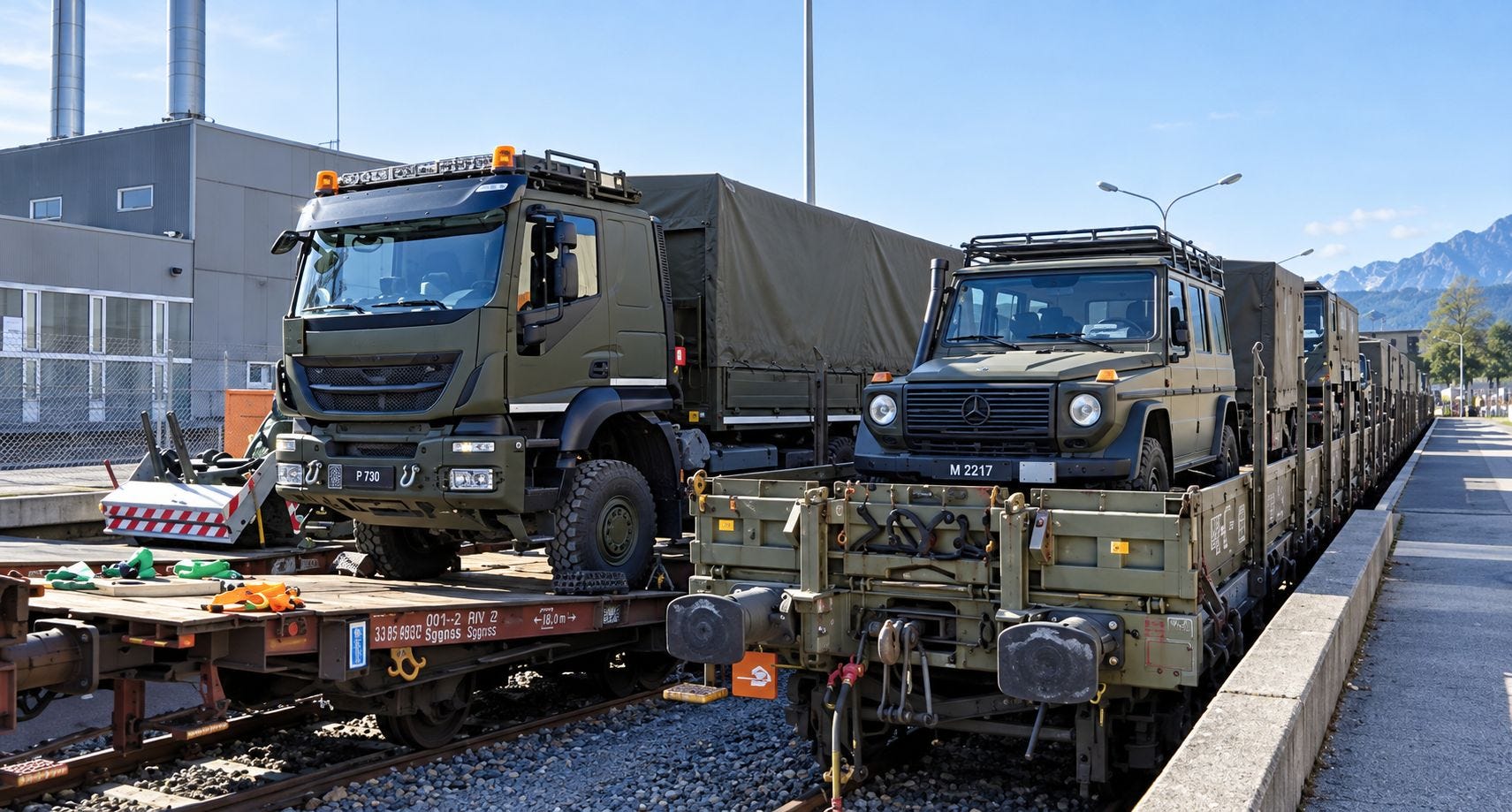
SPAIN: The cabinet has authorised the defence ministry to sign a five-year agreement with state-owned Renfe to carry military freight and personnel by rail. Spending under the agreement, which runs from 2026 to 2030, is capped at EUR 110m.
The decision was taken on 22 September and covers two Renfe subsidiaries, freight operator Renfe Mercancías and passenger operator Renfe Viajeros.
The agreement meets the armed forces’ needs for rail transport of goods and personnel and sets up a framework for training personnel from the Regimiento de Pontoneros y Especialidades de Ingenieros No. 12, an army engineer regiment. The regiment’s tasks include building railway infrastructure and operating rail transport, according to the defence ministry as cited by news site Infobae.
The arrangement takes the form of a convenio, an agreement within the public sector, and has not been put out to tender. The cabinet’s summary gives no signing date and does not say how the amount divides between freight and passenger services. It also does not name the units, routes or volumes covered, or describe the training.
The previous agreement
The new convenio follows one signed on 26 September 2022 and valid from 1 November 2022 to 31 October 2026, according to the text published in Spain’s Official State Gazette. That agreement capped the ministry’s spending at EUR 102.81m including VAT. Of that ceiling, EUR 96m was set aside for military personnel’s discounted travel on regular services and EUR 6.81m for moving vehicles and equipment.
The 2022 text already provided for training the engineer regiment, which it names as the army unit that carries out military train operations. According to the same text, the ministry and Renfe have worked under successive agreements since 1991. The 2022 text also states that the agreement gives Renfe no exclusivity and leaves the ministry free to use other transport providers.
Procurement and EU rules
In April, the Dutch defence ministry contracted DB for military escort wagons. In June, the rolling stock lessors’ association AERRL, the new entrants’ alliance ALLRAIL and the European Rail Freight Association called for military logistics to be procured through open tenders. They also asked for pre-planned emergency timetables and compensation for operators.
EU institutions are negotiating a regulation on military mobility, proposed by the European Commission in November 2025. The next political trilogue is provisionally set for 20 October, and the Irish Council presidency aims for agreement by the end of the year.
The proposal sets common rules for cross-border military movements and an emergency regime. The wider package covers dual-use upgrades on four priority corridors. Compensation for civilian rail capacity displaced by military traffic is among the points still open between Parliament and Council.