

Top story: Germany still around 50% electrified; ETCS still near-zero in coverage
Around half of Germany’s network is electrified, while ETCS covers just over 1% of route-kilometres, according to Bundesnetzagentur’s latest market analysis.
Operationally, that leaves a large share of services dependent on non-electrified traction. And on signalling, the migration remains corridor-by-corridor, with long periods of parallel operation, onboard retrofits, and phased commissioning rather than a fast, system-wide switch.
For suppliers and planners, the key point is that electrification and ETCS are moving on different clocks: two separate bottleneck chains, each with its own delivery cadence and constraints.
2. Rail Baltica: LTG Infra blocked again on more than EUR 100m signalling award
A Lithuanian court has again prevented LTG Infra from signing a signalling modernisation contract worth more than EUR 100m.
On corridor programmes, the signing date is the start gun for mobilisation, detailed design lock-down, possession planning, and test and commissioning sequencing against adjacent works. A renewed block therefore does not just pause procurement. It shifts the whole delivery rhythm on a section where cross-border sequencing is part of the corridor logic.
3. Lazio and RFI: EUR 160m ERTMS agreement for Rome–Viterbo
The Lazio region has signed a EUR 160m agreement with RFI and Astral to deploy ERTMS on the Rome–Civita Castellana–Viterbo route, combining a safety upgrade with measures aimed at improved capacity and service regularity.
This is a clean implementation case: a named line, a defined system scope, and a concrete funding envelope. The hard part now is delivery: trackside deployment, an onboard strategy, testing, and authorisation, without blowing up the timetable during works.
4. Knorr-Bremse completes duagon acquisition
Knorr-Bremse has completed its acquisition of duagon AG, strengthening its position in rail electronics, embedded computing, and software.
The strategic layer is lifecycle integration: onboard systems that sit between vehicle subsystems and the wider rail system, where updates, obsolescence, cybersecurity, and long-term support increasingly drive cost and operational risk.
5. EU clears Belgium’s EUR 61m rescue loan for Lineas
The European Commission has approved Belgium’s EUR 61m rescue loan for freight operator Lineas under EU state-aid rules.
In operational terms, the immediate issue is continuity: keeping services running while next steps are negotiated. In policy terms, the decision is a reference point for what support can be cleared, under which conditions, when a major operator is under pressure.
6. KKR agrees majority stake in Green Mobility Partners leasing platform
KKR has announced an agreement to acquire a majority stake in Green Mobility Partners, backing plans to scale locomotive leasing in Europe.
Locomotive access is a real constraint where cross-border capability, approvals, and availability decide whether services can be launched or expanded. A scaled leasing platform can therefore influence traction availability, contract terms, and standardisation choices across corridors.
7. Bavaria and DB InfraGO plan 74 km electrification plus battery charging
Bavaria has signed a planning agreement with DB InfraGO covering 74 km of electrification and two new charging stations to support battery-electric operations and reduce diesel use.
This is targeted infrastructure: electrify the most effective sections, then add charging nodes so battery trains can bridge the remaining gaps. The delivery question is whether charging locations and readiness dates line up with real diagramming needs, and how the power interfaces integrate at stations and depots.
8. Nexrail orders 20 more Vossloh DE18 SmartHybrid locomotives
Leasing company Nexrail has ordered 20 additional Vossloh DE18 Stage V SmartHybrid locomotives for delivery around 2027, taking its planned DE18 fleet to 50 units.
The spec bundles emissions compliance, hybrid capability, and multi-country approvals, positioning the locomotives for cross-border work and last-mile freight duties where flexibility, permissions, and availability are often the binding constraints.
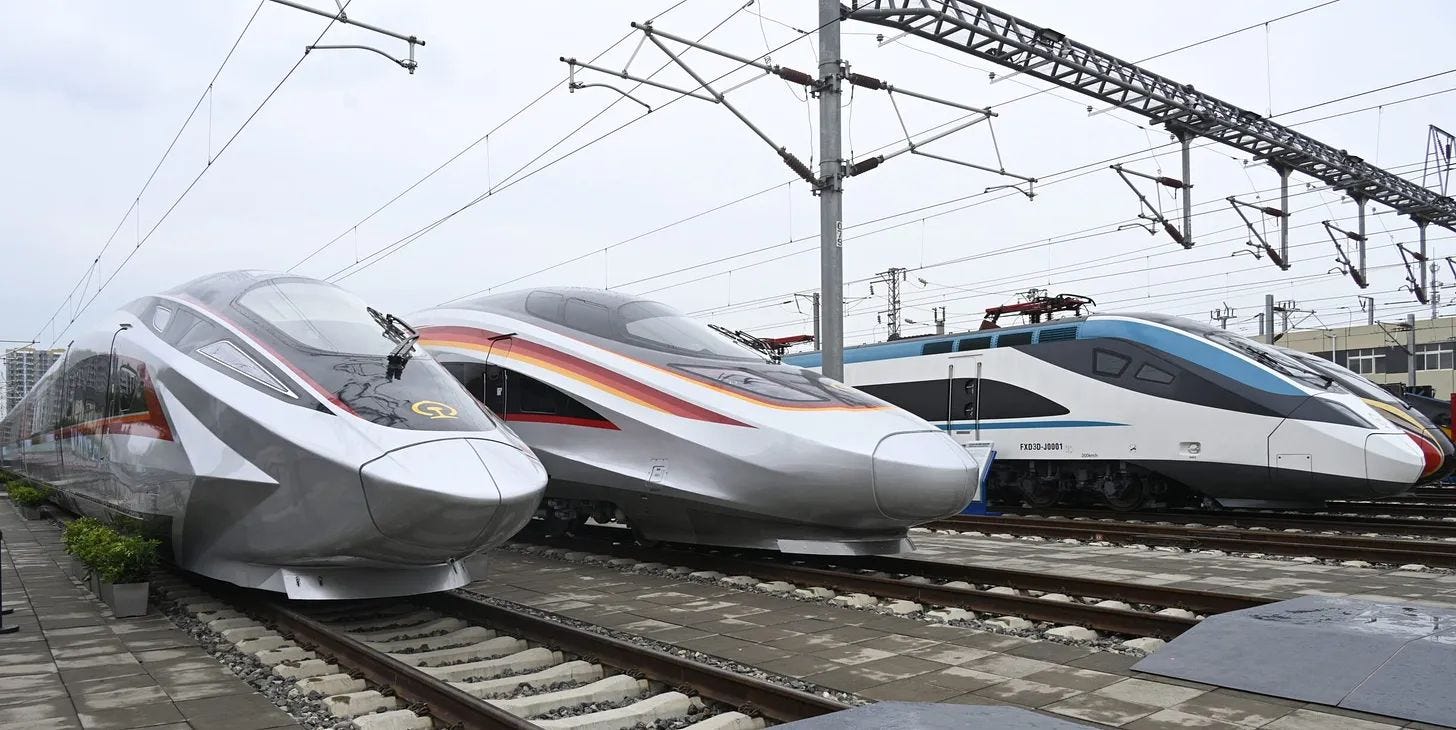
Spotlight: Spain raises stakes on delivery speed in Renfe high-speed tender
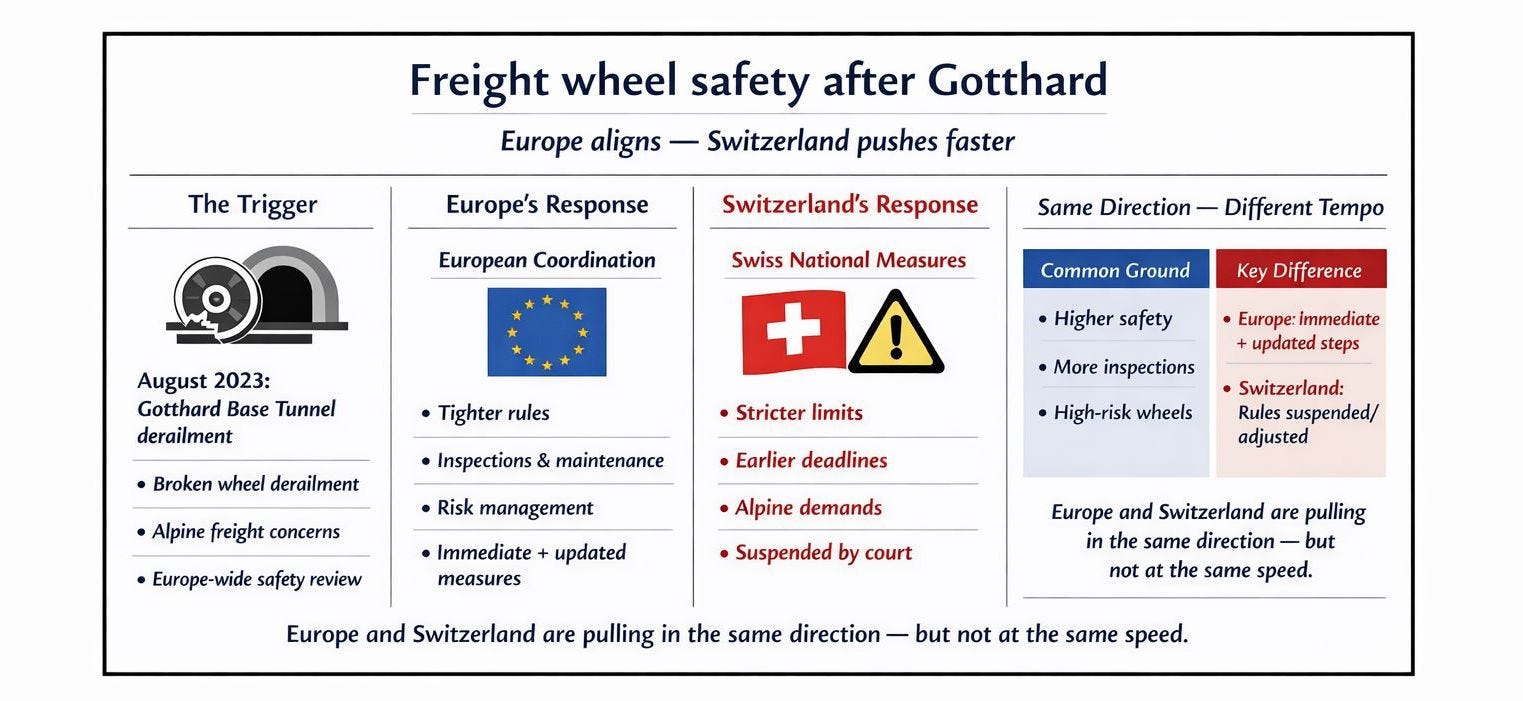
Catch up: Wheel safety: New European rules go operational on 1 February
Thank you for reading The Rail Agenda’s newsletter. If you found it valuable, consider forwarding it to someone who might enjoy it.