

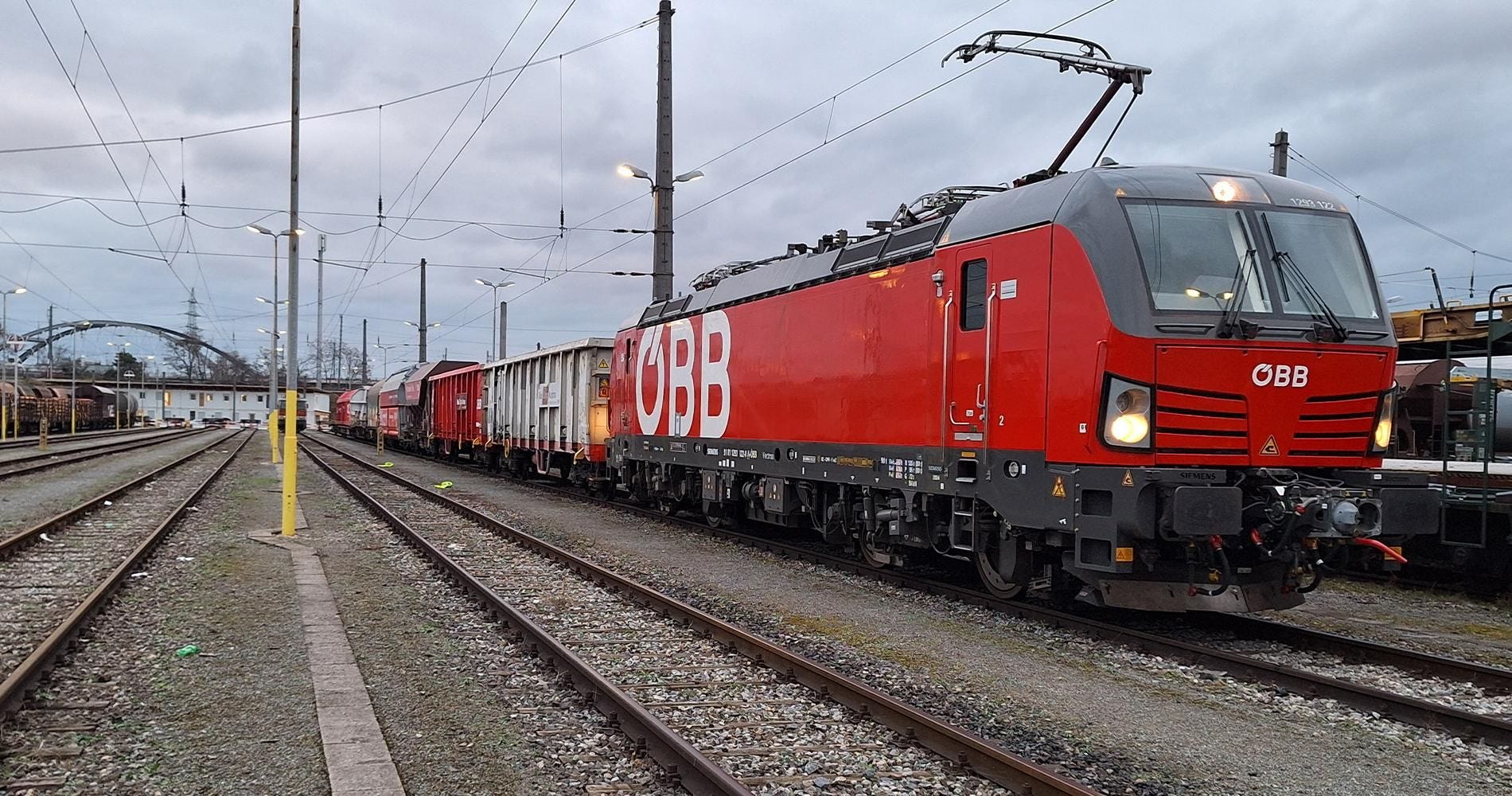
Rail Cargo Group launches DAC test train
Rail Cargo Group has launched a Digital Automatic Coupling (DAC) test train in Austria to gather operational data under real freight conditions.
The programme uses a mixed consist to reflect single wagonload operations, focusing on coupling performance, train handling and the integration of power and data functions linked to DAC.
The test train starts with eight wagons and is set to expand to 24 wagons in mid-2026. Rail Cargo Group will also test double traction using Siemens Vectron locomotives. The aim is to assess DAC as a working system in day-to-day operations, rather than as a standalone mechanical upgrade.
Portugal to re-tender key Lisbon–Porto HSR section
Portugal will relaunch the tender for the Oiã–Soure section of its Lisbon–Porto high-speed line after the first attempt failed to produce an award. The government announced the decision on 22 January, clearing infrastructure manager Infraestruturas de Portugal (IP) to restart the procurement.
The Oiã–Soure package is a critical link around the Coimbra area, shaping whether the project can move forward as a continuous corridor rather than a set of disconnected contracts. The initial tender, launched in summer 2024, drew no valid bids. A re-tender gives IP room to adjust scope, interfaces and commercial terms before publishing new documents.
Italy plans EUR 30m port rail aid
Italy is preparing to launch a EUR 30m state-aid scheme to support rail operations inside ports, targeting shunting and last-mile movements that often determine whether freight uses rail access.
The measure is designed to lower operating costs for short internal rail moves used to position wagons and build or split consists within port areas. The scheme has received EU state-aid clearance but still requires national implementation steps before it can enter into force.
Italian authorities frame the support as a way to strengthen rail’s competitiveness in port logistics.
DB targets stations with action programme
Deutsche Bahn has launched a nationwide station action programme aimed at improving safety, cleanliness and reliability across its passenger network.
The initiative focuses on higher staffing levels, faster maintenance responses and closer coordination between station management, security and cleaning teams. DB says the programme prioritises busy and problem-prone locations, where passenger complaints and operational disruptions are most frequent.
The move reflects growing pressure on station performance as traffic volumes rise and infrastructure ages across the German network.
Rail Baltica tenders major works in Estonia
Rail Baltica has opened bidding for major construction contracts in Estonia, marking the next step in delivering the standard-gauge corridor through the Baltic state.
The tender covers mainline civil works, including earthworks, structures and related infrastructure, as Estonia moves from preparatory activities into large-scale build-out. The procurement is part of a wider push to keep national sections aligned as construction accelerates across Latvia, Lithuania and Poland.
Estonian authorities frame the move as critical to maintaining corridor-level sequencing and avoiding bottlenecks later in the programme.
EU urged to screen rail technology suppliers
European rail suppliers are calling on the European Commission to apply existing EU cybersecurity and supply-chain screening tools to rail technology used on critical infrastructure.
Industry group UNIFE argues that rail systems should be treated on par with energy, telecoms and defence, where EU mechanisms already exist to flag and restrict “high-risk” third-country technologies. The appeal comes as several countries look beyond European suppliers to shorten delivery times and ease rolling stock and signalling bottlenecks.
Suppliers warn that procurement decisions taken under delivery pressure risk creating long-term dependencies in safety-critical systems, including signalling, control and digital rail platforms. They argue that once such systems are deployed, switching suppliers is complex, costly and operationally risky.
UNIFE is not calling for a blanket ban, but for structured, EU-level risk assessments before deployment.
Thank you for reading The Rail Agenda’s newsletter. If you found it valuable, consider sharing it with someone who might find it useful.