

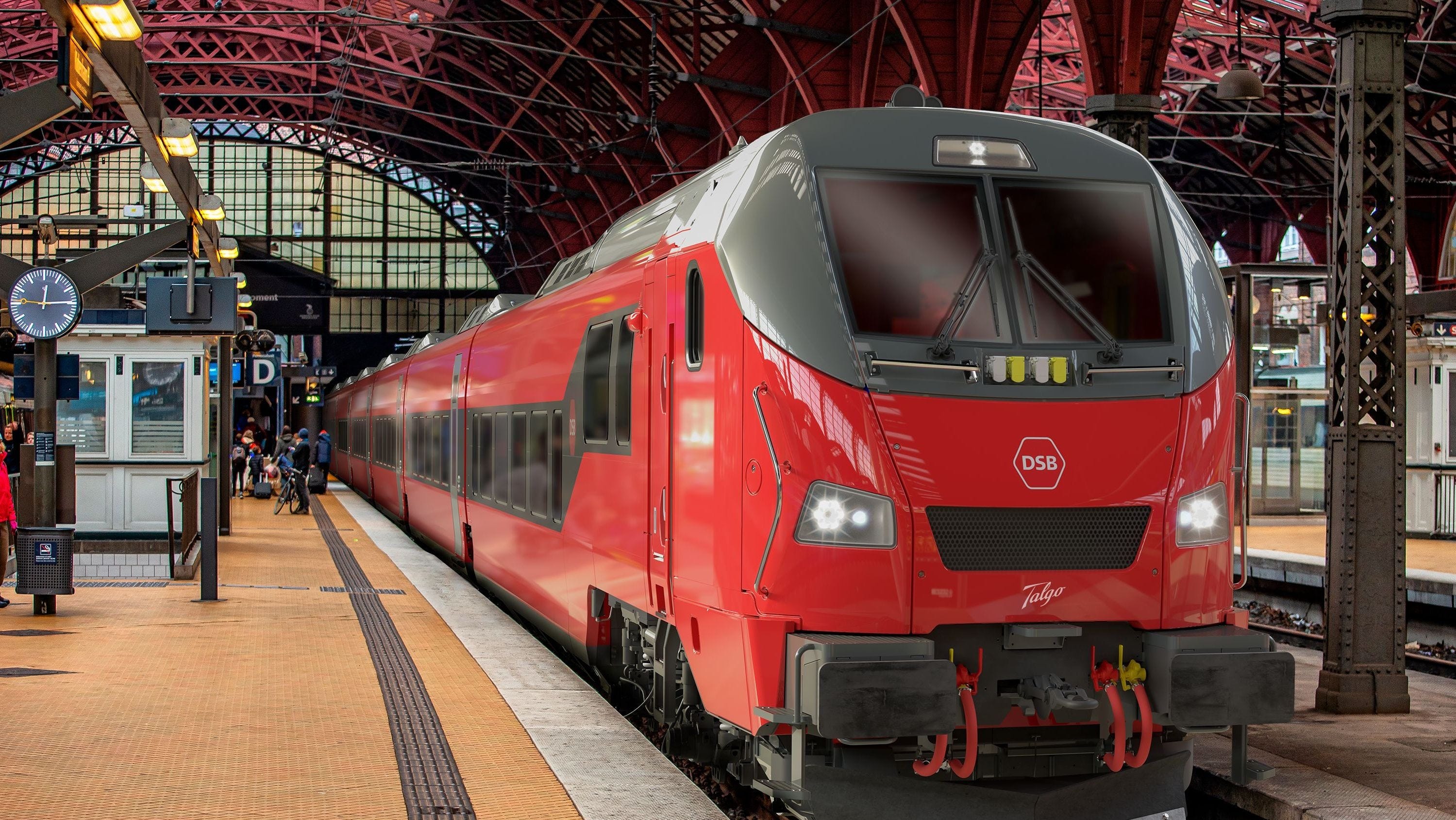
SPAIN: The Spanish manufacturer has set a target to double production capacity by end-2028, as its order book reaches EUR 6.5 billion — the largest in the company’s history.
The target was announced at Talgo’s annual general meeting in Vitoria-Gasteiz, where chairman José Antonio Jainaga said new investment in the company’s Rivabellosa and Las Matas factories would underpin the expansion. The investment details remain to be defined.
The order book has grown rapidly across four customer bases: Deutsche Bahn, DSB, FlixTrain and Trafikverket — all buying the same Talgo 230 intercity platform. Delivering that volume without further delays is the open question the capacity plan is meant to answer.
Four contracts, one platform
The EUR 6.5 billion order book, up from EUR 4.466 billion at end-2025, rests on a single product. Deutsche Bahn signed a framework contract for up to 100 ICE L sets in 2019, with negotiations ongoing over a potential reduction to 60. DSB signed a EUR 500 million framework contract for 16 EuroCity sets. FlixTrain placed an order for 30 sets — with an option for 65 more — worth EUR 1.06 billion. Trafikverket followed in April with a EUR 756 million contract covering locomotives and day and night sets for Sweden’s night train network.
The DSB sets entered service 3 November 2025. The ICE L is a different story: originally due in December 2023, it is running more than two years late. The FlixTrain and Trafikverket deliveries have yet to begin.
Delivery record as context
José Antonio Jainaga described the capacity ambition as a goal, not a commitment. Current output at the two Spanish plants runs at 400–500 carriages per year. Doubling that by end-2028 would require both factories to scale significantly while simultaneously executing on four live programmes.
The ICE L delay — Deutsche Bahn’s Talgo-built intercity fleet — has been the most visible pressure point. It is not the only one.
Leo Express is currently operating three leased Talgo VI coaches on the Prague–Bratislava corridor, a platform from the 1990s that has since been refurbished. Since April, persistent door failures and air conditioning faults have kept one or two coaches out of service at any given time. Czech rail authority Drážní úřad has conducted three inspections. Leo Express has a planned entry onto German routes scheduled for 25 June, with no official announcement of cancellation as of publication.
The Talgo VI issues do not reflect on the Talgo 230, which is a different and newer design. But they illustrate the gap between order volume and operational reliability that has marked Talgo’s recent European programmes.
