

DB Cargo will miss EU deadline to stop losing money
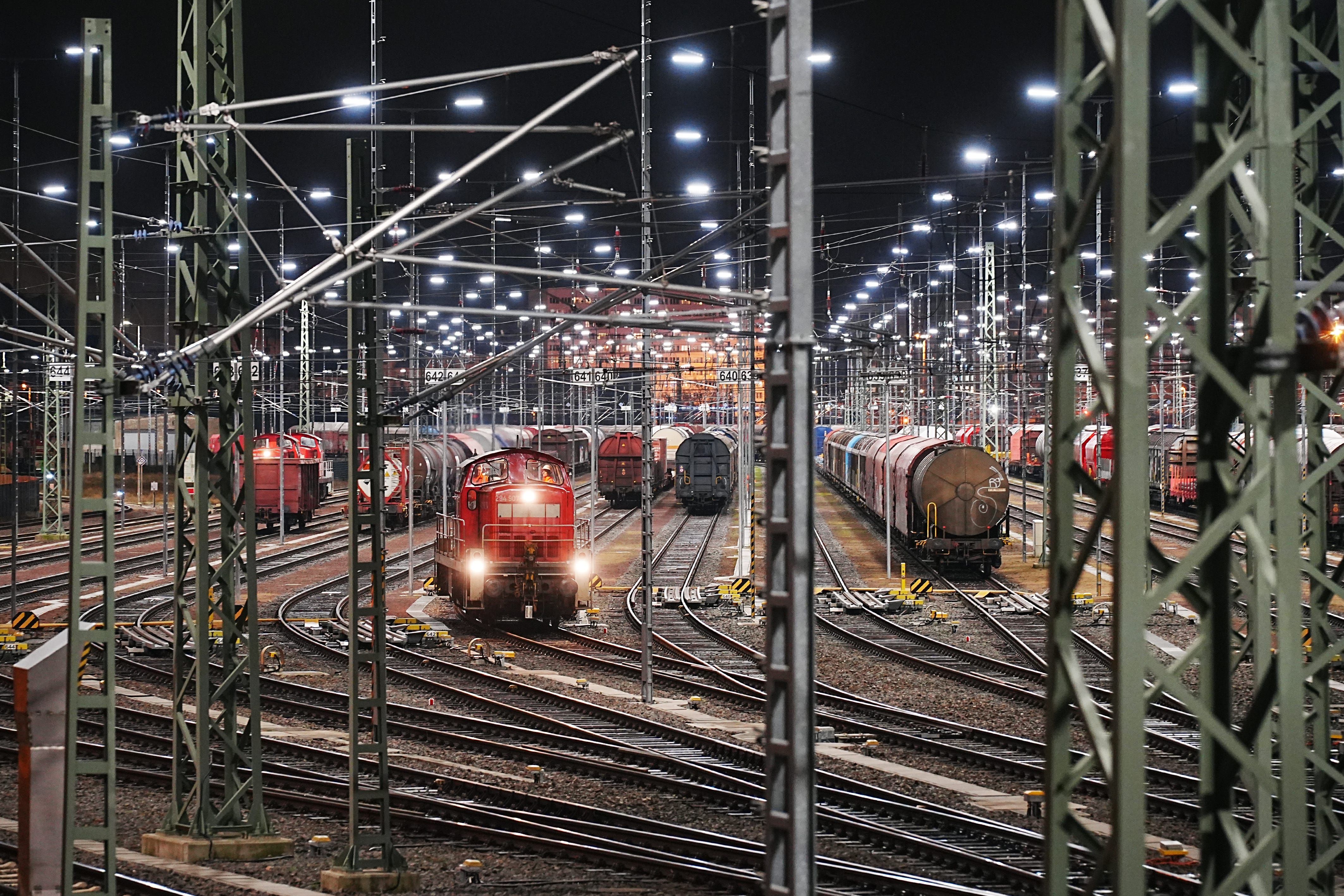
GERMANY: DB Cargo expects to post a loss in 2026, the year its EU-approved restructuring plan was due to restore long-term viability. The rail freight operator must now renegotiate with the European Commission and is extending the restructuring to all 16 foreign subsidiaries.
Chief executive Bernhard Osburg said on 17 September, in remarks reported by German news agency dpa, that a break-even result is hardly possible this year. He attributed the shortfall to a one-off write-down on DB Cargo UK, which the company has put up for sale.
The British subsidiary is carried in the books at around EUR 260m more than DB Cargo expects to receive for it, according to company sources cited by the agency.
The Commission approved EUR 1.9bn in German state aid to DB Cargo on 29 November 2024 after assessing a restructuring plan meant to guarantee long-term viability by the end of 2026. Without the write-down, the chief executive said, DB Cargo would have broken even this year.
ÖBB seeks new CEO and adds operations chief to holding board
AUSTRIA: ÖBB has opened the search for a successor to chief executive Andreas Matthä, whose term ends on 30 June 2027. The group is also adding a chief operating officer (COO) to its holding board to steer train operations group-wide. Applications close on 12 October.
ÖBB’s holding company has advertised both posts, and its supervisory board expects to have selected candidates by the end of the year. The board currently has two members, and the new post brings it to three.
According to ÖBB, the COO will rebuild the process it calls “Bahn-Produktion” – everything from the timetable to having trains ready for service – and steer it at group level.
EU law permits integrated groups of this kind, provided the infrastructure manager decides train path allocation and track access charges independently of the group’s operators. ÖBB’s announcement does not say how the COO’s group-wide remit over the timetable relates to ÖBB-Infrastruktur AG.
EIB lends Romania EUR 630m to finish a railway six years in the making
ROMANIA: The European Investment Bank (EIB) has signed a EUR 630m loan with Romania for the upgrade of the 113 km Brașov–Sighișoara line. Construction began in 2020, and infrastructure manager CFR SA’s own report puts it at 60% complete, with both contracts now due in 2028.
Finance Minister Alexandru Nazare signed the agreement in Bucharest on 4 September, and the EIB countersigned in Luxembourg on 9 September. The total project cost is estimated at EUR 2.25bn, to be covered by the loan, EU funds and the state budget.
The project is split into three sections under two construction contracts, all of which started in 2020. A year ago, the Romanian infrastructure manager expected work on the middle section to finish in October 2026.
Catalonia sets out plan for four new rail freight terminals
SPAIN: The Catalan government has approved a terminal strategy running to 2036 that commits roughly EUR 127m to four new rail freight terminals in Lleida, Penedès, Terres de l’Ebre and Empordà. The money covers a first phase from 2026 to 2031.
Rail carried 3% of land freight in Catalonia in 2025, the lowest figure in a series going back to 2006 and less than half the 6.3% recorded in 2020, according to the logistics observatory of Cimalsa, the Catalan government’s public logistics company, as analysed by the Catalan news agency ACN.
Only Lleida, which takes EUR 72m, has reached the stage of an informational study with a budget line, according to government sources.
Duved night train contracted six months at a time
SWEDEN: Trafikverket, the Swedish transport administration, has signed a six-month contract with state-owned operator SJ for the Stockholm–Östersund–Duved night train from December, with three extension options only the state can trigger. The compensation is just under SEK 30m, roughly EUR 2.7m.
The agreement runs from 13 December 2026 to 13 June 2027 and requires one night train in each direction every day, the same pattern as today.
Any extension depends on the funding the administration is allocated in the coming years, said Lennart Kalander, head of the responsible department at Trafikverket. It has to decide before the end of 2026 whether to trigger the first option, which runs to 9 December 2029.
That's The Rail Agenda for today. If you found it useful, forward it to a colleague. Sign in at therailagenda.com to read every story in full.