

INDUSTRY: A Valencia court has declared Spanish hyperloop startup Zeleros insolvent, the second major failure in Europe’s commercial hyperloop sector in 2026 after Dutch developer Hardt Hyperloop was declared bankrupt in early March.
Zeleros had attracted EU research funding and institutional backing before filing for insolvency in late March. The two collapses remove two of the sector’s most prominent European developers within weeks of each other.
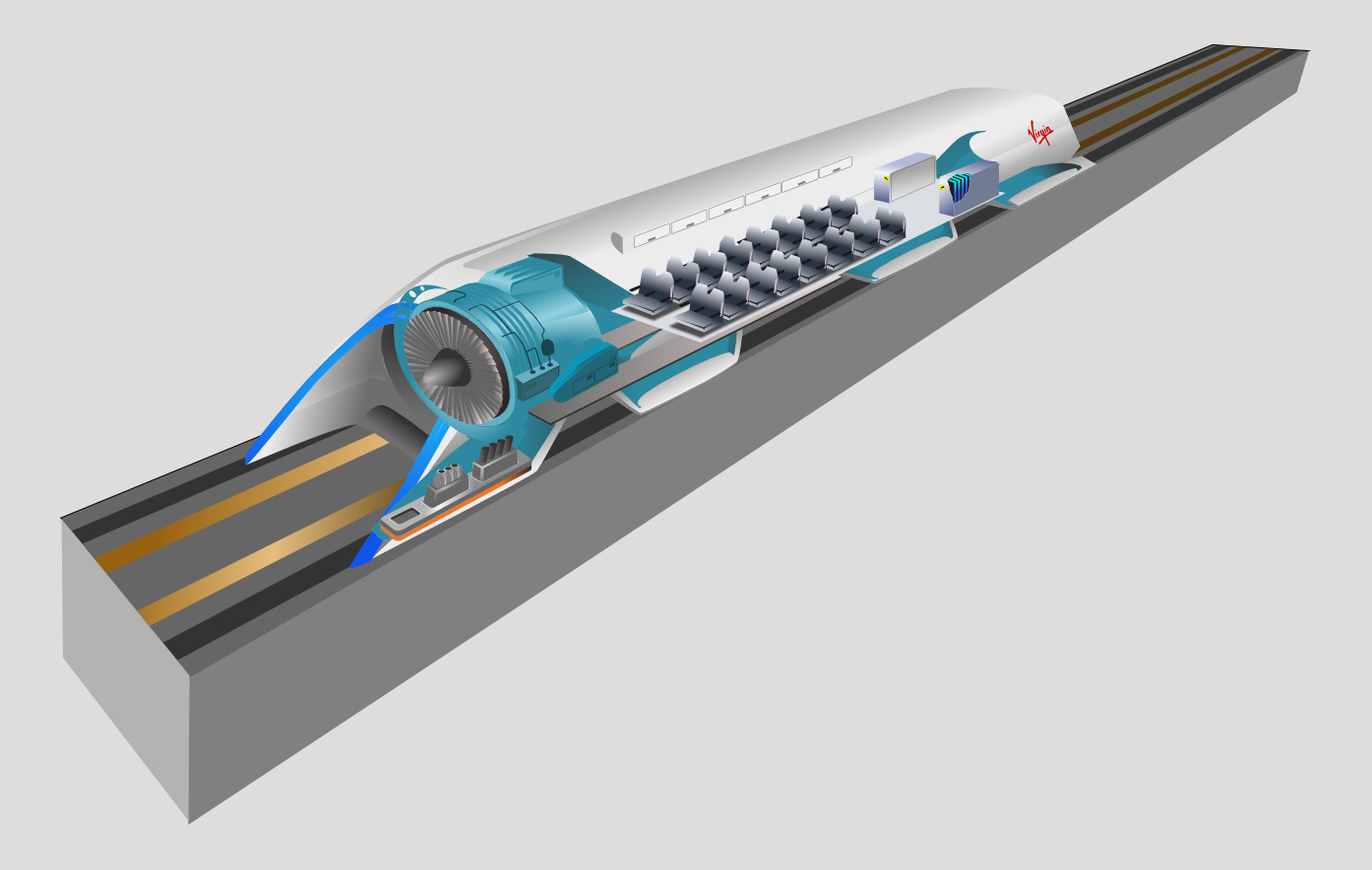
The two collapses follow the shutdown of Virgin Hyperloop in 2023.
Zeleros built research presence but never left development phase
Zeleros was founded in Spain and developed vacuum-tube transport concepts, securing participation in European research programmes. The company presented itself as a flagship southern European contributor to the sector.
The company had not moved beyond the research and development phase before the insolvency ruling.
Hardt collapse set the pattern weeks earlier
Hardt Hyperloop, based in Rotterdam, was declared bankrupt by the court in The Hague on 4 March. The Dutch company had been one of Europe’s most visible hyperloop developers, closely associated with the European Hyperloop Center, a 420-metre test facility in Veendam in the northern Netherlands.
Hardt had demonstrated stable levitation and a lane-switch system at the centre in 2025, reaching around 85 km/h in a low-pressure tube. The bankruptcy came despite those technical milestones.
Structural barriers blocked the path to infrastructure scale
Both companies faced a challenge that has proved consistent across the sector: moving from prototype demonstrations to infrastructure projects requires large-scale investment and regulatory frameworks that do not exist.
Hyperloop systems would require entirely new sealed tube infrastructure, specialised stations and dedicated control systems built from scratch. The scale of investment is comparable to major rail projects, without the established financing models, safety standards or operating frameworks that conventional rail can draw on.
No hyperloop system has entered commercial passenger or freight service anywhere in the world.