

The review Deutsche Bahn chief executive Evelyn Palla ordered of the corridor renovation programme has produced its first key points — and they confirm more than they change.
The key points became known on 11 August through business magazine Manager Magazin and were confirmed by news agency dpa. According to both, DB will keep the Generalsanierung programme but revise it on five points.
Not one named project has been dropped or moved. Whether corridors will be cut, and whether the promise of construction-free years after each renovation survives, both remain open.
The five points
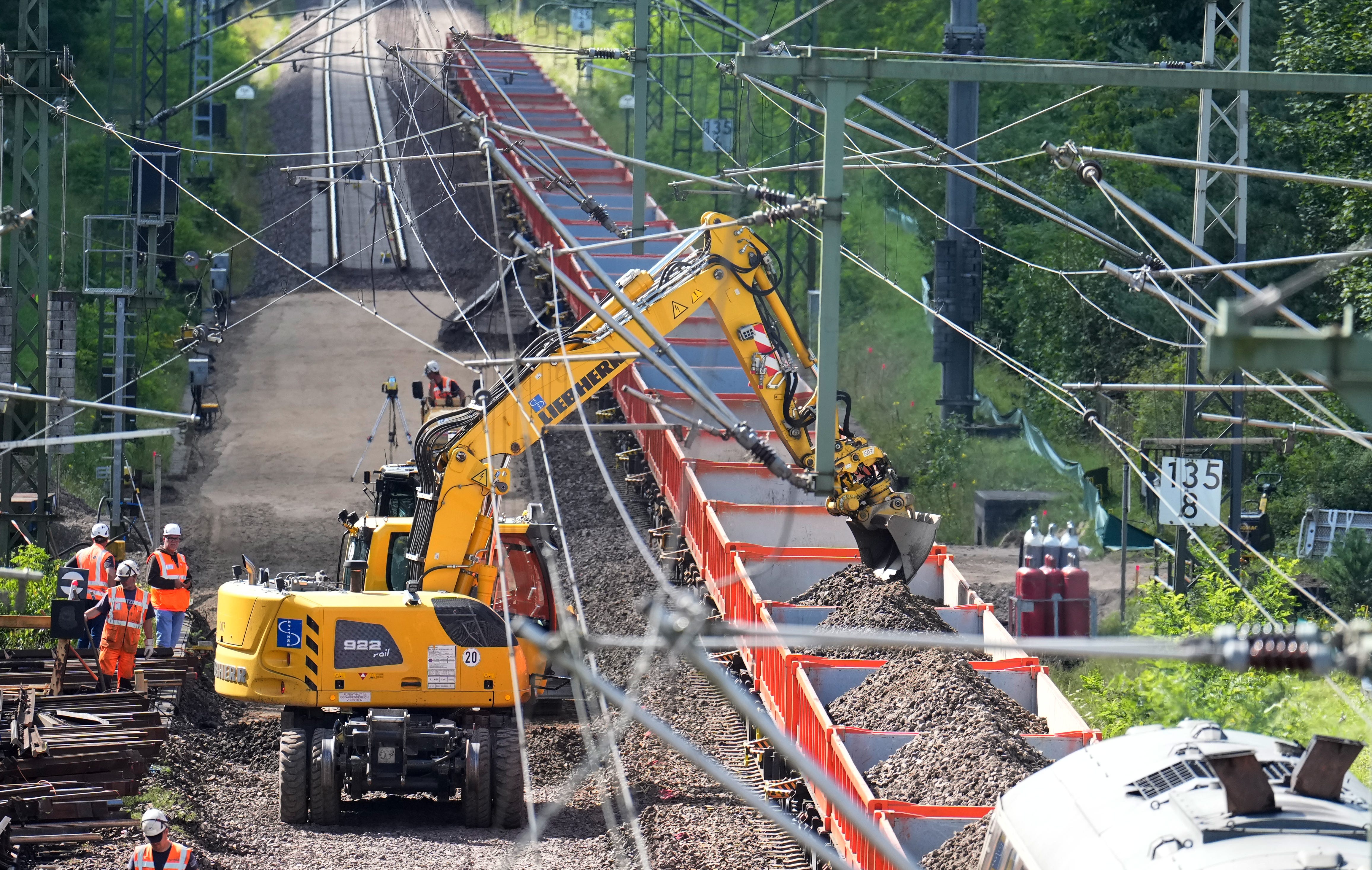
Generalsanierung is Germany’s answer to decades of underinvestment in its rail network: more than 40 of the busiest corridors are closed completely, typically for around half a year each, renovated in one concentrated effort and reopened — in principle — free of construction for years. The programme runs to 2036 and replaces the old model of rolling partial works that kept lines permanently disrupted without ever making them better.
According to the published key points, the revision covers:
The number and scope of the projects will be reviewed and reprioritised, with financial and staff resources focused where they deliver most for quality and reliability.
Renovations are to be better coordinated with each other and with other construction projects, so that delays no longer push closures of major corridors into overlap and raise the strain on the wider network.
All corridors are to be prepared at least for later digitalisation — an answer to criticism that DB has not used the closures to equip lines with ETCS train control.
Renovated lines are to return to service step by step rather than in one go, with testing and approval of signalling planned more realistically. What that means for the length of individual closures remains open.
DB intends to state more clearly how long each line stays free of new works after renovation. The original pledge was ten years, later cut to five — and whether the new wording softens it further is also open.
A model under pressure
Evelyn Palla announced the review in early July after a run of problems: renovations arriving late, costs rising, and punctuality failing to improve on completed corridors. Hamburg–Berlin, the programme’s largest project to date, reopened on 14 June six weeks behind schedule; only one train in four has run on time there since, and further night closures are still needed to complete the signalling. Nürnberg–Regensburg returned to service at the end of July, three weeks late.
This spring’s parallel closures also pushed German rail freight into acute difficulty, with steelmakers reporting cuts to production.
Transport minister Steffen Bilger backed the revision, telling dpa there is clear room for improvement in how the corridor renovations run and what they deliver. Renovated lines must “function measurably better than before”, he said, without new construction following shortly after.
DB has not yet published the revised concept itself. That presentation is due in the coming weeks, according to dpa — the point at which operators and freight customers learn which closures move, and whether any corridor drops out of the calendar to 2036.