

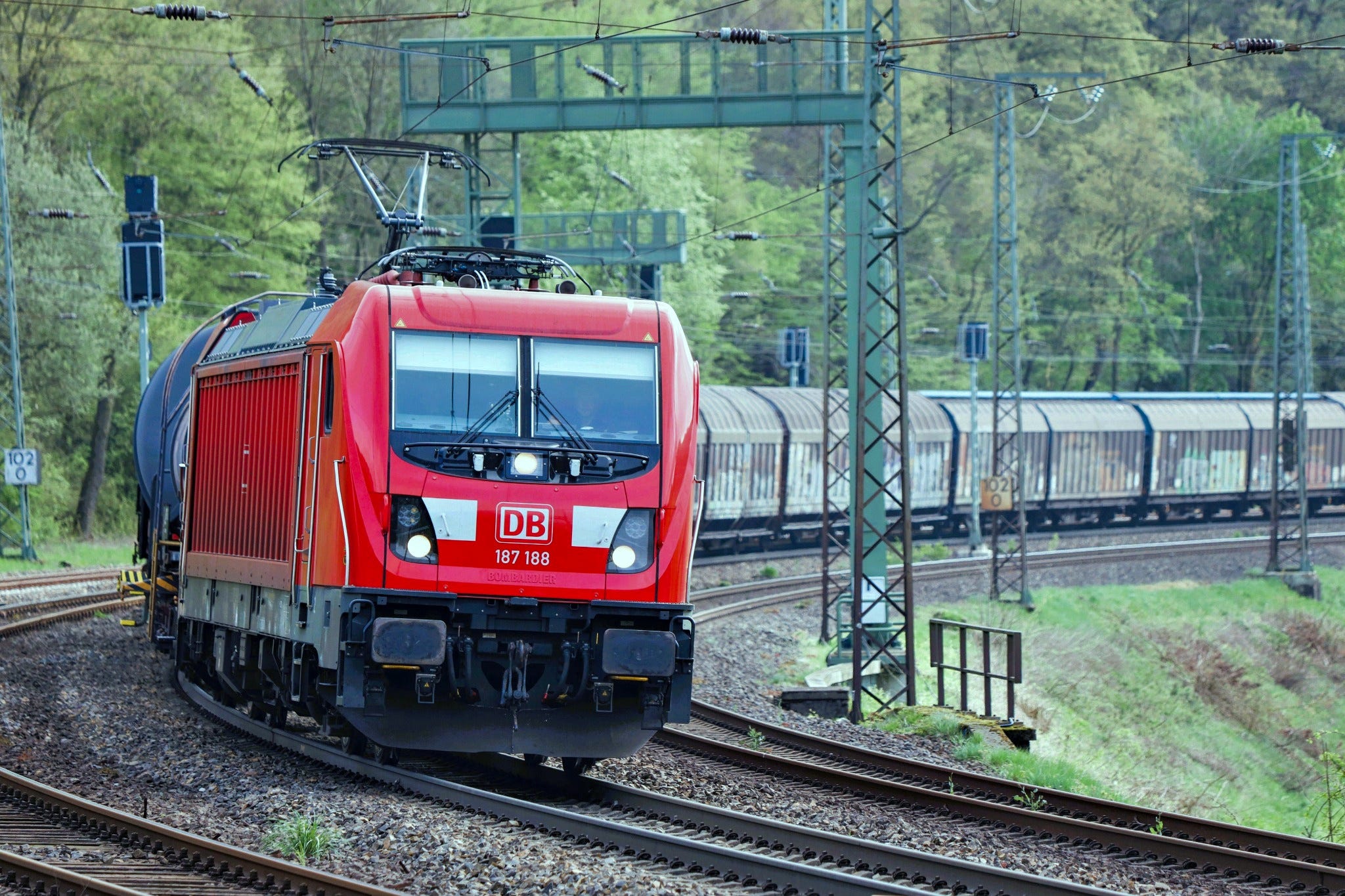
GERMANY: DB InfraGO has applied to raise freight track charges 12.6% for 2027 – but the company’s own lawsuit against its regulator means no approved price before mid-December.
DB InfraGO, the infrastructure arm of state-owned Deutsche Bahn, filed the application with federal regulator Bundesnetzagentur last week, industry association Die Güterbahnen said, putting the sector’s extra cost at around EUR 112m a year. The charge for a standard freight train would rise from EUR 3.48 to EUR 3.92 per kilometre. DB InfraGO has not commented publicly on the association’s figures.
Every train pays the charge to use the network, and each year’s prices need the regulator’s approval. The new timetable begins on 13 December. The company’s lawsuit over the cost ceiling beneath the prices rules out an earlier decision, the association says.
Three prices in eight months
Charges for 2026 were approved at EUR 3.93 per kilometre in December, then cut to EUR 3.48 in July after the European Court of Justice struck down part of Germany’s charging law and the regulator redistributed the burden. The new application takes the price back to EUR 3.92.
The association says the relief won in July is thereby more than used up, and that the federal government intends to recover up to EUR 40m of it through a lower track charge subsidy. The draft 2027 budget puts that subsidy at just over EUR 200m, down from around EUR 345m this year. Oliver Smock, senior adviser at the association, said freight is again facing the highest percentage increases despite three years of falling volumes.
The lawsuit behind the wait
In June the regulator capped the total costs DB InfraGO may recover from operators in 2027 at EUR 7.32bn, some EUR 231m below the company’s own calculation. The company is contesting the ceiling at the administrative court in Cologne, arguing it assumes federal maintenance funding that has not been agreed. The price approval is a separate decision and remains pending.
Without a challenge the cap would have become final, DB InfraGO says, and later changes in federal funding could no longer feed into the charges.
DB’s competitors pay most of the bill
Two thirds of German rail freight is carried by operators outside the DB group, so most of the EUR 112m would fall on companies competing with DB’s own freight arm. The association contrasts the open price with road, where truck tolls are fixed years in advance.
Operators have been booking paths for the 2027 timetable since March without knowing the cost. A Cologne ruling before December would shorten the wait.
