

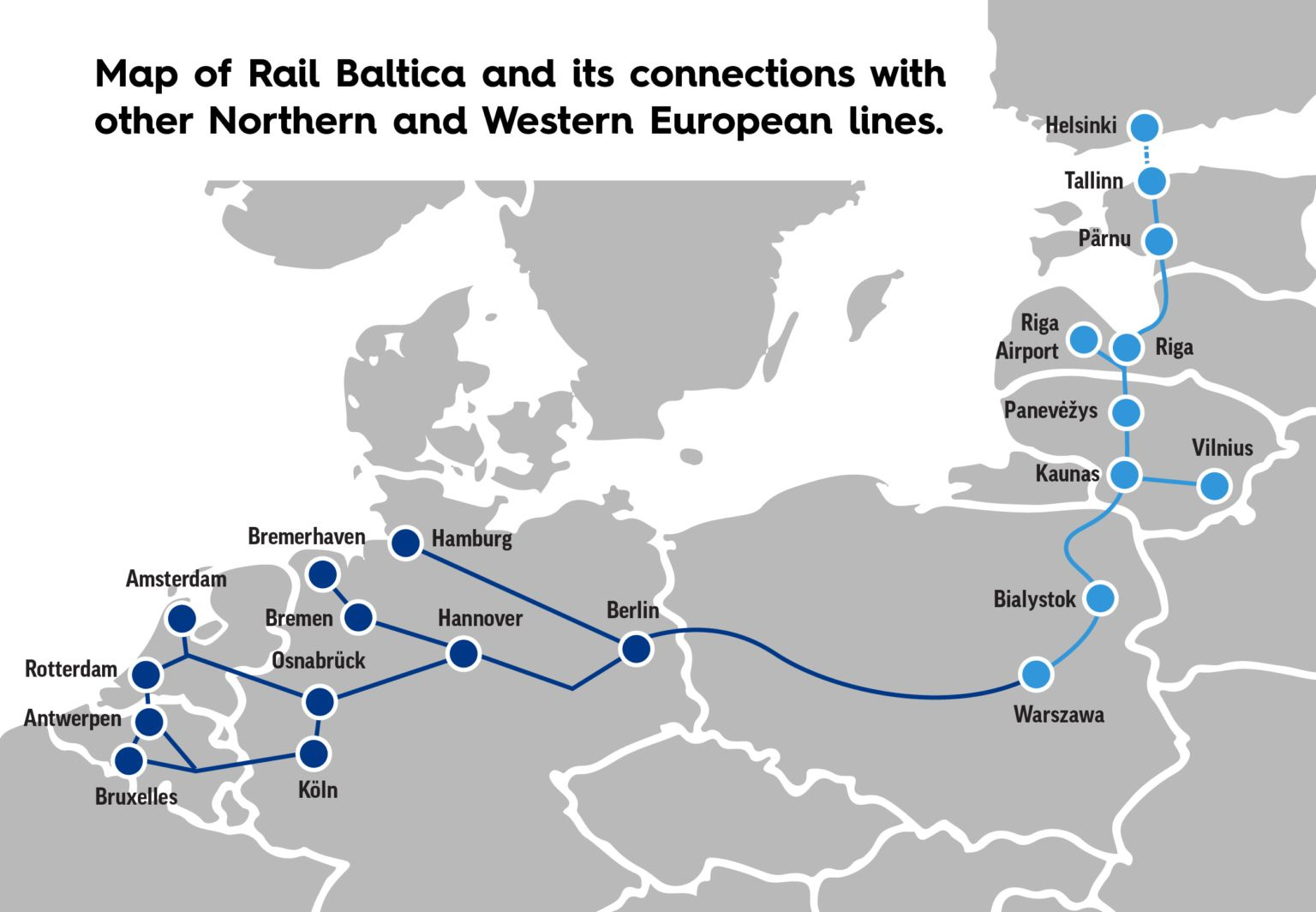
Rail Baltica: EU warns Latvia over unresolved decisions
The European Commission’s coordinator for the North Sea–Baltic Corridor is urging Latvia to take formal decisions on Rail Baltica’s scope, sequencing and funding, and ties the message to the EU’s 2030 target for the core TEN-T network.
RB Rail AS says the remarks mirror its own repeated calls for Latvian political commitments. The message shifts the focus away from day-to-day construction and onto governance: what Latvia will build, in which order, and with what financing envelope.
Until Latvia fixes the scope and sequencing, tender timing remains unclear and budget baselines keep changing. That also makes corridor planning with Estonia and Lithuania harder to lock down ahead of the next tenders.
Switzerland sets 2045 transport masterplan framework
Switzerland’s Federal Council has set the framework for a national transport masterplan through 2045 and asked the transport ministry to prepare one combined draft package for public consultation by end-June 2026.
The framework groups rail priorities into three timeframes — 2030, 2035 and 2045 — with indicative budgets.
For the 2045 timeframe, it flags a “key projects” package of at least CHF 10 billion, including capacity work in major nodes. It also says Basel’s Herzstück is not deliverable as originally planned and points to an alternative cross-city concept.
MÁV pulls Dunakeszi plant fully in-house
Hungarian State Railways (MÁV) has taken full ownership of two Dunakeszi entities linked to the rail vehicle plant north of Budapest. The move brings both the operating company and the asset-holding structure under group control.
MÁV has not detailed implications for production plans, contracts, investment or staffing at the site. The step is primarily about governance and asset control.
GoA2 starts on Swiss regional line with level crossings
A Swiss regional railway has started semi-automated (GoA2) operation in regular passenger service on an open line with level crossings.
Baselland Transport is deploying the concept on the narrow-gauge Waldenburg Railway after approval by Switzerland’s federal transport authority and the commissioning of new signalling and train control systems, supplied by Stadler.
In the approved model, the driver remains on board and authorises departure, while the system executes and supervises the driving profile once doors are closed. Automated depot movements are planned from end-2026.
Thank you for reading The Rail Agenda’s newsletter. If you found it valuable, consider sharing it with someone who might find it useful.