

SWEDEN: The first section of the country’s planned high-speed railway is facing higher costs after new estimates showed the planned route through Norrköping would cost almost SEK 2bn more than initially assessed.
Norrköping municipality says updated estimates show the urban section will cost significantly more than previously thought, prompting a rethink of how the railway should run through the city.
Trafikverket currently estimates the total cost of the East Link (Ostlänken) project at SEK 110.3bn in 2025 prices.
Urban routing adds cost risk
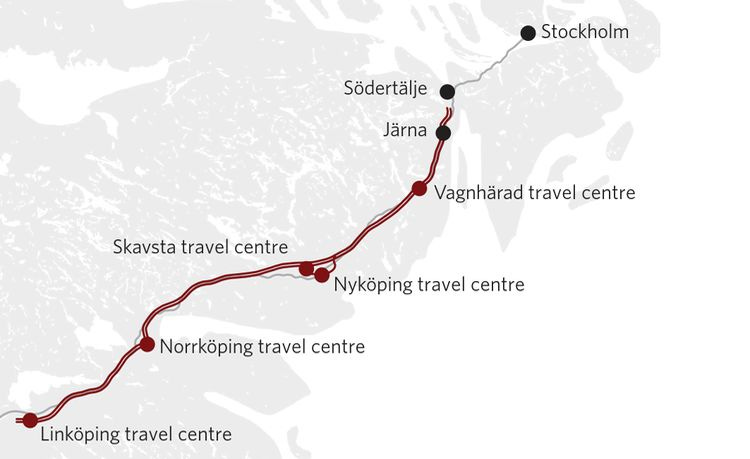
The East Link is a planned 160 km double-track railway between Järna and Linköping designed for speeds of up to 250 km/h and expected to open in the mid-2030s.
The project forms the first section of Sweden’s planned new main lines intended to increase capacity on the Stockholm–Linköping section of the southern main line corridor by shifting faster passenger services onto a new route.
Routing new rail lines through cities is often one of the most expensive and technically difficult parts of a project because they must fit around existing infrastructure, land constraints and local planning rules, often pushing up costs and forcing redesigns.
Norrköping passage under review
The 2022 co-financing agreement between the municipality and the state had envisaged an elevated alignment through parts of central Norrköping.
Local authorities now say the design is likely to prove more expensive than previously estimated, and discussions are under way on alternative solutions, including a ground-level alignment.
Sweden’s existing main lines typically support speeds of up to 200 km/h. The East Link is designed for 250 km/h, which in most international classifications is considered high-speed rail, even if it falls below the 300 km/h design speeds used on some dedicated high-speed networks.