

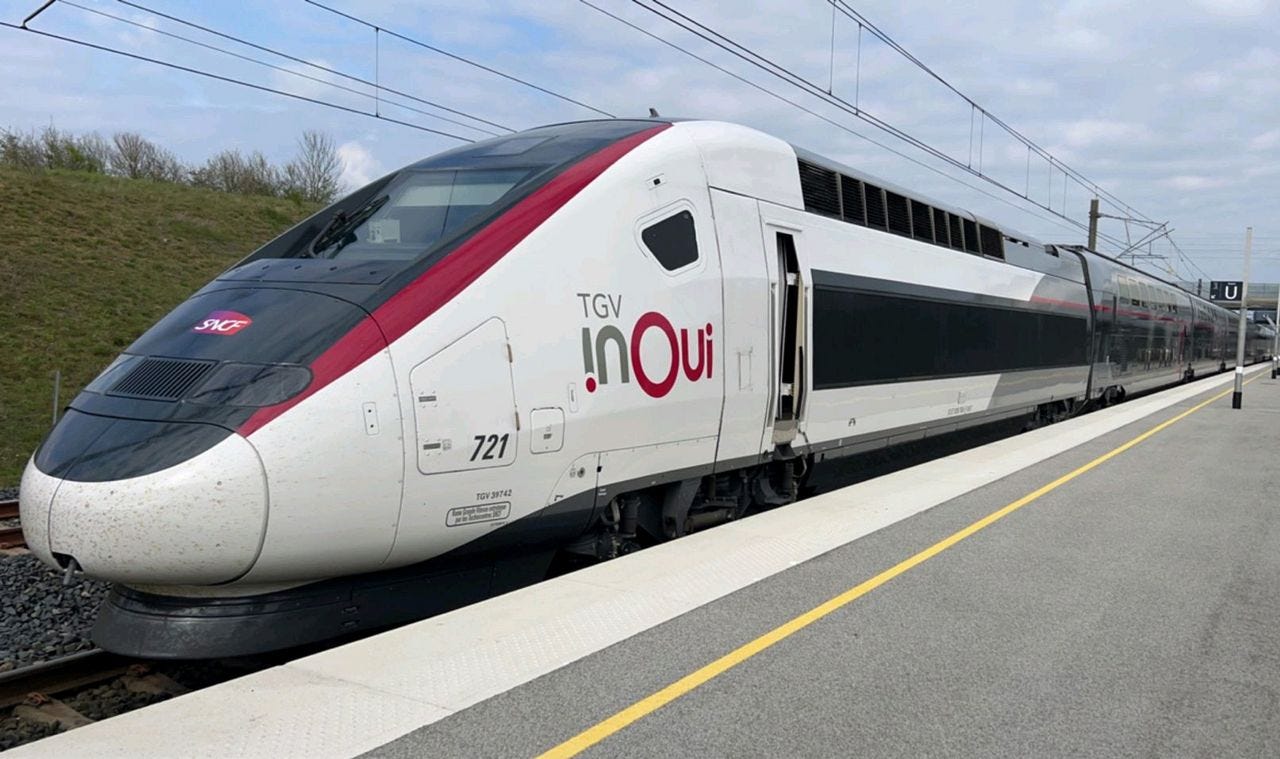
SNCF has prompted political and public criticism in France after confirming that children under 12 are not allowed in a dedicated “Optimum Plus” area on selected weekday Paris–Lyon TGV InOui services.
The restriction applies to a premium subcategory within first class, but the decision has widened into a broader debate about whether a state-owned operator should exclude children to offer a premium travel environment.
Optimum Plus replaces the former Business Première offer and is available on selected weekday journeys. SNCF says the dedicated space is aimed at frequent travellers and business passengers seeking a calmer, more private travel environment.
Reaction has been polarised
SNCF says 92% of seats during the week — and 100% at weekends — remain accessible to all passengers. The Optimum Plus carriage is positioned at the end of the train so other passengers, including families, do not have to pass through the dedicated area.
The policy has drawn sharply split reactions.
One Facebook user wrote:
Honestly, SNCF, you’ve hit rock bottom. This world is becoming absurd. When will there be a space for people who play music without headphones, or talk loudly on the phone? In short… doesn’t this remind you of something? It’s a frightening world.
Another Facebook user took the opposite view:
Personally, I’m tired of having to endure other people’s children having a meltdown on journeys. Setting aside a small dedicated area wouldn’t be a bad idea.
Political pressure on SNCF
The controversy has also reached the political level. France’s High Commissioner for Children, Sarah El Haïry, described the decision as “shocking” and said she would take the issue up with SNCF chief executive Jean Castex.
SNCF says the rule is not new and that Optimum Plus replaces Business Première with the same conditions. It also says it has rejected calls for fully “child-free” carriages and continues to offer family fares, children’s areas and the Junior & Compagnie service..
The system signal: The wider signal is that “quiet travel” is moving from expectations about behaviour to formal access rules — a sensitive shift for a state-owned operator.