

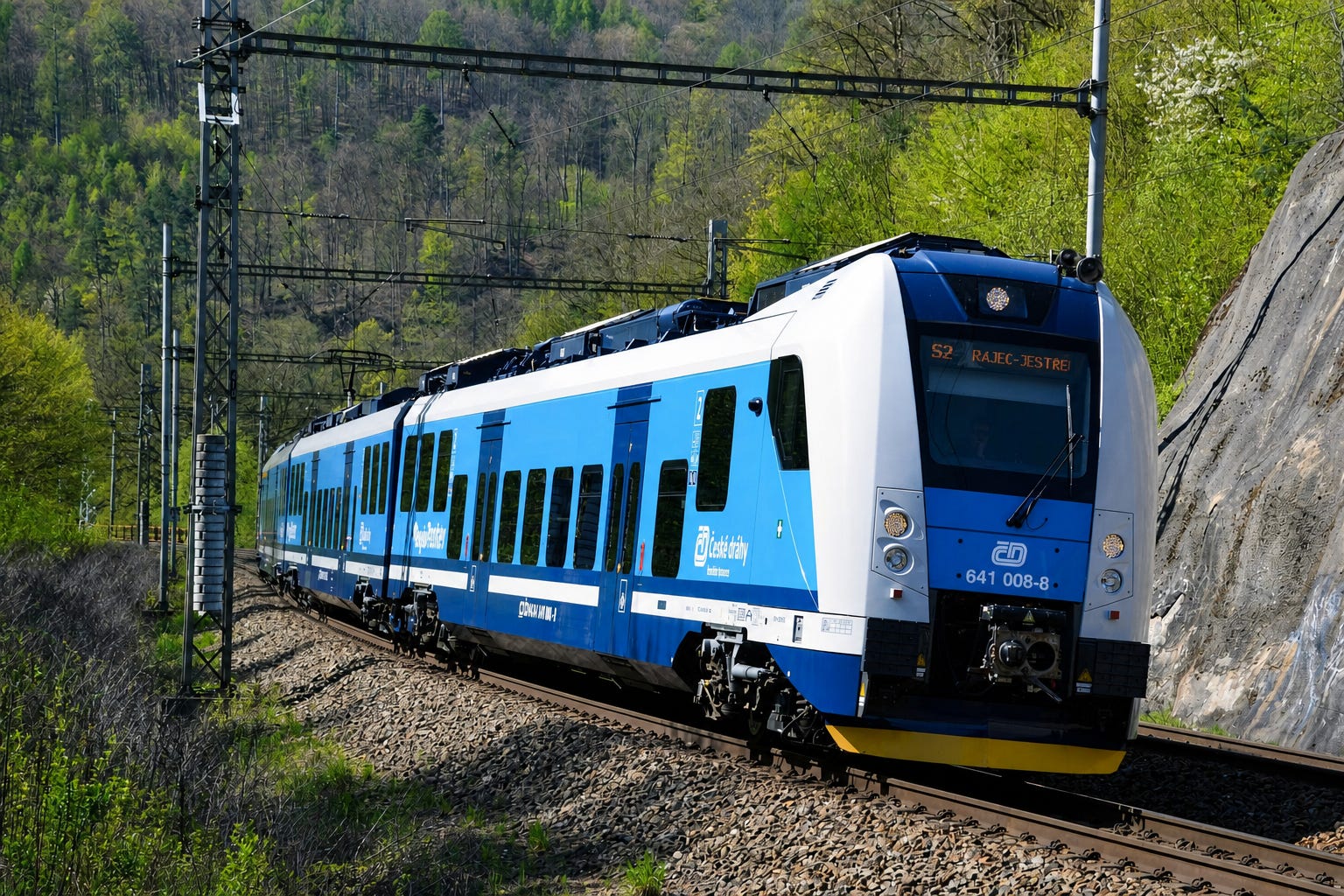
INDUSTRY: Škoda Group has agreed a strategic cooperation deal valued at EUR 120m covering the supply and maintenance of 10 electric multiple units for Uzbekistan Railways — reviving an arrangement that collapsed in 2023 over export financing. The new agreement is backed by the European Investment Bank and designated a flagship initiative under the EU’s Global Gateway programme.
The agreement was signed 30 April in Tashkent in the presence of Uzbek President Shavkat Mirziyoyev and Czech Prime Minister Andrej Babiš. The 10 four-car EMUs are built for the 1,520 mm gauge network and based on the RegioPanter platform currently in service in Latvia and Estonia.
A joint venture for local production and maintenance, and a Škoda Academy for technical training, form part of the deal. Financing comes from EGAP, the Czech state export insurer, and the European Investment Bank, under the EU’s Global Gateway infrastructure investment framework.
From collapse to deal: the financing fix
The 2023 arrangement — a EUR 320m agreement for 30 trains — never reached production. Export financing could not be concluded, and the project was suspended without a single unit being built.
The new structure resolves that blockage. EGAP provides state-backed export insurance; the European Investment Bank co-finances the deal.
Speaking to Czech daily Hospodářské noviny in February 2026, Škoda Group CEO Petr Novotný said the company had failed to secure the necessary export financing for the original deal. He said the combination of EGAP and EU support made the revised offer competitive against Chinese manufacturers, who are active in the Uzbek market.
What the deal covers
The 10 EMUs will be produced at Škoda’s Ostrava facility, where the same RegioPanter platform is already in production for operators in Latvia and Estonia. The broad-gauge variant has been adapted for the 1,520 mm network covering Uzbekistan and the wider post-Soviet rail area.
Beyond rolling stock delivery, the agreement establishes a joint venture in Uzbekistan for local assembly and maintenance. A Škoda Academy will train local technical staff, with the transfer of maintenance expertise intended to make Uzbekistan Railways increasingly capable of maintaining the fleet independently.
The corridor behind the deal
Uzbekistan’s rail network sits on the Trans-Caspian international transport route — the corridor linking Central Asia to the extended Trans-European transport network. Global Gateway, the EU’s infrastructure investment framework, explicitly targets this corridor as a strategic priority.
For Škoda, the agreement establishes a manufacturing and maintenance presence in a market where competition is intensifying. Russia’s TMH unveiled its EP5N low-floor EMU at the INNOPROM Central Asia trade show in Tashkent in April, developed in cooperation with the Tashkent Passenger Car Construction and Repair Plant. EU-backed financing is what Novotný has said makes Škoda’s offer competitive on price.