

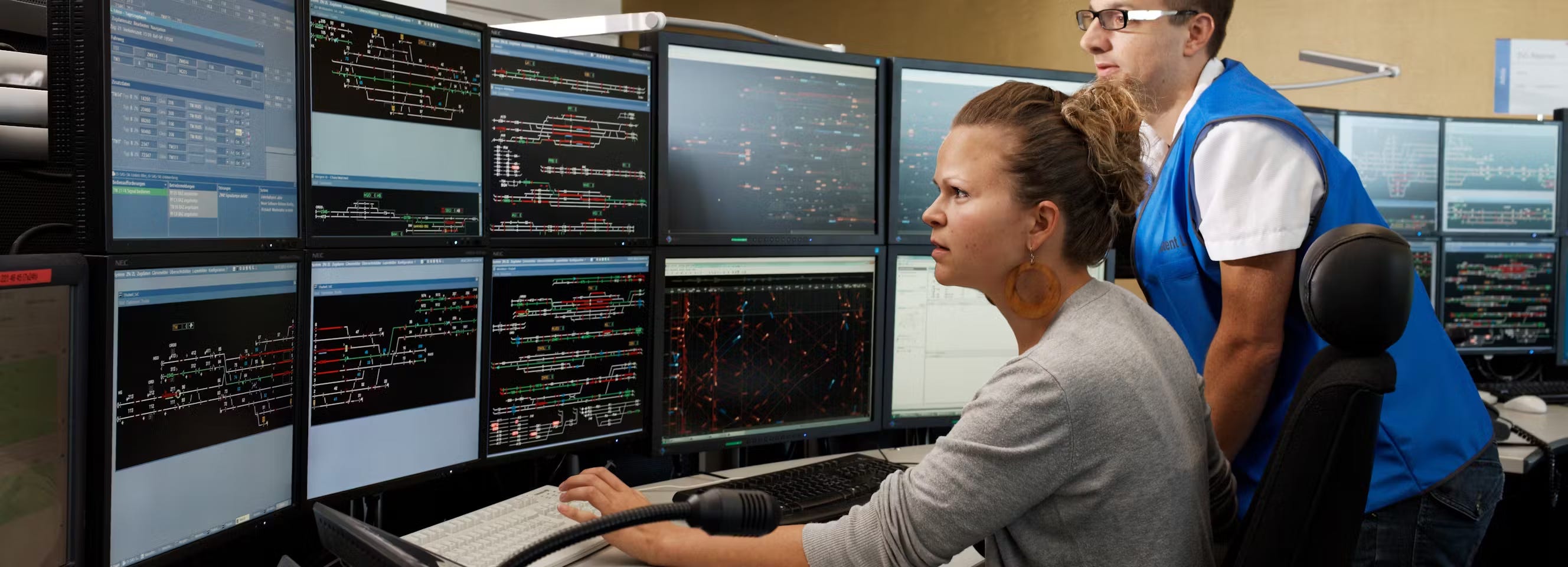
Swiss Federal Railways’ EUR 1.5 billion digital signalling framework represents a fundamental shift in European procurement strategy, splitting the contract between established players Hitachi and Siemens alongside rolling stock manufacturer Stadler. The deal structure not only secures SBB’s digital future but potentially redefines supplier dynamics across the continent.
The October award follows Deutsche Bahn’s EUR 6.3 billion framework from February – together representing EUR 7.8 billion in committed signalling investment within a single year. This marks an unprecedented concentration of purchasing power that fundamentally alters the traditional project-by-project procurement model that has dominated European rail infrastructure for decades.
The 10-year frameworks with multiple extension options – potentially spanning 40 years including maintenance for SBB – provide suppliers with the long-term certainty needed for substantial R&D investments.
This contrasts sharply with the fragmented approach that has historically limited innovation in railway signalling, where suppliers faced unpredictable demand and short-term contracts.
The Stadler surprise reveals market evolution
Stadler Rail’s selection for object controllers represents the most striking element of SBB’s procurement strategy. The Swiss rolling stock manufacturer, which only entered the signalling market through acquisitions in 2021, has secured a position alongside industry giants with over 33% (Siemens) and 13% (Hitachi) European market share respectively.
This vertical integration strategy – where train manufacturers expand into infrastructure technology – challenges the traditional separation between rolling stock and signalling suppliers. Stadler’s “one-stop-shop” approach, offering both trains and the systems controlling them, could prove particularly attractive to smaller operators and regional networks seeking simplified procurement and guaranteed interoperability.
The absence of Thales (17% market share) from both the SBB and DB frameworks is notable, particularly given the company’s established position in the European market. While Alstom (15% market share) secured over EUR 600 million from DB’s framework, its exclusion from SBB suggests infrastructure managers are increasingly willing to look beyond established relationships. This openness to new entrants, even those with limited track record in complex interlocking systems, indicates a market in transition.
Framework contracts become the new battleground
The shift from individual projects to massive frameworks fundamentally changes competitive dynamics. Suppliers now face winner-takes-most scenarios where missing a major framework effectively locks them out of a national market for decades. The combined SBB-DB frameworks represent a substantial share of European signalling investment for the next decade.
This concentration creates both opportunities and risks. Winners gain predictable revenue streams enabling aggressive R&D investment in digital technologies, artificial intelligence integration, and predictive maintenance capabilities.
Losers face the prospect of sustained market share erosion as their installed base ages without replacement opportunities.
For infrastructure managers, frameworks offer standardisation benefits and economies of scale previously impossible with fragmented procurement.
SBB’s projection of CHF 450 million annual savings by 2040 through its SmartRail 4.0 programme demonstrates the financial logic driving this approach. The ability to replace 80% of legacy systems dating to the 1950s with modern, modular platforms promises dramatic reductions in maintenance costs and operational complexity.
What next for European signalling
The SBB-DB procurement model will likely cascade across Europe as other infrastructure managers face similar modernisation pressures. Infrastructure managers in France, Spain, and Italy are watching closely, with several major signalling tenders expected in 2026-2027.
Suppliers must now adapt to this new reality. Traditional players like Siemens and Hitachi are strengthening their positions through these frameworks, while challengers like Stadler demonstrate that strategic focus and targeted acquisitions can break established hierarchies. Chinese manufacturers, notably absent from both Swiss and German frameworks, may find European market entry increasingly difficult as long-term partnerships solidify.
The frameworks also accelerate technology convergence around ETCS Level 2/3 and digital interlocking standards. With two of Europe’s most technically advanced networks committing to specific suppliers for decades, these implementations will effectively set de facto standards that others must follow or risk isolation.
For the broader industry, the message is clear: the era of fragmented, project-based signalling procurement is ending. Infrastructure managers are choosing strategic partners for multi-decade digital transformation journeys. Suppliers must position themselves now or risk permanent marginalisation in Europe’s EUR 18 billion signalling market.