

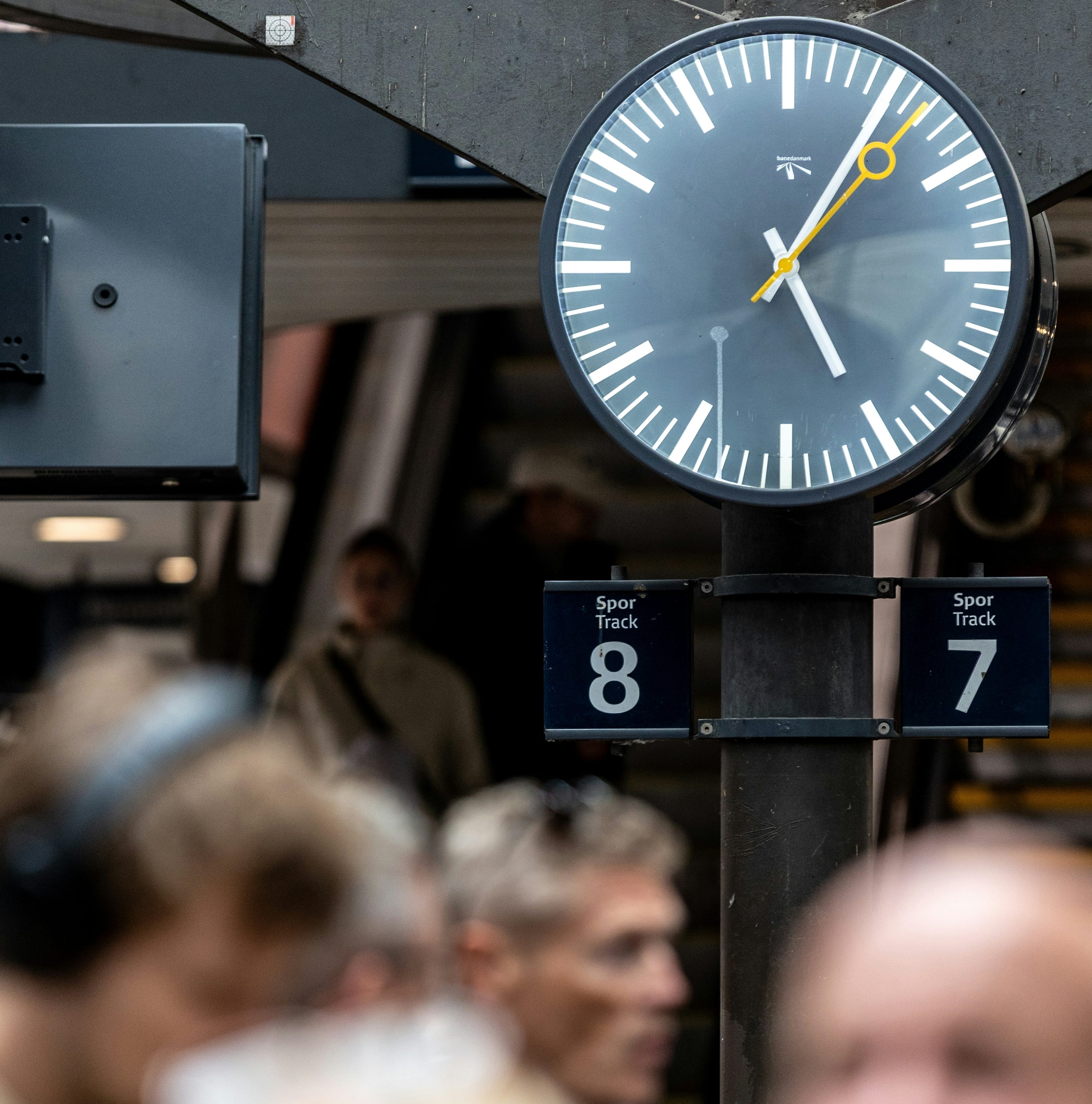
COMMENTARY: Every opposition transport spokesman in Europe has the same speech. The trains are late. The government has failed. Vote for us and we will fix it.
By Dan Jensen
They are right about the trains. They are wrong about everything else.
The punctuality data from railway operators across Europe is real. The problem is real. But the data is also a methodological minefield — operators measure delays differently, report selectively, and define “on time” in ways that make direct comparison nearly impossible.
So here is our best attempt at a ranking. Not a definitive league table. A working assessment, based on the most comparable data available, with the most important caveats to follow.
The three best-performing national operators in Europe
SBB, Switzerland — 93.2% on time in 2024
NS, Netherlands — 89.4% on time in 2024
SNCB, Belgium — approximately 87–89% on time in 2024. The figure aligns with monthly data published by Belgian infrastructure manager Infrabel, though a precise 2024 annual rate has not been independently confirmed.
The three worst-performing major national operators
DB, Germany — 62.5% on time in 2024
Trenitalia, Italy — 78.4% on time in the first half of 2024, falling to 67.4% on its high-speed services in late 2024
SNCF, France — 82% on time in 2024 across all service categories, according to France’s rail regulator
Before you read those numbers as a verdict on six governments, read the following.
The measurement problem politicians ignore
SBB counts a train late if it arrives more than three minutes behind schedule. DB counts a train late at six minutes. That single difference means the two figures cannot be placed on the same scale. Had DB used SBB’s definition, the directional effect would be substantial — the true gap between the two systems is wider than the headline numbers suggest. Had SBB used DB’s definition, its score would rise further still.
SNCF goes further. It applies different thresholds depending on journey length — five minutes for short trips, fifteen for long ones. Trenitalia’s worst figures were recorded at a ten-minute threshold. When opposition politicians line up these numbers and call it a ranking, they are doing something that no serious transport analyst would sign off on.
The numbers are not wrong. The comparison is.
Three governments, one admission
What is striking about Germany, France and Italy is not that their trains are late. It is that their governments have all, in different ways, admitted that nothing can be done about it quickly.
Germany’s transport minister and DB’s new leadership announced in September 2025 a revised punctuality target of 70% — with delivery pushed to 2029.
France’s SNCF Réseau operates under a multi-year infrastructure framework that projects continued degradation of track quality through 2030 — a trajectory set by SNCF’s own infrastructure assessments, not by external critics.
In Italy, Deputy Prime Minister Salvini stated in a parliamentary session in January 2025 that high-speed traffic had grown 15% while network capacity had not — and his ministry began exploring a corresponding traffic reduction to recover reliability.
Three countries. Three governments of different political colours. Three public admissions that the fix is a decade away.
What Switzerland actually built
SBB does not perform well because Switzerland is small, or organised, or culturally punctual. It performs well because Switzerland made a political decision in the 1980s to fund rail infrastructure on 25-year horizons and protect that funding from electoral cycles. Switzerland’s integrated timetable model builds recovery buffers into the schedule at major interchange stations — absorbing minor delays before they cascade.
The Netherlands did the same across successive governments.
Belgium is the most instructive case: SNCB is chronically underfunded by its political owners, runs in a country divided by language and governance disputes, and still ranks among the top three in Europe — because the underlying infrastructure built over previous decades has not yet been fully allowed to decay.
The lesson is not that some countries are better at running trains. It is that some countries made financing decisions two or three decades ago that their current operators are still living off.
When doing the right thing looks like failure
DB’s Generalsanierung programme commits 40 billion EUR to renovating 40 major corridors. The Riedbahn pilot in 2024 closed 70 kilometres of track for five months. Punctuality fell. Passengers experienced it as deterioration. It was not. It was the cost of thirty years of deferred maintenance arriving all at once.
Italy faces the same logic. EU recovery funds are financing infrastructure upgrades across the network. The construction is the direct cause of current disruption. Opposition parties attack the government at precisely the moment the system is most vulnerable — not because it is failing, but because it is finally being repaired.
Infrastructure investment timelines and political cycles
ERTMS, the European standard for train control, will increase network capacity and reduce the cascade failures that turn one delayed train into twenty. The European Union Agency for Railways is pushing toward harmonised punctuality reporting. Both will matter — in ten to fifteen years.
That asymmetry is the real story behind every opposition punctuality speech. The politicians citing today’s delay figures are, in most cases, the political successors of the governments that created the conditions for those delays. The investment decisions that determine whether trains run on time are made decades before the delays appear — and decades before anyone is held accountable for them.
Parliaments run on four-year clocks. Rail infrastructure runs on forty-year ones.