

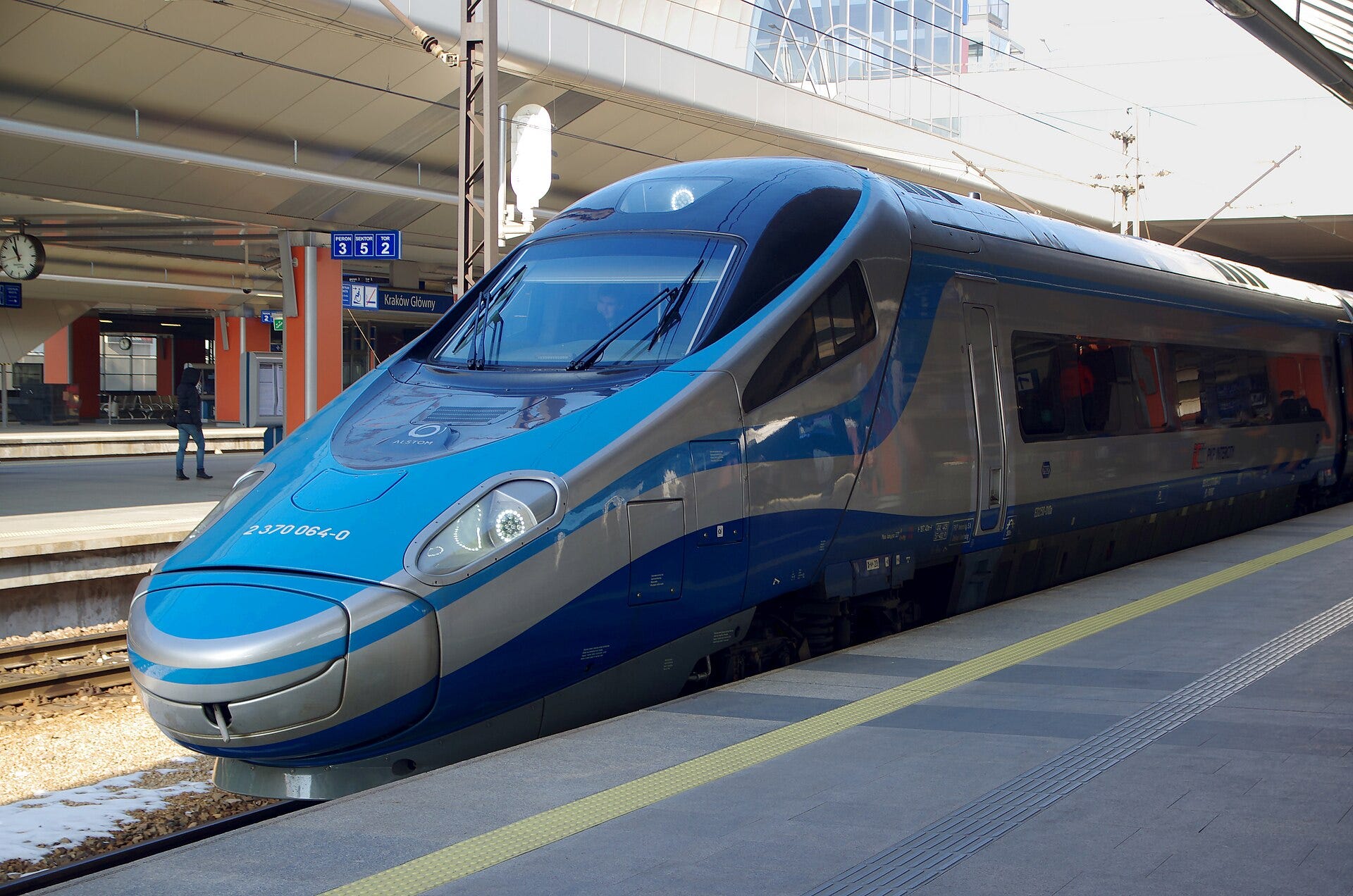
POLAND: Infrastructure manager PKP Polskie Linie Kolejowe (PKP PLK) tested the new GSM-R radio system on the Centralna Magistrala Kolejowa (CMK) overnight on 18 August, with a PKP Intercity Pendolino running at 250 km/h. The rollout was the last prerequisite for European Train Control System (ETCS) level 2 on the line, and PKP PLK said scheduled services at that speed begin next year.
PKP PLK called the test a full success. Infrastructure minister Dariusz Klimczak confirmed the result the same day. The target is 250 km/h running on around 180 km of the line, which today is capped at 200 km/h in service.
Deputy infrastructure minister Piotr Malepszak has put the start of commercial operation in the second half of 2027. Warsaw–Kraków would then take under two hours, about 25 minutes less than today.
The signalling condition
ETCS level 2 is required above 200 km/h, and GSM-R is the radio layer it runs on. PKP PLK board member Maciej Kaczorek said reaching 250 km/h in testing is an important moment for Polish railways and that existing infrastructure is being prepared step by step for higher parameters.
The CMK, PKP PLK’s line 4, opened in the 1970s and was engineered from the start for higher speeds than the rest of the Polish network. The current programme upgrades that existing alignment. PKP PLK put the value of the works at about PLN 1.8bn (around EUR 420m) in 2024.
The schedule has slipped repeatedly. The 250 km/h service was first promised for 2023 and then for 2025.
Rolling stock already in service
PKP Intercity’s 20 Alstom ED250 Pendolino sets entered service in December 2014 with a design speed of 250 km/h but have been held to 200 km/h in traffic. Higher speeds have been reached on the CMK in trials before: ED250-001 ran at 293 km/h in November 2013, still the Polish record. Only the Pendolino fleet is cleared for the higher speed; other PKP Intercity trains on the route will continue at 160 or 200 km/h.
The separate Centralny Port Komunikacyjny (CPK) programme plans purpose-built high-speed lines from Warsaw to Łódź and on to Poznań and Wrocław for up to 350 km/h. Those lines are in planning and early construction.