

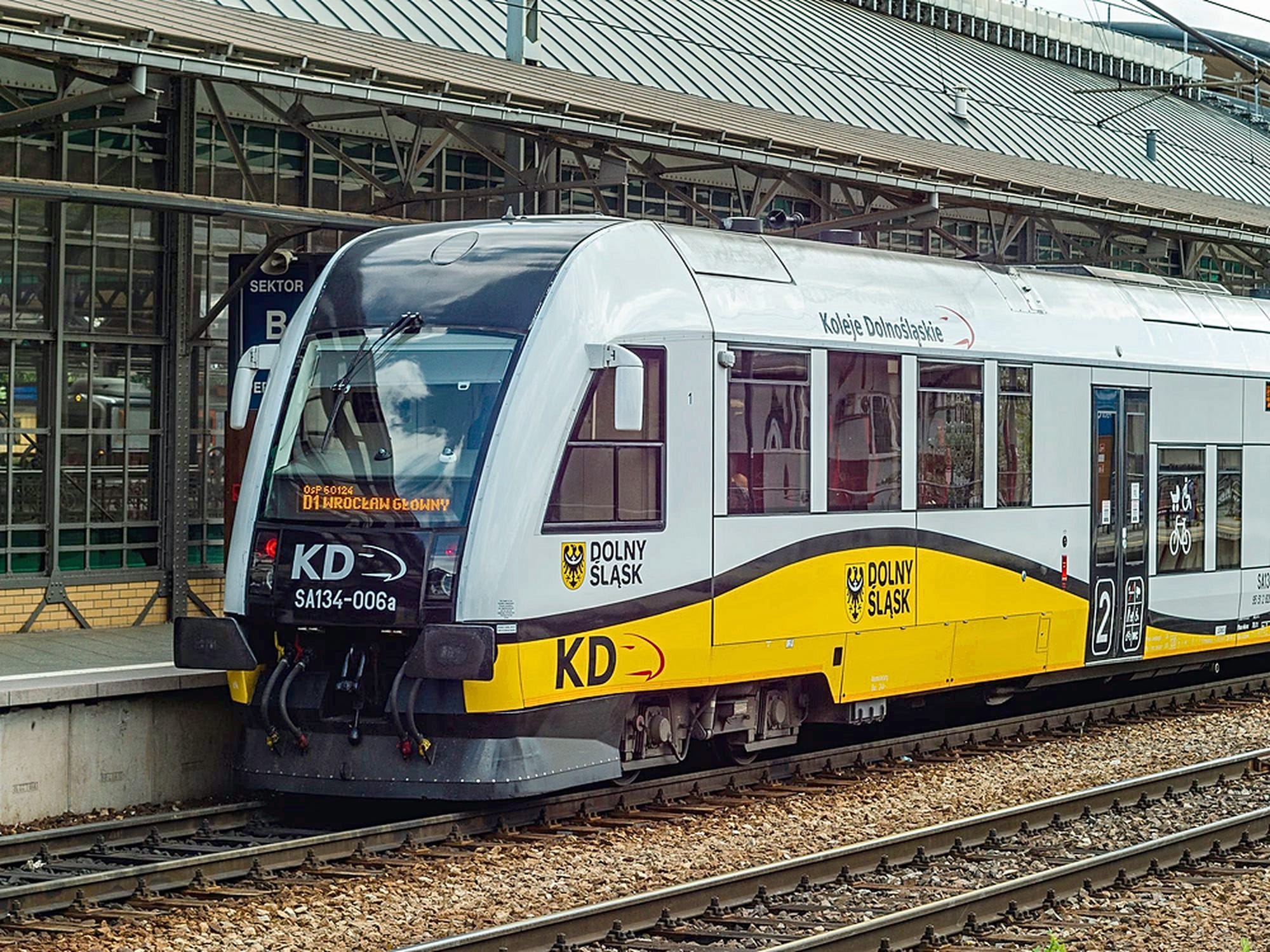
POLAND: Koleje Dolnośląskie, a regional operator in Lower Silesia, has excluded Turkish manufacturer Bozankaya from a tender for zero-emission trains, applying EU rules that allow third-country suppliers without trade agreements with the bloc to be shut out of public procurement. Three European manufacturers advance.
Koleje Dolnośląskie has qualified Pesa, Siemens Mobility and Škoda Group for the next phase of an innovation partnership covering up to four prototype trains with electric traction and a second zero-emission power source — hydrogen, battery or supercapacitor.
The exclusion appears to be among the first applications of the mechanism in a European rolling stock tender outside the Foreign Subsidies Regulation framework — a separate legal instrument that takes effect when a supplier comes from a country not covered by the EU’s international procurement agreements.
Innovation partnership, not standard tender
An innovation partnership is not a conventional bid process. Koleje Dolnośląskie sets the performance requirements; the three shortlisted manufacturers design the solution. The operator selects the best offer.
The legal basis for Bozankaya’s exclusion is a Polish implementation of EU procurement rules, in force from 9 September 2025, allowing contracting authorities to reject or apply less favourable conditions to suppliers from countries not party to the EU’s international procurement agreements. Turkey is not a signatory to the Government Procurement Agreement.
The Foreign Subsidies Regulation removed CRRC from a Lisbon light rail consortium in April. FSR targets state subsidies that distort competition. The Koleje Dolnośląskie case operates under a different legal basis: not whether a supplier received state support, but whether its home country has a reciprocal market access agreement with the EU. Both instruments can block non-EU suppliers, but on different legal grounds.
Three manufacturers, one prototype contract
The next phase invites Pesa, Siemens Mobility and Škoda Group to submit final offers for two to four prototype trains. Koleje Dolnośląskie’s network includes lines without electrification across four voivodeships and cross-border routes into the Czech Republic and Germany. EU funding rules now preclude diesel — trains operating in those conditions must carry a zero-emission alternative power source to qualify for EU co-financing.
Delivery is set at 30 months from contract award. The prototypes then enter 12 months of operational testing. A successful test phase triggers a framework order of up to 16 trains.
Bozankaya has previously supplied trams to Iași in Romania and holds an active tram contract in Elbląg, Poland. Those contracts are unaffected. The exclusion applies to this tender.