

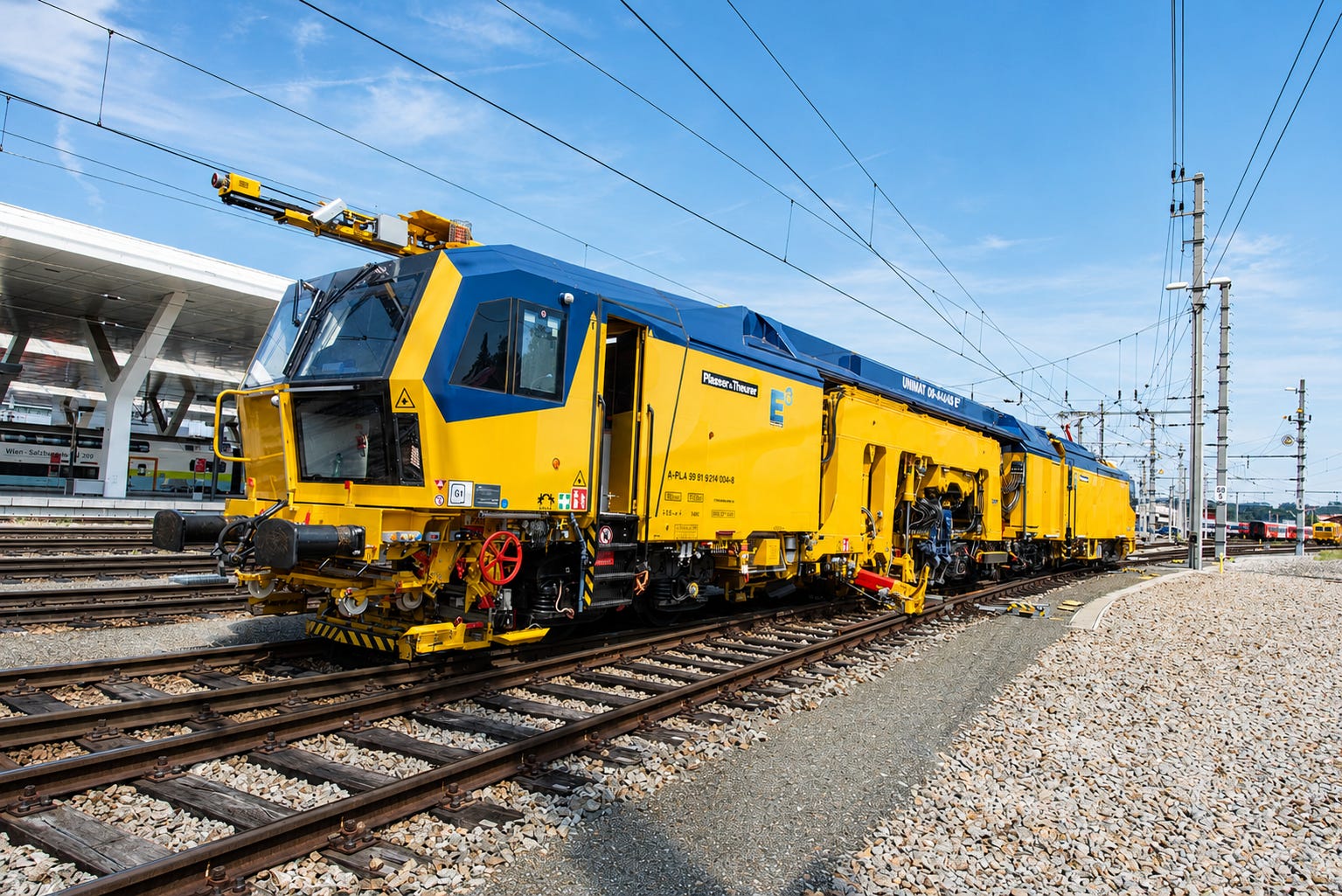
Austrian track machinery maker Plasser & Theurer posted record revenue of EUR 731m in 2025 — up 56% year on year — as a restructuring launched in 2024 restored profitability after several years of net losses.
The company reported EBIT of EUR 41.4m, up from EUR 11.6m the previous year. Order intake reached approximately EUR 1bn, also a record, leaving a backlog of more than EUR 1.6bn.
Plasser & Theurer attributes the recovery to high global demand and a marked improvement in delivery capability — the operational constraint that had depressed performance in prior years.
Delivery recovery drives order momentum
The company did not specify what drove the delivery improvement, but the scale of the order backlog suggests the constraint was supply-side rather than demand-side. With EUR 1.6bn in hand, forward visibility is now stable.
The result reverses a period of significant losses. EBIT in the prior year stood at EUR 11.6m — itself a partial recovery — while earlier years had seen the company run material deficits as production capacity and delivery reliability fell short of order demand.
New factory targets hybrid propulsion
A new assembly and commissioning facility at the company’s Linz site is due to open this year. The investment exceeds EUR 60m — the largest single capital commitment in the company’s more than 70-year Austrian history — and will create around 80 jobs.
The factory will support production of machines with hybrid propulsion systems for a sustainable reduction in CO₂ emissions.
Cost base and competition remain structural challenges
Plasser & Theurer exports 93% of its output from Austria, a high-cost operating environment. The company cannot simply pass cost increases on to international customers.
It competes against suppliers from economies where production costs are significantly lower — and where, in some cases, state subsidies reduce prices further. The company has called for competitive energy pricing, reduced regulatory burden and sustained public investment in infrastructure as preconditions for maintaining its Austrian manufacturing base.
The company’s order backlog of EUR 1.6bn covers production well into the coming years. The Linz investment is designed to expand output capacity before that backlog begins to clear.