

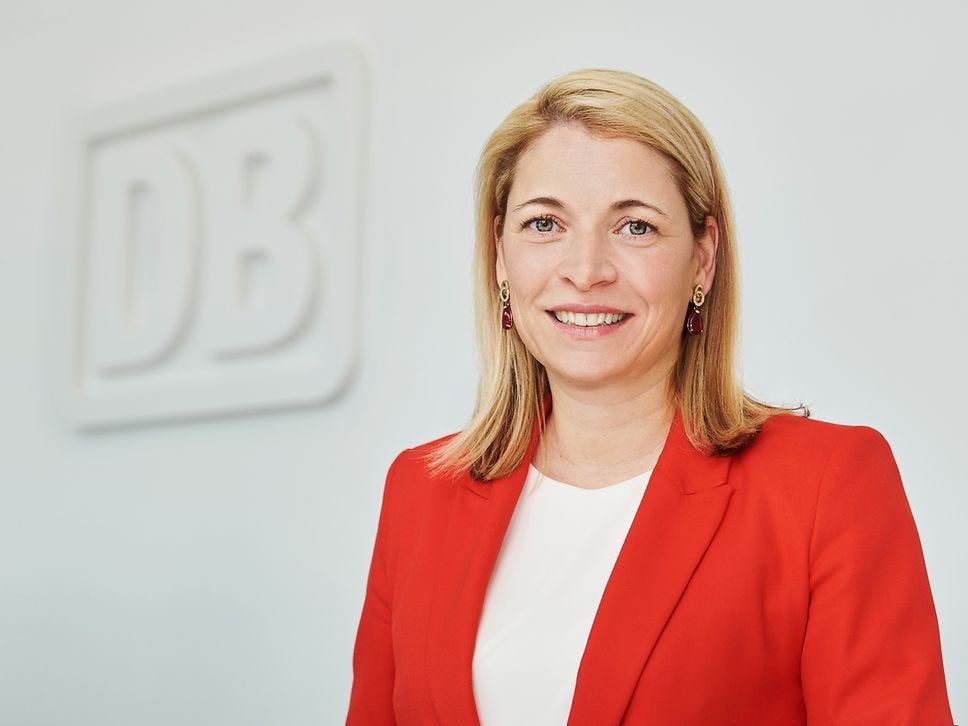
Deutsche Bahn has taken the first major step in a wide internal restructuring. New CEO Evelyn Palla is reducing management layers, cutting the number of top-level positions and consolidating governance into a leaner corporate structure. The aim is faster decision-making and a more operational focus at a time of sustained performance pressure.
The overhaul halves the number of senior units directly below the Management Board and reshapes the leadership of DB Regio and DB Fernverkehr. It also comes with clearer punctuality milestones:
• Palla aims for at least 60% punctuality in 2026
• DB continues to work towards the federal government’s target of 70% by 2029
DB is launching three immediate initiatives focused on:
• real-time passenger information
• cleanliness and service standards
• safety and security
DB presents the restructuring as a “Neustart” to make the company more reliable and customer-oriented, against the backdrop of years of service disruption, project delays and financial strain.
A leaner organisation to address structural constraints
The revised structure removes an entire management layer and reduces director-level units from 43 to 22. Several board portfolios are merged or dissolved, including the previous separation of technology, digital systems and infrastructure responsibilities. The aim is to shorten reporting lines and give operational teams clearer lines of escalation.
DB Regio and DB Fernverkehr follow the same principles. Executive roles are consolidated, and stand-alone marketing functions at board level are removed. The changes bring planning, operations and customer-facing activities closer together to link management decisions more directly to day-to-day service performance.
A mandate shaped by urgency — and an early move in freight
Palla took office on 1 October 2025 after leading DB Regio, where she built a reputation for operational focus and performance improvements. Her appointment was widely seen as part of the federal rail reform agenda and as a mandate to modernise DB’s governance and accelerate structural change.
Around three weeks into the role, she moved to replace the head of the freight division — an early decision that underscored expectations for accountability and performance. It also set the tone for the broader restructuring now underway.
Restructuring in a system under pressure
The internal overhaul comes shortly after two significant developments:
• the latest Stuttgart 21 setback, including cancellation of the planned partial opening in December 2026 (first operations now expected in 2027)
• organisational changes at DB Cargo, reflecting long-standing profitability and service challenges
These pressures sit within a wider context of maintenance backlogs, tight capacity and rising demand across the German network. The new structure is intended to support clearer decision-making and more predictable operational coordination during this period.
A necessary transition with uncertain outcomes
Implementation will run throughout 2026. While the streamlined structure should reduce friction in decision-making, improvements in punctuality and service quality will depend on how effectively responsibilities shift into new operating routines.
The move mirrors a wider European trend: major incumbents are simplifying governance to manage infrastructure pressure, digital migration and rising performance expectations.
Why it matters: DB’s governance structure shapes how quickly operational issues can be addressed across one of Europe’s largest rail systems. The key question is whether the new organisational model will deliver measurable improvements once it reaches day-to-day operations in 2026.