

DSB will run buses, not trains, to Flensburg in 2027
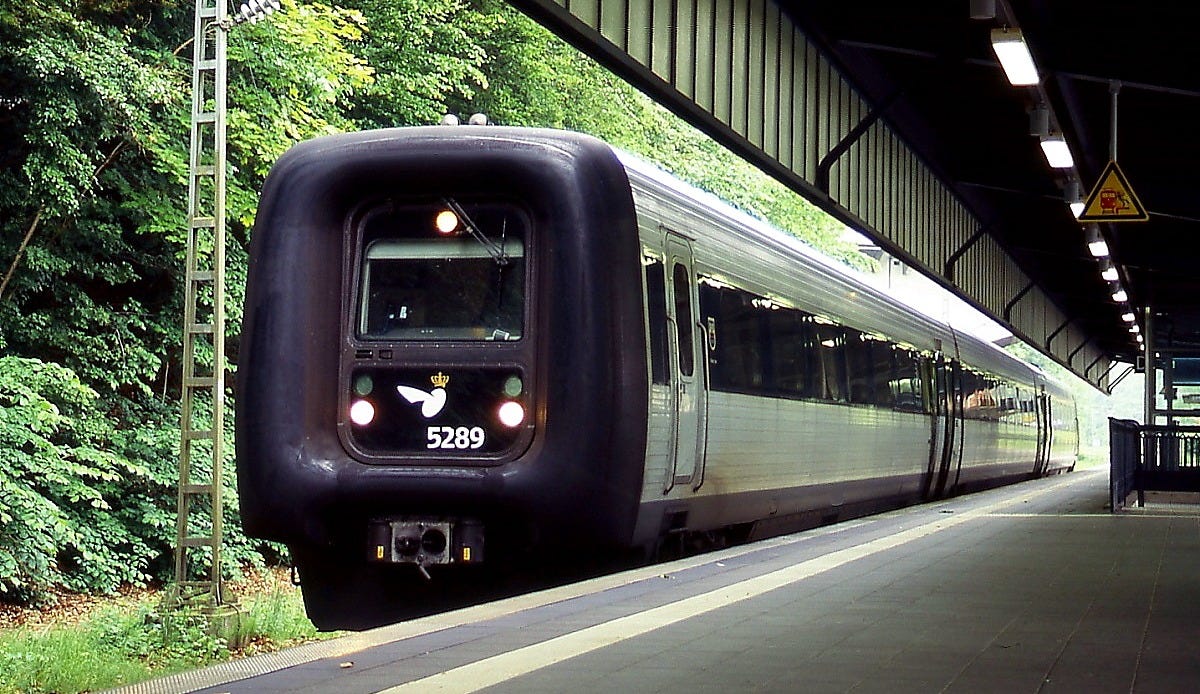
CROSS-BORDER: DSB will run buses instead of trains between Padborg and Flensburg throughout 2027, every two hours, rising to hourly in the daytime in spring, high summer and autumn. Its Intercity trains to Flensburg end on 13 December, a year before German trains are due to replace them.
The buses connect with trains in Padborg, on the Danish side of the border, and in Flensburg. Flensborg Avis, the Danish-language daily in Flensburg, reported this month that the end of the trains had previously been announced for December 2027.
Deutsche Bahn said the DSB trains used on the route are no longer approved in Germany. Der Nordschleswiger, the German-language newspaper in southern Denmark, linked the lost approval to the conversion of DSB’s IC3 diesel trains to ETCS.
Schleswig-Holstein signed a contract with DB Regio in December 2025 that extends the RE7 regional line from Flensburg to Tinglev in Denmark from December 2027. The buses fill the year in between.
EU budget draft cuts military mobility as hard as civil transport
EU: A Council draft of the EU’s 2028–2034 budget cuts military mobility and civilian transport alike, both by 11% from the European Commission’s proposal. Together they make up the EUR 40.6bn transport budget of the Connecting Europe Facility (CEF).
The Irish Presidency of the Council put the figures in a revised negotiating box. It cuts the overall budget by 8%, to EUR 1,622bn in 2025 prices. The amounts are in brackets and bind no government.
EU leaders discussed the draft at their summit on 15–16 October without reaching agreement and asked European Council President António Costa to take the negotiations forward.
The energy budget loses 20%, from EUR 26.5bn to EUR 21.3bn. Thirty-nine European transport organisations have asked EU leaders to restore transport funding at least to the level the Commission proposed.
Netherlands puts maintenance before new rail projects
NETHERLANDS: The government is putting maintenance ahead of new construction. It will spend EUR 18bn more on upkeep of track, roads, bridges and waterworks and is pausing a series of projects for lack of money. One new rail line, the Nedersaksenlijn from Groningen to Enschede, goes ahead, and the Lelylijn gets no decision.
Infrastructure Minister Vincent Karremans and State Secretary Annet Bertram set out the priorities for the national Mobility Fund and Delta Fund on 16 October. “Not everything can be done at once,” the government said.
The priorities also include a faster ERTMS rollout and essential work on the HSL high-speed line.
The government’s statement does not name the paused projects. Broadcaster RTL reported that 29 projects would be pushed back. The statement does not say how much of the EUR 18bn goes to rail.
RegioJet takes over Prague–Brno with most new trains still missing
CZECHIA: RegioJet takes over the Prague–Brno express line from České dráhy (ČD) in December without all of the 18 new trains it ordered from Polish manufacturer Pesa. The private operator is preparing to run part of the service with locomotives and coaches instead.
Pesa’s representatives expected four three-car and four four-car units to be in service in December, Czech transport news site Zdopravy.cz reported. That depends on a permit for trial operation from the Rail Authority.
That’s The Rail Agenda for today. If you found it useful, forward it to a colleague – they can read every story by signing up for free.