

Alstom runs late at home while Siemens wins the orders
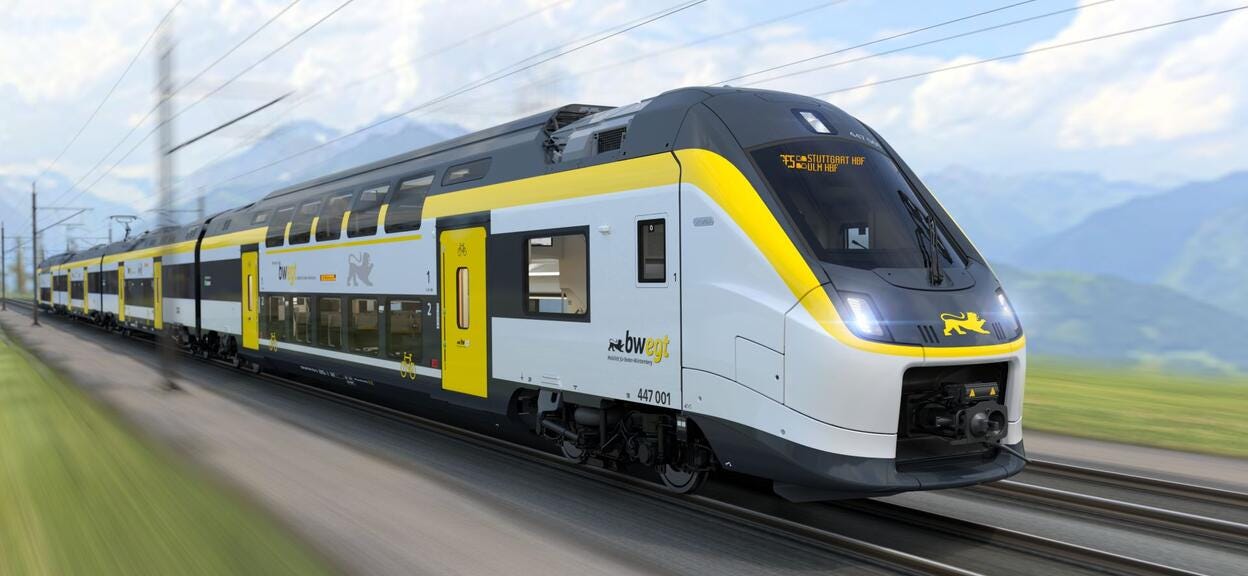
Alstom’s TGV M is due to take its first paying passengers on 9 November, two years late, and its double-deck trains for German regional lines have slipped to 2028. The buyers are keeping their contracts and waiting. In October, Siemens Mobility won new orders from Renfe, Romania and Lower Saxony.
For the operators and transport authorities that buy its trains, the question is what a buyer can do when its supplier is late on several programmes at once.
Renfe awarded Siemens a EUR 1.218bn contract for 30 Velaro Novo high-speed trains on 27 October, and Alstom did not bid.
The buyers have kept the contracts they signed. Renfe has already shown what the next ones will be judged on: whether the supplier can deliver on time.
Safety strike spreads to Iryo, Ouigo and freight operators
SPAIN: Train drivers at Iryo, Ouigo and five freight operators have been called out on 17 November, widening a safety strike at state-owned Renfe and Adif across the sector. The largest rail union also wants Renfe and Adif brought back under one roof.
The calls followed the collision of a Renfe and an Iryo high-speed train near Urda, in the province of Toledo, on 28 October, which killed more than 60 people.
The strike falls 12 days before the general election on 29 November.
Leo Express faces indefinite strike on Komárno line
SLOVAKIA: A union at Leo Express Slovensko will strike indefinitely from 12 November, putting trains on the state-contracted Bratislava–Komárno line at risk. Leo Express says the union’s demands exceed what it can afford.
The union wants a first collective agreement, higher base pay and binding rules on pay and working conditions.
Dutch speed up ERTMS rollout but fund it only to 2035
NETHERLANDS: The government has added EUR 1.6bn to replace the ATB train protection system with ERTMS around 2040, instead of well after 2050. The money covers the work until 2035. After that, the bill falls to future governments.
Until 2050, the programme is estimated to cost about EUR 14.4bn against EUR 11.8bn reserved, a shortfall of about EUR 2.6bn.
ÖBB passenger chief Sabine Stock to leave as reform reshapes role
AUSTRIA: ÖBB-Personenverkehr has re-advertised its top commercial post because Austria’s planned rail reform is set to turn the passenger operator into a limited company with fundamentally changed tasks. Sabine Stock, who holds the post, will not apply and leaves when her mandate ends on 28 February 2027.
A managing director of a GmbH is bound by the shareholder’s instructions, unlike a member of a stock corporation’s management board.
That’s The Rail Agenda for today. If you found it useful, forward it to a colleague – they can read every story by signing up for free.