

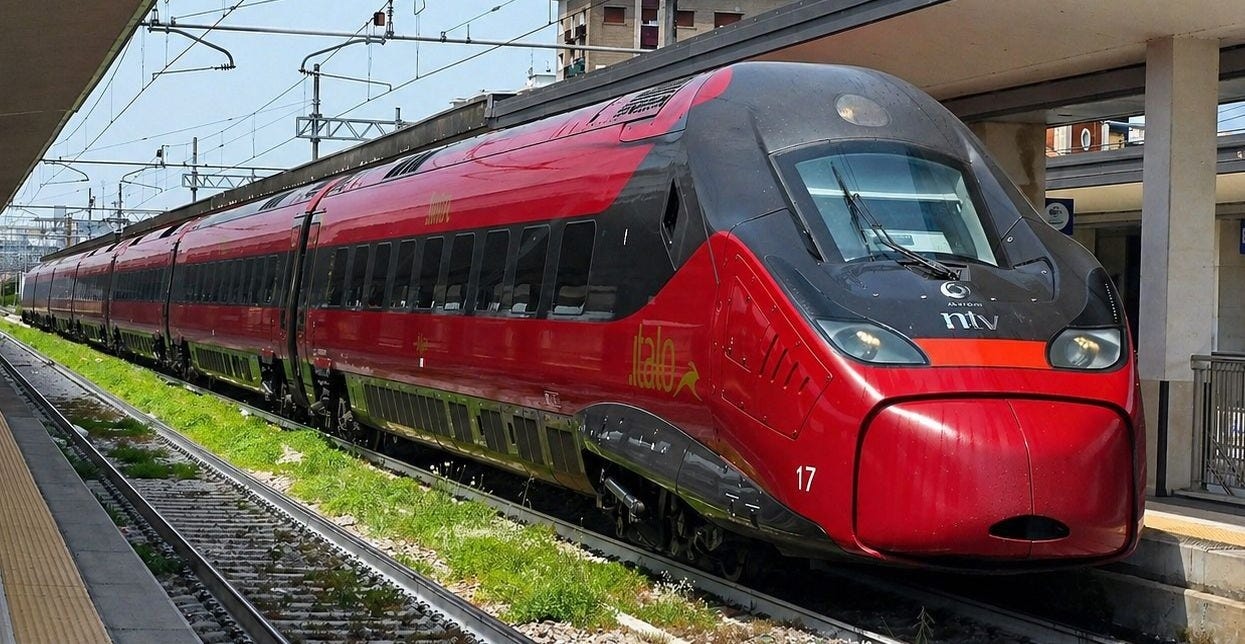
GERMANY: Italian open-access operator Italo has told infrastructure manager DB InfraGO it needs train path confirmation by end of May — or a June contract signing with Siemens for 26 high-speed trains becomes impossible and the project collapses.
CEO Gianbattista La Rocca told Il Sole 24 Ore on 29 April that the Siemens contract — covering 26 trains plus a 14-unit option, with delivery targeted for mid-2028 — cannot be postponed without causing delays that would make the company’s planned high-speed services on the Munich–Cologne–Dortmund and Munich–Berlin–Hamburg corridors unviable.
Italo established a German subsidiary in 2025 and obtained a passenger operator’s licence in 2025 after applying in October, but is still in the process of obtaining a safety certificate. Without confirmed train paths and station slots from DB InfraGO, the EUR 1.2bn procurement order cannot proceed to signature.
The deadline sequence
DB InfraGO must confirm access — train paths and station slots across a planned network of 18 cities and 1,300 kilometres — before the Siemens contract can be signed. La Rocca said the June signing date cannot move: a delay would extend delivery times to a point where the project becomes unviable.
The full investment totals EUR 3.6bn, covering train purchase, 30 years of maintenance, staff training, station investments and IT infrastructure. Italo plans 50 daily services across the two corridors, with first trains in service by mid-2028.
Open access as the model
Italo is Italy’s only private open-access high-speed operator, competing with state-owned Trenitalia since 2012. La Rocca has held up the Italian experience as the template for Germany, arguing that competition has doubled demand on Italy’s high-speed network to more than 60 million passengers a year and pushed fares down 40% — with both operators remaining profitable.
Germany’s long-distance rail market carries 110–120 million passengers annually, La Rocca told Il Sole 24 Ore, with the company projecting at least 40% further growth if competition is introduced.
The company says ongoing German network modernisation works are not a concern — it expects to be fully operational by the time the infrastructure programme concludes.