

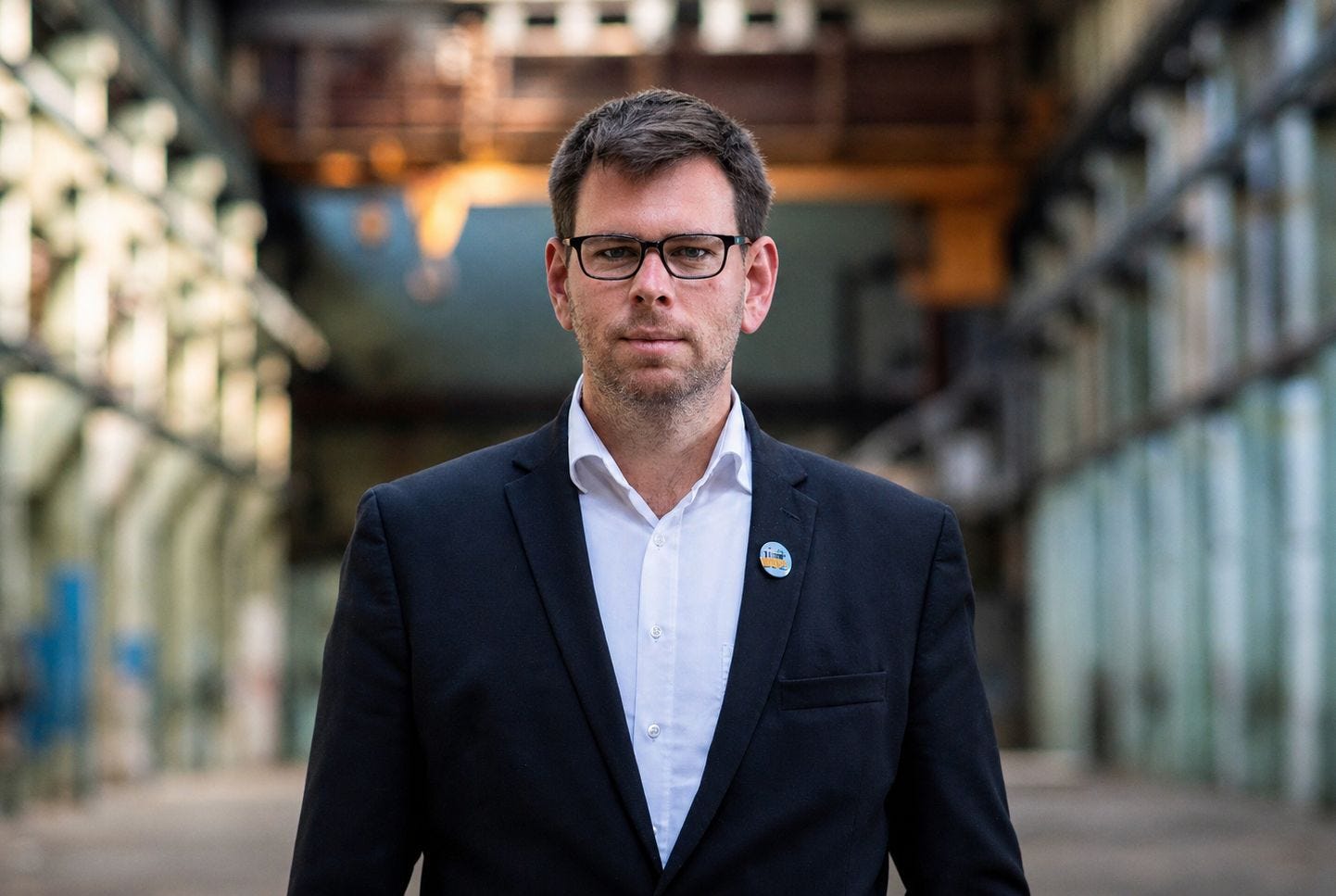
HUNGARY: Budapest transport chief Dávid Vitézy has been nominated as Hungary’s minister of transport and investment, giving the incoming Magyar government a reform-oriented operator with a direct mandate over MÁV and EU rail funding.
Vitézy, who rebuilt Budapest’s public transport authority BKK into a functioning network operator, was nominated by prime minister-elect Péter Magyar on 25 April.
The appointment signals a departure from 16 years of Orbán-era rail policy, with Vitézy expected to move quickly on MÁV restructuring and reactivation of EU infrastructure funds frozen under the previous government.
Vitézy’s mandate: MÁV reform and EU funds
Vitézy has been direct about what he is inheriting. Hungary’s national rail operator MÁV has not purchased new vehicles in years and is operating under crisis management, he said following his nomination. He warned that the coming summer would be more difficult than last year, with fewer and fewer vehicles remaining operational.
EU funding is central to any immediate path forward. Vitézy has stated that access to European funds is a precondition for new vehicle acquisitions — funds that were effectively frozen under the Orbán government amid rule-of-law disputes with Brussels. Restoring that access is among his first priorities.
What BKK established
The appointment draws directly on Vitézy’s record as founding CEO of BKK, Budapest’s transport authority, between 2010 and 2014. Under his leadership, BKK consolidated the city’s fragmented transport operations into a single network operator, introducing integrated ticketing and a unified passenger information system across bus, tram and metro services.
MÁV presents a different challenge — a national network in operational decline, not a city system requiring integration. But the core task is similar: restoring basic functional reliability to a system that has deteriorated under sustained underinvestment.
Magyar has asked Vitézy to lead MÁV out of its current crisis, implement the Tisza party’s transport programme, and use regained EU funds to launch what he described as a second golden age of Hungarian rail. Vitézy has said he expects to do professional rather than political work in the role.
The new government is not yet formally in office.