

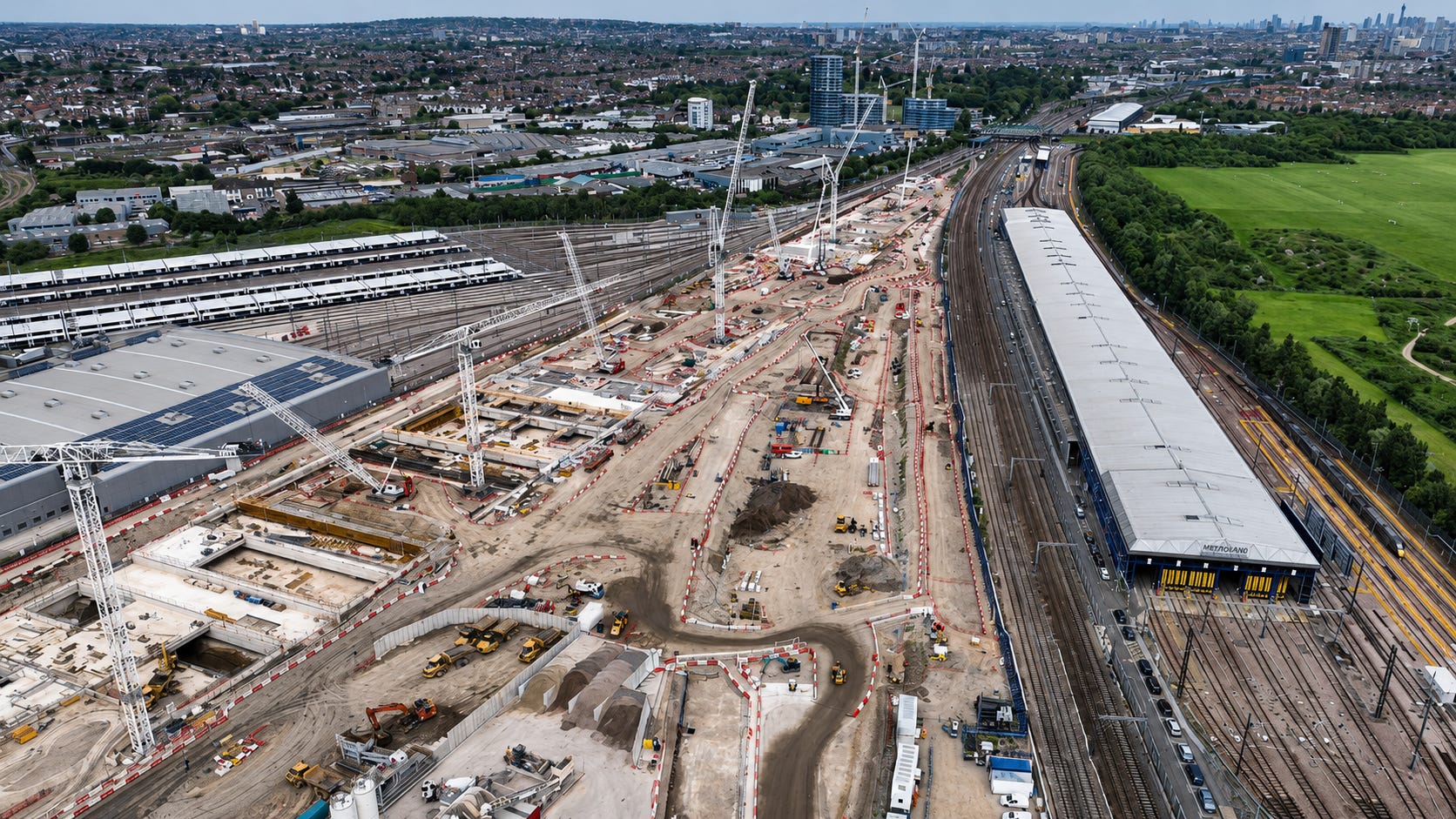
UK: HS2 will cost up to GBP 102.7 billion (EUR 118.8 billion) — three times its 2019 estimate of GBP 35–45 billion — with top speed cut from 360 to 320 km/h and first services now not expected before 2036.
Transport Secretary Heidi Alexander set out the revised parameters in a statement to the House of Commons on 19 May, alongside a report documenting systemic civil service failures in how the project was managed.
First services will run between Old Oak Common in west London and Birmingham; trains will not reach the central London terminus at Euston before 2040–2043.
What the reset changes
The revised cost range of GBP 87.7–102.7 billion, expressed in 2025 prices, reflects accumulated scope changes, inflation and management failures over more than a decade. The original GBP 35–45 billion estimate dates from 2019.
No single cause accounts for the gap. The Lovegrove report, published the same day as Alexander’s statement, found that civil service oversight of the project had been systemically deficient — with cost and schedule risks consistently underreported to ministers.
The speed reduction from 360 to 320 km/h could save up to GBP 2.5 billion and bring services at least a year earlier. 320 km/h is the standard operating speed on most European high-speed infrastructure; the higher figure was a design ambition that added cost without proportional network benefit.
Two termini, one open question
Old Oak Common is a new interchange hub in west London, not a central London terminus. Passengers travelling to the city centre will connect to the Elizabeth line until the Euston extension is complete.
Tunnelling between Old Oak Common and Euston began in January 2026. Full services to Euston are not expected before 2040–2043 — a window that remains subject to further funding decisions.
HS2 was originally conceived as a spine connecting London, Birmingham, Manchester and Leeds. The northern legs were cancelled under the previous Conservative government; the reset confirmed by Alexander covers the remaining London–Birmingham section only.
Civil service failure on record
The Lovegrove report gives the reset a weight that routine delay announcements lack. It documents how cost and schedule risks were managed inside government — and finds oversight inadequate.
It places on parliamentary record that one of Europe’s largest infrastructure projects was allowed to drift for years without adequate oversight, and that ministers were not given the information they needed to intervene.