

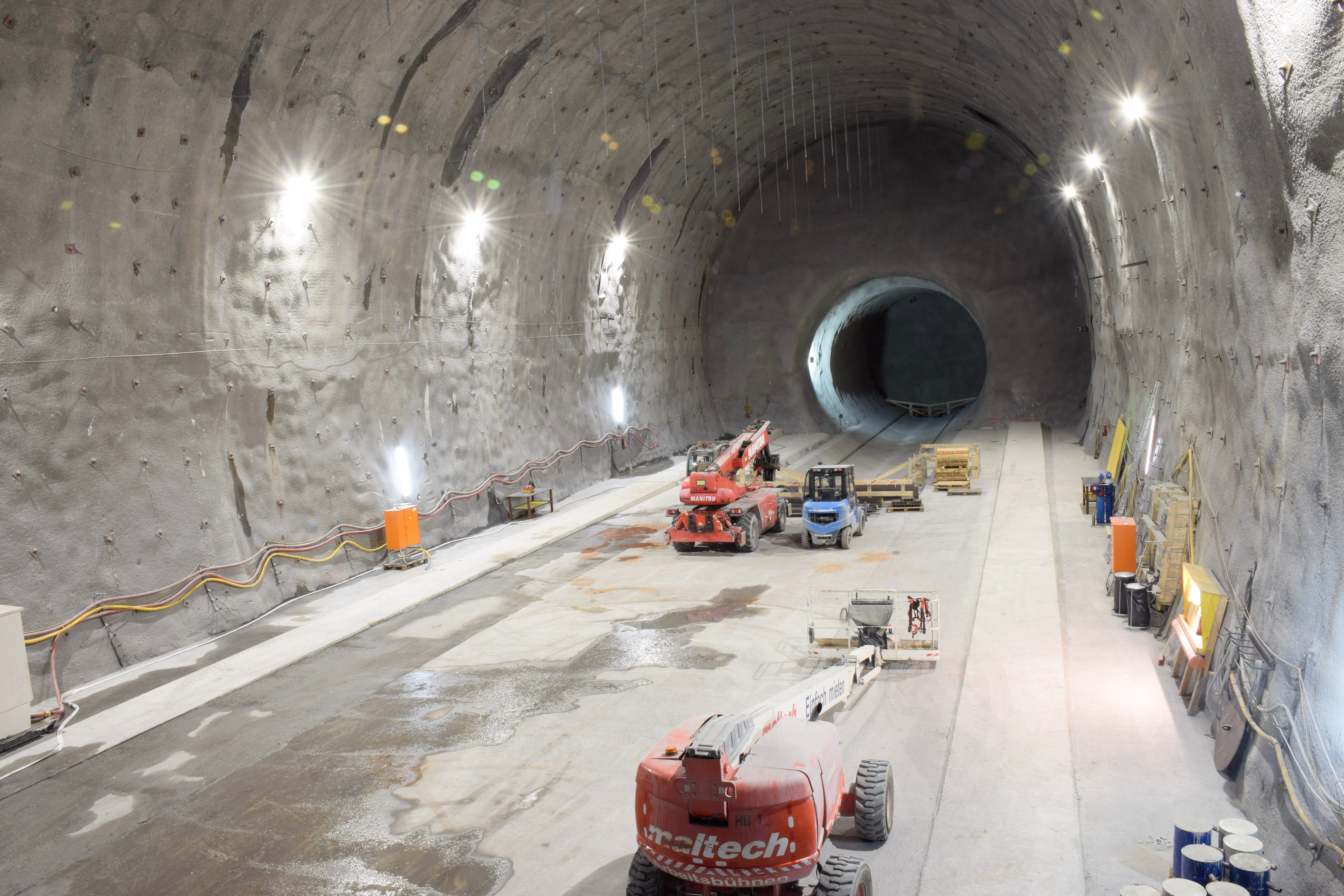
GERMANY: The new line meant to carry Brenner Base Tunnel traffic through Bavaria is planned to enter service in 2043 — eleven years after the tunnel itself is scheduled to open. The federal government has informed the Bundestag that preliminary planning is complete, moving the project’s further course into parliament’s hands.
The report to the Bundestag sets out the preferred alignment developed by DB InfraGO: a roughly 63 km double-track line from Grafing, east of Munich, to the border at Kiefersfelden.
More than half the route runs in tunnels, with a design speed of 230 km/h and a block-densification upgrade between München-Trudering and Grafing. The report puts project costs at around EUR 11.4bn — a figure that excludes the roughly EUR 6.6bn in additional demands raised by the region during planning.
The milestone plan gives the project its weight — and its problem. Planning approval documents are to be filed in 2028, construction is to start in 2034, and the line is to open in 2043. The Brenner Base Tunnel broke through at the border on 28 July and is scheduled to open in 2032.
A report is not a construction decision
The line’s need has been legally established since 2016, when it entered the priority category of the Federal Transport Infrastructure Plan 2030. The parliamentary process concerns the project’s further course and the additional demands raised in the region, and requires no change of law.
Nothing in the report commits funding. That is where the criticism from Austria lands.
FPÖ deputy transport spokesman Gerhard Deimek said on 4 August that a report to parliament is neither a construction decision nor financing, and warned of an eleven-year capacity gap. He called on the Austrian government to demand, together with Italy, a binding German construction and financing roadmap and to put the issue on the EU transport council’s agenda.
He pointed to the billions Austria and Italy have already invested in the tunnel. Tirol’s governor Anton Mattle had shifted the political focus to the access routes on the day of the breakthrough.
The cost of pausing is priced into the report
The document carries its own warning about the funding risk. It prices the cost of delay against a separate forecast that already factors in statistically quantified risks: if a lack of federal money interrupts the project for five years, that forecast rises by around 15 per cent through price escalation alone.
A ten-year interruption adds around 30 per cent. The route forms part of the Scandinavia–Mediterranean TEN-T corridor, which the project is designed to serve.
The existing Inntal line already runs close to capacity. DB InfraGO says the planned route meets the federal transport plan’s traffic targets and can absorb the additional freight the tunnel will enable.
Whether it gets the chance now depends on a parliament handed a 2043 date and a report that prices every year of delay.