

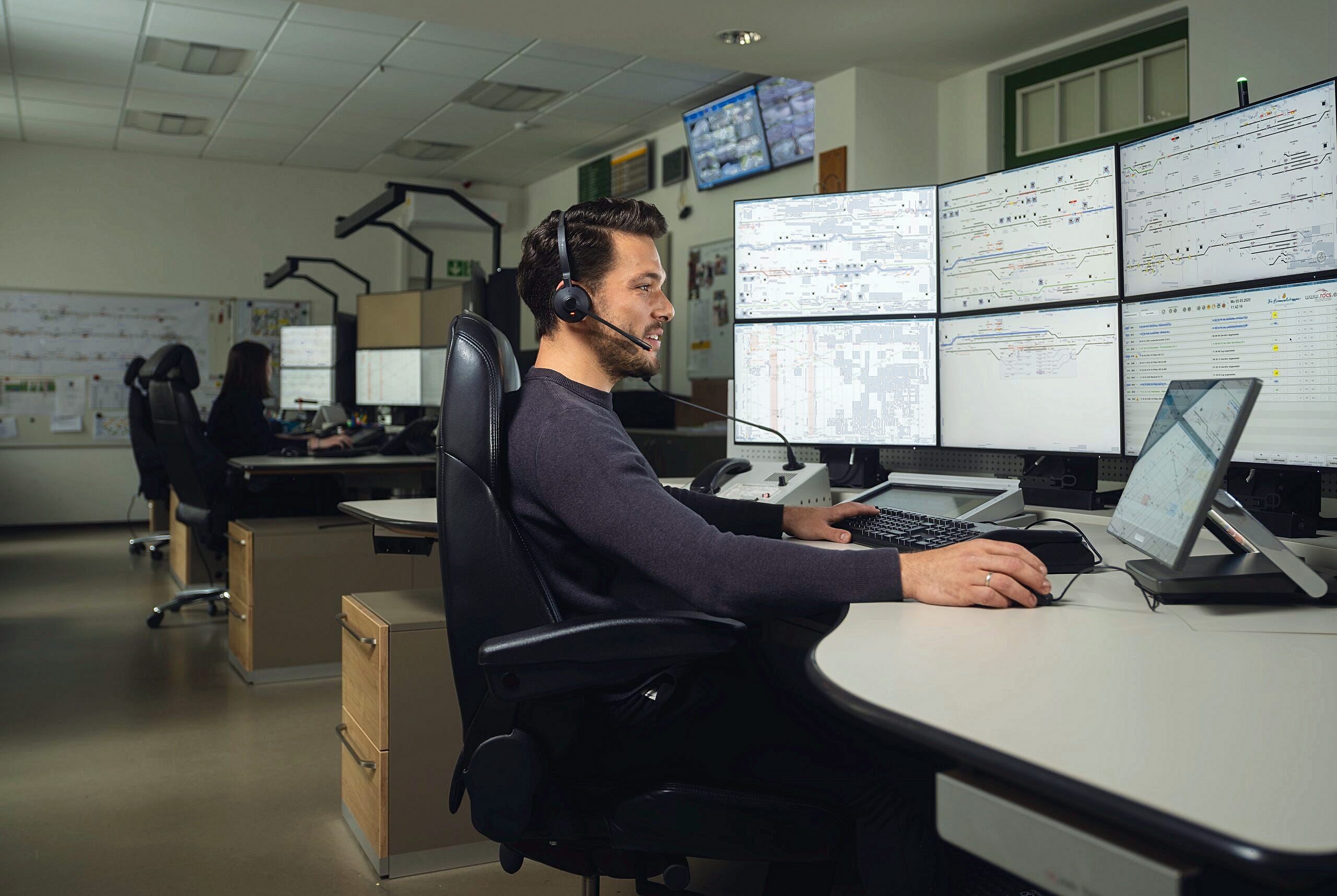
Austrian communications specialist Frequentis is moving to majority control of Spanish MCX software developer Nemergent Solutions, consolidating the technology stack underpinning its FRMCS migration platform as large-scale European trials begin this summer.
Frequentis will increase its stake in Nemergent from 25% to 51%, effective July 2026, absorbing the company it has partnered with since 2020 into the Frequentis Group. The announcement, made 16 June, also deepens a strategic partnership with Dutch connectivity specialist Lyfo.
Nemergent’s mission-critical services technology is already the core of Frequentis MissionX — the platform the company positions as its primary pathway for railway operators migrating from GSM-R. The consolidation gives Frequentis direct control over development resources at a point when FRMCS validation under the EU-Rail MORANE 2 programme is moving from lab testing to live field trials.
MCX platform tightened as field trials approach
Frequentis has held a stake in Nemergent since 2020, raising it to 25% in May 2024. The move to majority ownership is not a pivot — it formalises a dependency already built into MissionX.
MissionX is Frequentis’ integrated platform for safety-critical rail communications, covering dispatcher voice, broadband data and the interworking functions that allow GSM-R and FRMCS to operate in parallel during migration. Majority ownership of Nemergent removes the structural risk of a key software component sitting outside the group at the moment migration contracts begin to be awarded.
Timing tied to FRMCS transition window
Across Europe, more than 130,000 kilometres of GSM-R infrastructure remain in operation. The technology underpins safety-critical voice communications and forms the bearer layer for ETCS on most national networks.
Decommissioning pressure intensifies from 2030, but infrastructure managers and operators are being pushed to begin migration planning now — MORANE 2 field trials, which Frequentis participates in, are scheduled to start this summer.
Railway organisations making procurement decisions in the next two to three years will expect suppliers to demonstrate stable, fully controlled technology stacks. A supplier group that does not control its own core software stack carries a different risk profile when contracts are being awarded.
Manuel Hintermayr, Frequentis Director Mission Critical Services, confirmed in the announcement that the consolidated MissionX ecosystem is intended to support large-scale FRMCS railway programme rollouts.
Parallel network problem addressed by Lyfo partnership
The deepened partnership with Lyfo targets the operational problem that defines the transition period itself. For several years, railway networks will run GSM-R and FRMCS simultaneously, and safe operation depends on maintaining uninterrupted connectivity across both.
Lyfo’s multi-network switching technology automatically moves between available networks when one becomes unavailable — addressing the continuity gap that arises precisely when neither system is yet fully dominant.