

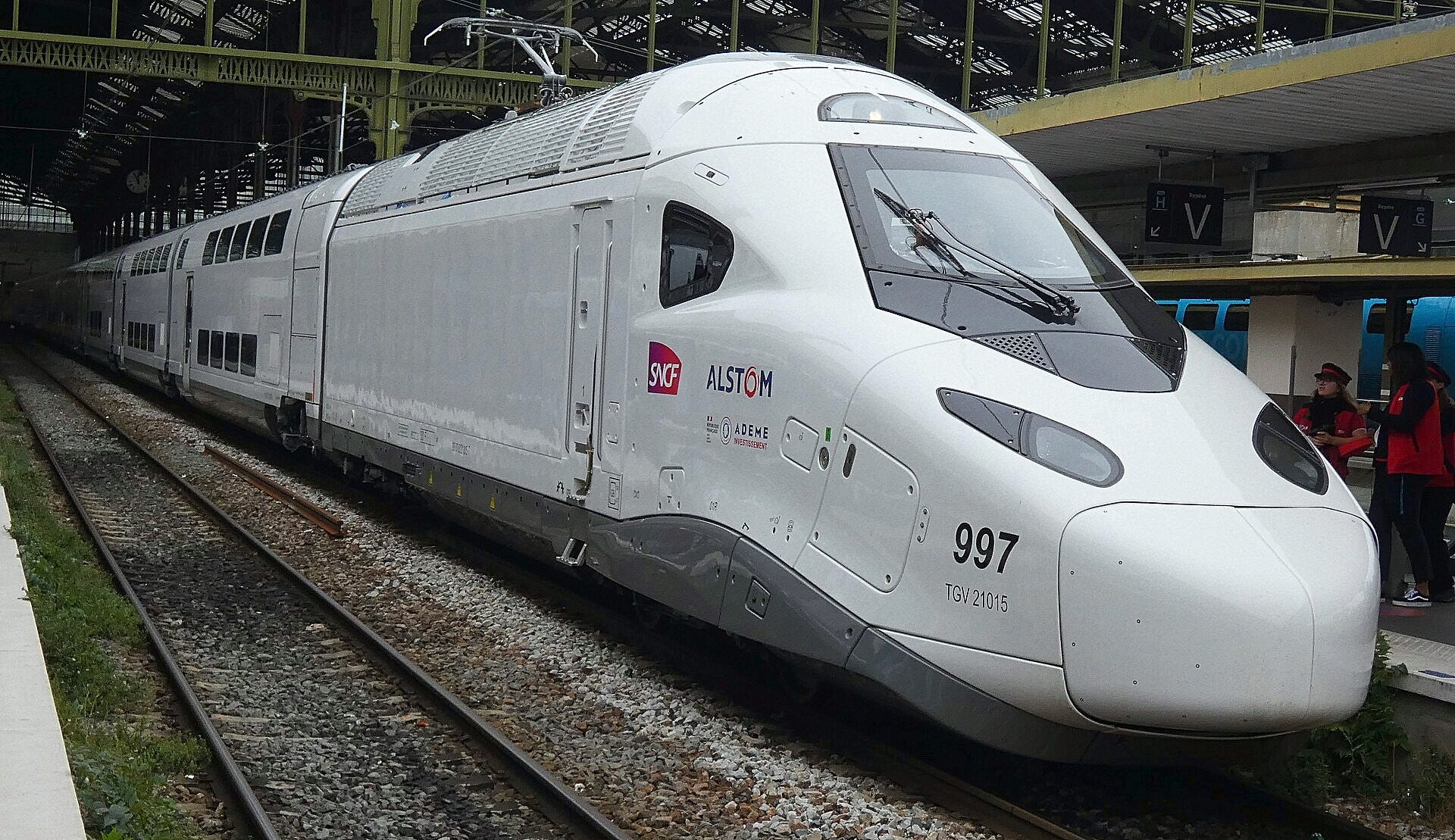
FRANCE: France’s next-generation high-speed train has cleared its final regulatory hurdle, but the first passengers will not board until September — the fourth time the commercial launch date has moved since the programme began.
The European Union Agency for Railways (ERA) issued formal authorisation to place the TGV M on the market on 29 May, confirming the train meets European safety and interoperability requirements after a testing campaign covering nearly one million kilometres since 2023.
SNCF Voyageurs and Alstom announced the same day that commercial operations under the TGV INOUI brand would begin in early September 2026, not 1 July as last communicated. The companies cited a multi-week pre-commercial phase involving hundreds of staff from both organisations as the reason for the delay.
Delivery schedule and fleet ramp-up
Two trainsets will be delivered in June, rising to six by the end of August and 13 by the end of 2026. The pre-commercial phase will run across the French national network, covering onboard systems, operating procedures and crew familiarisation before the first six sets enter the commercial timetable in September.
The full order stands at 130 trainsets for SNCF Voyageurs and 30 for Eurostar. The ERA authorisation covers the dual-voltage domestic French configuration — 1.5 kV DC and 25 kV 50 Hz AC. Eurostar’s cross-Channel variant requires a separate authorisation process.
A programme four years in the making
Alstom submitted the final approval dossier to the ERA in December 2025, at which point the company publicly committed to a 1 July entry into service. The ERATV register recorded the first approved configuration on 22 May. The 29 May announcement confirmed both the authorisation and the revised September date simultaneously.
The programme has run a testing campaign since 2023. Alstom states the TGV M delivers 740 seats — 20% more than the current generation — alongside 20% lower energy consumption and 30% lower maintenance costs.
SNCF Voyageurs chief executive Christophe Fanichet described the ERA approval as the culmination of a long-term industrial project. Alstom chief executive Martin Sion said the authorisation reflected the quality of the application and the commitment of the teams involved since testing began.
What the delay costs
July and August will run without TGV M. For SNCF Voyageurs, that means the busiest travel period of the year passes on the existing fleet, at a moment when new competitors — Trenitalia France already operates on French high-speed routes, and Velvet is targeting a 2028 entry — are building their own capacity.
The September start gives Alstom and SNCF six sets in the timetable from the outset, with the fleet growing to 13 by December. The ramp-up is gradual by design, not by constraint, according to both companies.
Whether that framing holds will become clearer once the first trains enter regular service.