
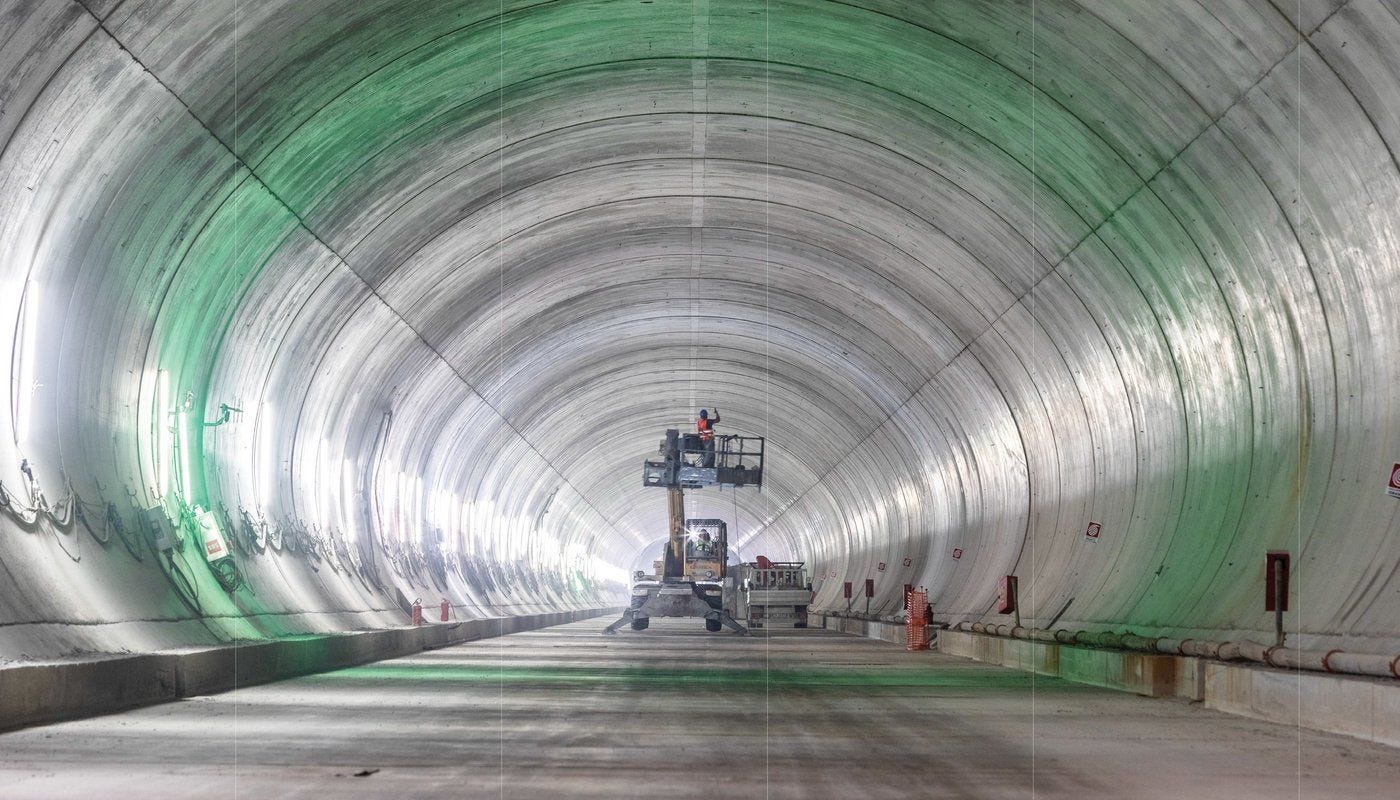
CROSS-BORDER: The western bore of the Brenner Base Tunnel now runs unbroken over 55 km from Innsbruck to Franzensfeste after tunnel boring machine Wilma broke through on 25 August. It is the first of the two main bores to be excavated end to end.
Wilma reached its end point in the H53 Pfons–Brenner contract section after 706 days of driving, having started on 18 September 2024. The machine bored just under 7.5 km and installed more than 22,000 concrete lining segments, according to project company BBT SE.
The completed bore joins a series of individual tunnel sections between the Sill gorge near Innsbruck and Franzensfeste in South Tyrol. The eastern bore, the interior fit-out and the railway systems remain to be built before trains can run.
A 2,700-tonne machine in four shifts
Wilma is 180 metres long, has a cutting diameter of 10.37 metres and weighs around 2,700 tonnes. Six to eight workers ran the drive around the clock in four shifts.
The rock is hard central gneiss with temperatures around 30 °C at tunnel level. The machine crossed several fault zones where ground conditions changed within a few metres, BBT SE said.
Segments by rail, spoil by conveyor
Concrete segments weighing around ten tonnes each arrived by train through the Wolf rail siding and were fed directly into the machine. Excavated rock left the site on conveyor belts to the Padastertal disposal area.
Michael Knapp, BBT SE’s project manager for the section, said the logistics concept saved around 45,000 lorry journeys on the road.
Ten kilometres left when the countries were joined
Austria and Italy were first connected through the main tunnel on 28 July, at a breakthrough around 1,400 metres below the Brenner Pass. At that point 220 of the 230 km tunnel system had been excavated, with the last drive in the H53 section still running towards Innsbruck.
Tyrol’s transport councillor René Zumtobel called the breakthrough a further signal to Germany over the outstanding route decision for the northern access line in Bavaria, and said European transport policy needs the tunnel and its access lines to move traffic from road to rail. The German access route is not planned to be ready before 2043.

