

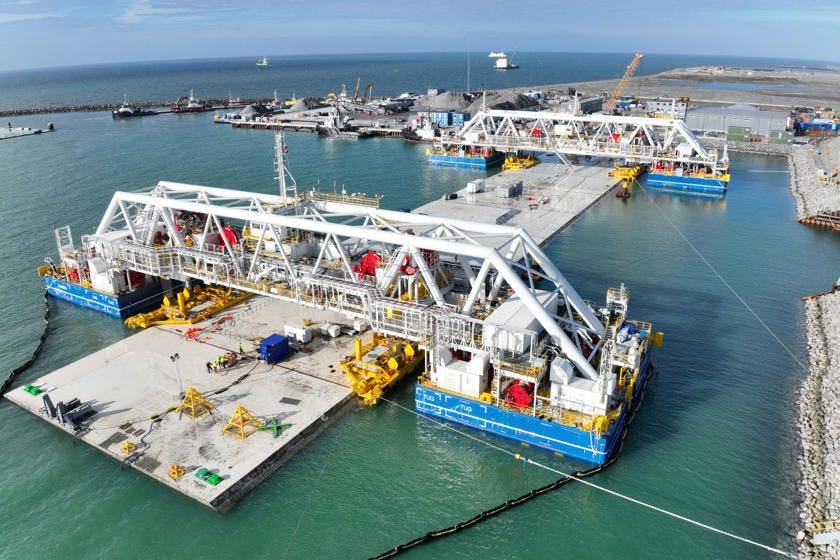
DENMARK: Specialised vessels built to install the Fehmarnbelt tunnel are undergoing final tests after the system was used with a completed tunnel element for the first time.
The vessels, known as IVY 1 and IVY 2, will transport and lower prefabricated concrete sections weighing about 73,000 tonnes each. They are now being tested ahead of certification by the Danish maritime authorities.
The system will be used to float the elements out from the production site in Rødbyhavn and lower them into a prepared trench on the seabed between Denmark and Germany.
Installation system tested before first immersion
The Fehmarnbelt fixed link is being built as an immersed tunnel made up of large prefabricated concrete elements produced at a purpose-built factory in Rødbyhavn.
Each element will be floated from the factory basin to the construction site, where the immersion vessels position it above the seabed trench and gradually lower it into place.
The pontoons hold the structure afloat during transport and control its position and descent during installation.
The first immersed element will be connected to the tunnel portal on the Danish side before additional sections are installed across the Fehmarnbelt.
Major cross-border rail and road link
The Fehmarnbelt fixed link will run for around 18 km between Rødbyhavn in Denmark and Puttgarden in Germany and is expected to become the world’s longest immersed tunnel.
The connection will replace the existing ferry crossing and form part of a key north–south transport corridor linking Scandinavia with central Europe.
Construction work has included dredging the seabed trench and producing the concrete elements required for the tunnel structure.
Immersion of the first element will mark the start of tunnel assembly beneath the Fehmarnbelt.