

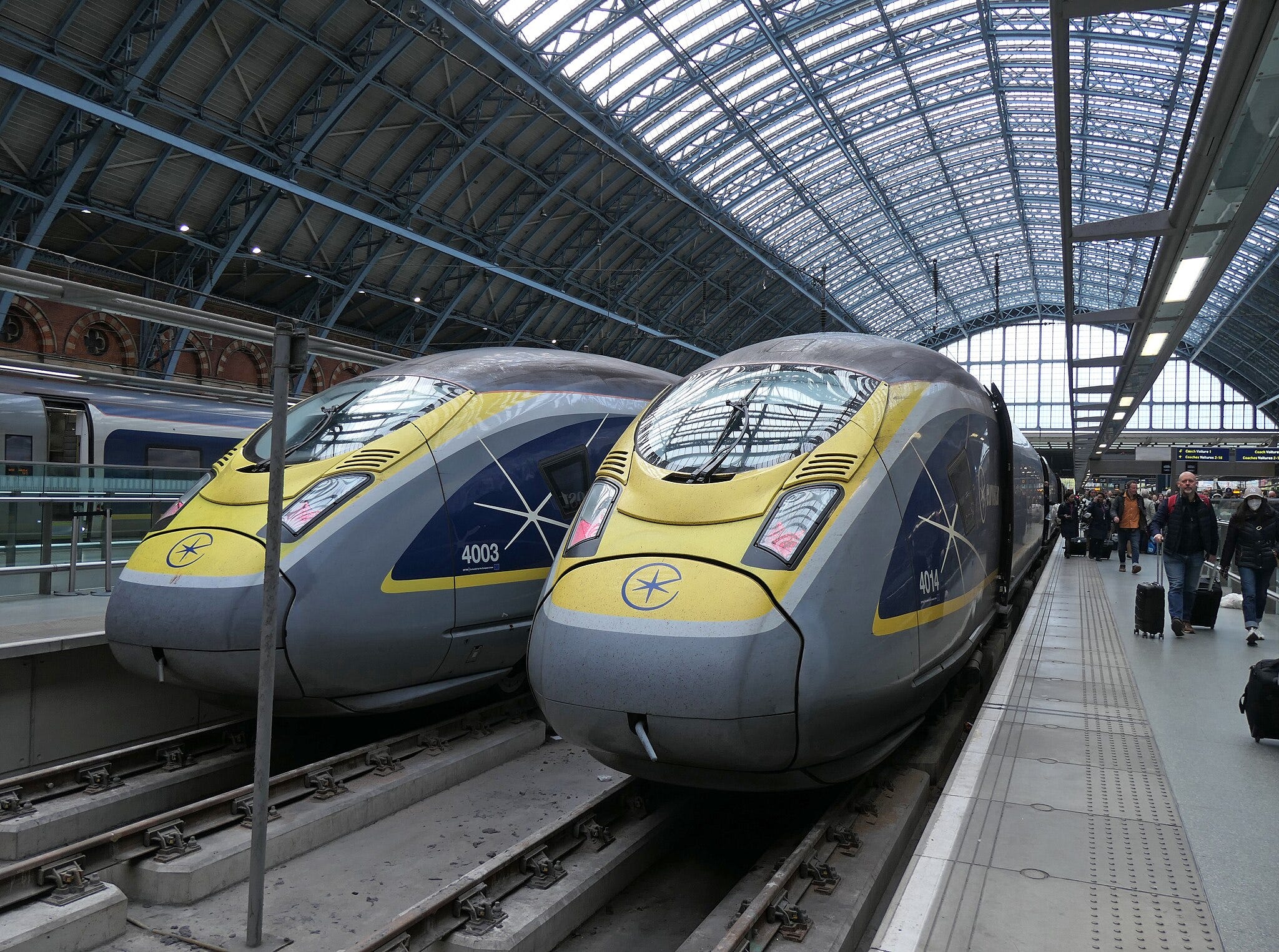
Eurostar and Deutsche Bahn have signed an agreement to prepare a direct high-speed service between London and Germany, reviving a long-standing ambition to extend Channel Tunnel operations beyond France, Belgium and the Netherlands.
The agreement launches joint work on timetables, rolling-stock planning, border procedures and regulatory approvals. While no launch date is set, the move gives the project a formal structure and a shared workplan.
What the agreement sets in motion
Eurostar and DB will now assess which routes could sustain viable services, how many trainsets would be needed, and how border checks could be handled at London St Pancras and on the continent. Any operation will require coordinated train paths across HS1, SNCF Réseau, Infrabel and DB Netz, along with sign-off from the Channel Tunnel Safety Authority.
A previous attempt to run ICE services between Frankfurt and London was halted more than a decade ago, mainly due to safety rules and certification issues. This new effort begins with a joint technical and operational framework rather than a predefined commercial plan.
Operational hurdles still define the timeline
Several constraints still limit how quickly a London–Germany service can emerge. Border arrangements, rolling-stock availability and train-path sequencing across four national networks remain key challenges. Both operators say the work ahead should clarify these before any formal launch decision.
Capacity is central. Eurostar’s e320 fleet is certified for Channel Tunnel operations, but dedicating sets to a long Germany route would require careful balancing against demand to Paris, Brussels and Amsterdam. DB brings operational experience on the continental side, but the approvals process remains complex.
A potential extension of Europe’s high-speed map
If realised, a UK–Germany link would open a new long-distance market through the Tunnel and connect London directly with major hubs in western Germany. It would also mark the first expansion of cross-Channel passenger operations in more than a decade.
Why it matters: A UK–Germany link would extend the Channel Tunnel’s reach into central Europe and broaden the cross-border high-speed market.
What’s next: Eurostar and DB will define route options, fleet needs and a feasibility timeline during 2026. But border procedures and Channel Tunnel safety approvals remain the critical constraints.