

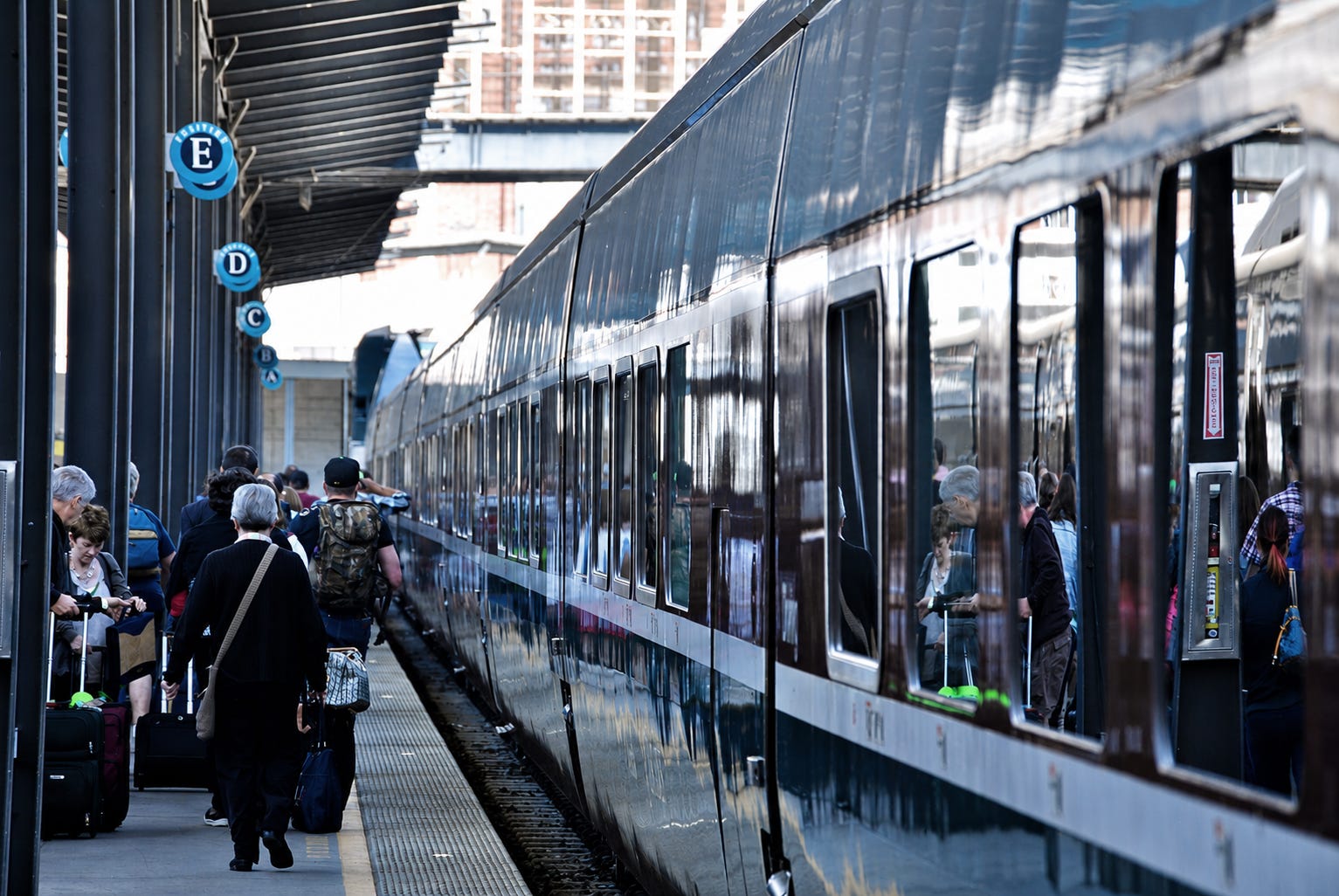
EU: The European Commission has proposed a single ticketing system for cross-border rail travel. The proposal would require national operators to sell competitors’ tickets on their own platforms and would give passengers full protection of their rights across operators in a single booking.
The package, presented on 13 May, simplifies planning and booking for regional, long-distance and cross-border travel — particularly for journeys involving multiple operators — and extends full passenger rights to travellers holding a single ticket across different operators.
Alberto Mazzola, Executive Director of the Community of European Railway and Infrastructure Companies (CER), rejected the platform obligation as an unprecedented regulatory overreach, comparing it to forcing Lufthansa to sell Ryanair flights. Cross-border journeys account for only seven percent of European rail journeys, he said — because the infrastructure is lacking, not because the ticketing system is flawed.
CER has not opposed the goal of simpler cross-border booking, but argues the proposal targets the wrong problem.
Operators must list and sell competing services
Under the proposal, passengers would be able to find, compare and purchase combined services from different rail operators in a single transaction on a ticketing platform of their choice — either an independent platform or the operator’s own sales channel. Rail operators with a market share of 50 percent or above of national railway services would be required to open their online ticketing platform to any requesting operator or organiser of railway services.
Operators would be required to enter into commercial agreements with third-party online ticketing providers on fair and non-discriminatory terms, giving those platforms access to display, link and resell rail services. Exceptions apply for SME services, historical and tourist services, and standalone urban and suburban networks. Tickets would need to be available for purchase at least five months before departure.
Passenger rights under the single ticket would cover the entire journey: the operator responsible for a delay would be required to reroute the passenger, provide reimbursement and pay compensation. Passengers missing a connection under a single ticket would be entitled to continue on the next available service from the same operator, subject to seat availability.
For scheduled journeys of 12 hours or more involving multiple transport contracts, compensation would be calculated per individual contract rather than for the journey as a whole. The cap does not apply where the single ticket includes a night train service or constitutes a through-ticket.
CER: infrastructure, not ticketing, is the barrier
Alberto Mazzola expanded his criticism beyond the platform obligation. Operators that had invested in their own ticketing platforms would be forced to open them to “free-riders”, he said, while the data-sharing requirement would primarily benefit large US-operated booking platforms — shifting negotiating power away from European rail companies.
The CER executive director’s core argument challenges the proposal’s underlying premise. Cross-border journeys represent seven percent of European rail travel not because booking is complicated, but because the infrastructure is not there. Fixing the ticket does not build the track.
CER’s position is not that the status quo is acceptable. The industry body has consistently called for simpler cross-border booking and greater integration. Its objection is to the mechanism — specifically the platform obligation and the unified booking horizon — not the destination.
Package now faces Council and Parliament
The three proposals adopted on 13 May now enter the ordinary legislative procedure, requiring approval from both the Council of the European Union and the European Parliament. Member states are expected to defend incumbent operators’ positions in Council negotiations, where the platform obligation and booking horizon requirements face the strongest resistance.
No timeline for adoption has been set. The proposals may be amended significantly before becoming law. Once adopted, operators would have one year to update their systems.