

EU: The European Public Prosecutor’s Office and the EU’s anti-fraud office are investigating 19 Bulgarian rail contracts worth up to EUR 400 million in EU funding. The cases involve suspected procurement fraud, misuse of funds and money laundering, according to EPPO.
Bulgarian Transport Minister Georgi Peev disclosed the investigations at a press conference on 18 June, after his ministry completed an initial audit of the rail sector.
According to the minister, the European Public Prosecutor’s Office (EPPO) is examining 17 rail project contracts from the 2019–2021 period; the European Anti-Fraud Office (OLAF) is separately reviewing two rolling stock procurement contracts.
If violations are confirmed, Bulgaria faces financial corrections of up to EUR 400 million — money that would be clawed back from a rail programme already struggling with unfunded commitments and stalled projects.
What the investigations cover
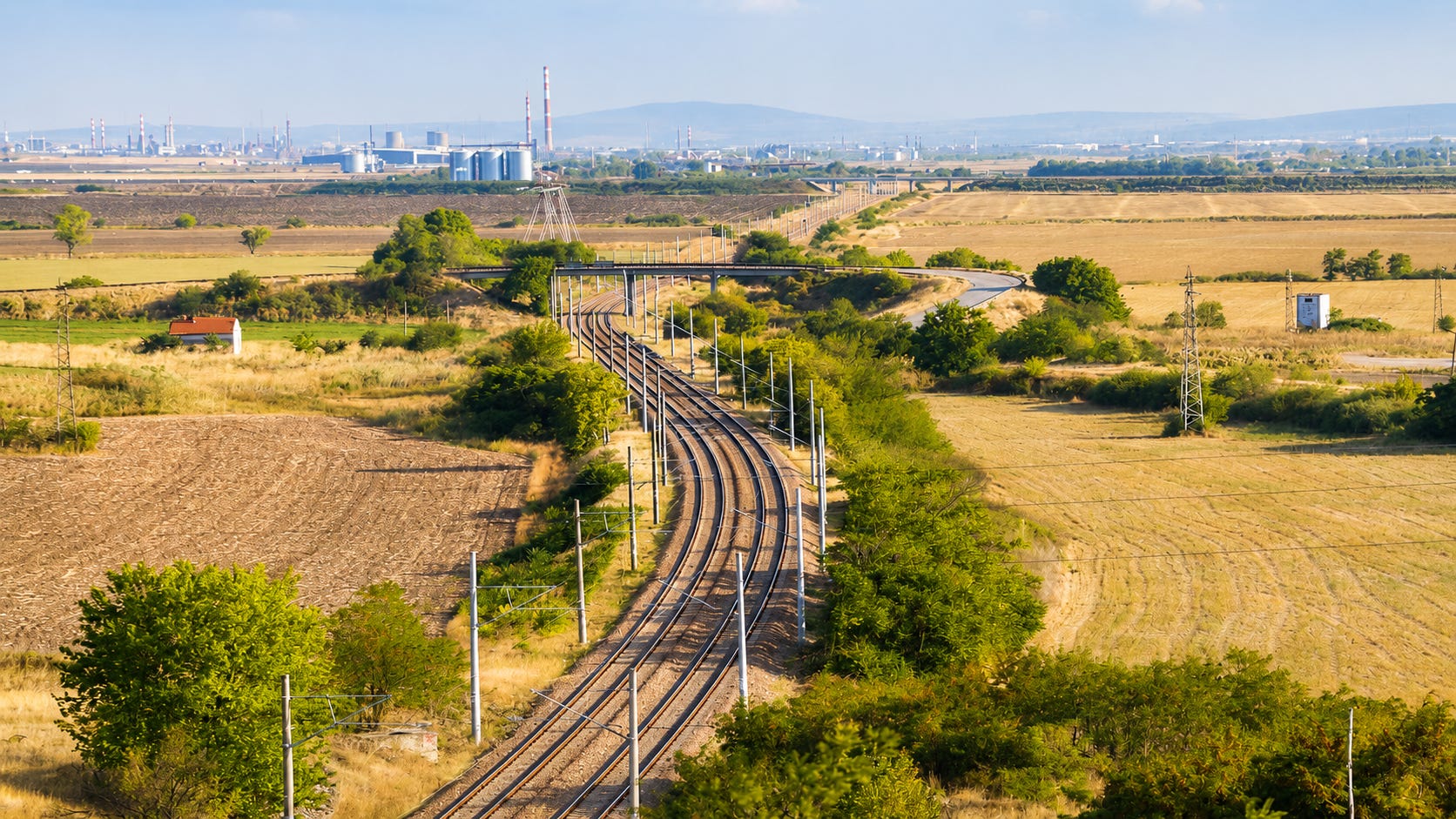
The contracts under scrutiny are concentrated on the Sofia–Plovdiv–Burgas corridor, Bulgaria’s main east-west rail axis and the primary beneficiary of EU-funded infrastructure modernisation over the past decade. They cover infrastructure upgrades, signalling installations and rolling stock procurement.
EPPO’s interest in Bulgarian rail is not new. The office conducted searches at 28 locations in August 2023, targeting two projects on the corridor financed through the Connecting Europe Facility and the Cohesion Fund. Charges followed in January 2025 in one specific case — a signalling contract on the Plovdiv–Burgas section worth EUR 94.5 million.
What the minister disclosed on 18 June is the full scope: 19 contracts now under formal scrutiny, spanning multiple procurement cycles.
What the minister has done
The minister is not overseeing the investigations — he is running a parallel clean-up. His ministry has identified contracts totalling approximately EUR 765 million committed without secured financing.
Advances of EUR 30.5 million were paid out between 2024 and 2026 on projects with no completed activity. A EUR 43 million framework contract for vegetation clearance along tracks has been cancelled — a contract the minister described as scandalous.
All National Rail Infrastructure Company (NKJI) projects without secured financing that are not directly linked to safety are being terminated immediately.
The prosecutor who was suspended
One element of the broader institutional context is the case of Teodora Georgieva, Bulgaria’s European Prosecutor within the EPPO College — the senior national representative responsible for supervising cases, one level above the delegated prosecutors who conduct investigations on the ground.
She was suspended pending an administrative inquiry into possible misconduct. Before her suspension, she had publicly stated that EPPO’s work in Bulgaria had faced pressure across multiple investigations.
What happens now
Bulgaria’s exposure is twofold. The EPPO and OLAF investigations are live — no verdicts have been issued, and the EUR 400 million figure represents the minister’s stated risk, not a confirmed loss. But the financial correction mechanism is real: if violations are confirmed, the European Commission can claw back funds already disbursed.
Bulgaria has consistently absorbed EU transport funds at high rates on paper — the 2014–2020 programme reached 99.4% execution, according to the European Commission’s final implementation report — while procurement integrity questions have shadowed the programme throughout.
The minister’s audit has identified EUR 765 million in committed but unsecured contracts and EUR 30.5 million in advances paid on projects with no completed activity.