

A new EuroNight service linking Basel with Copenhagen and Malmö, planned for launch in April 2026, is at risk of cancellation. Switzerland’s Finance Committee has voted to remove the federal subsidy required to run the service. The decision now goes to the Council of States for a final vote.
The project would re-establish an overnight link between Switzerland and Denmark, which has been absent since the previous Zürich/Basel–Copenhagen EuroNight ceased operation in 2014. Extending the planned service to Malmö was intended to create a continuous north–south corridor connecting the Upper Rhine with the Øresund region.
Petition gains momentum within days
A public petition launched shortly after the committee’s vote has gathered more than 24,000 signatures within days. Passenger associations and regional travel groups argue that the loss of the former Swiss–Danish night-train link — combined with the absence of a successor for more than a decade — makes the planned 2026 relaunch particularly significant.
They point out that today’s alternatives involve long daytime journeys, multiple transfers or indirect routings via Berlin or Frankfurt. The petition calls on the Council of States to restore the subsidy and allow the April 2026 launch to proceed.
SBB and RDC: a cross-border project with one funding source
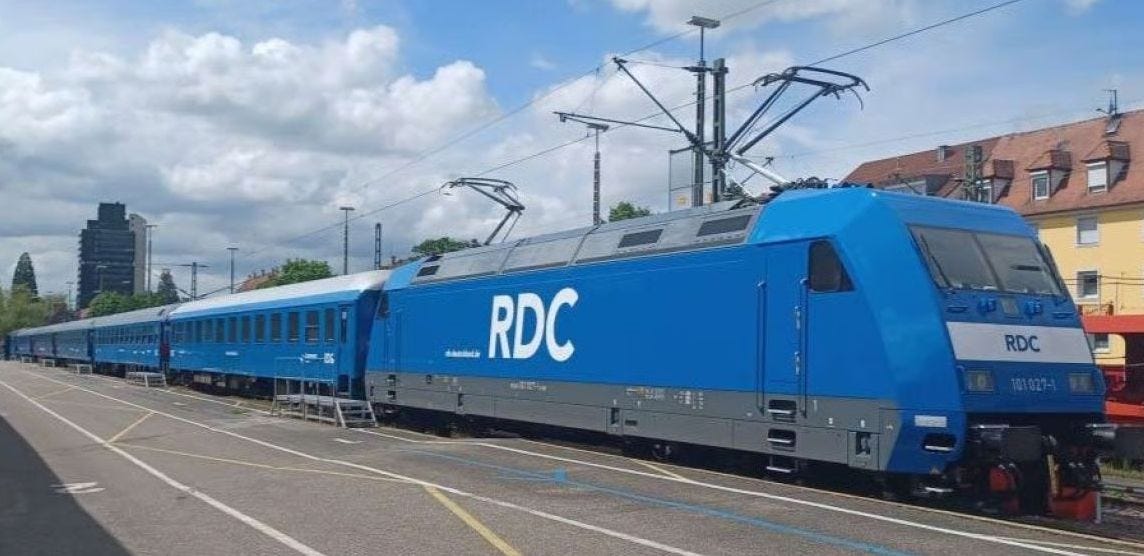
The planned service is a joint operation between SBB and RDC Deutschland. SBB leads the project as part of its international night-train strategy, while RDC Deutschland would supply rolling stock and operational capacity in Germany. The route is financed solely through Switzerland’s CO₂ Act night-train scheme, with no operating support from Germany, Denmark or Sweden. Without the roughly CHF 10 million annual subsidy, the project cannot go ahead.
A long north–south corridor under pressure
The Basel–Hamburg–Copenhagen–Malmö route would form a long north–south overnight corridor linking the Upper Rhine with northern Germany and the Øresund region. For SBB, it is part of a broader effort to rebuild cross-border overnight capacity amid rising demand and pressure on long-distance air capacity.
The committee’s decision underlines how international sleeper routes still depend on national funding, even when they run across several countries. Redirecting money to sustainable aviation fuels puts night-train funding and aviation-fuel spending in direct competition for the same climate budget.
If the Council of States confirms the cut, the planned route will be cancelled before launch — ending the attempt to restore a Swiss–Danish overnight connection that has been missing for more than a decade.