

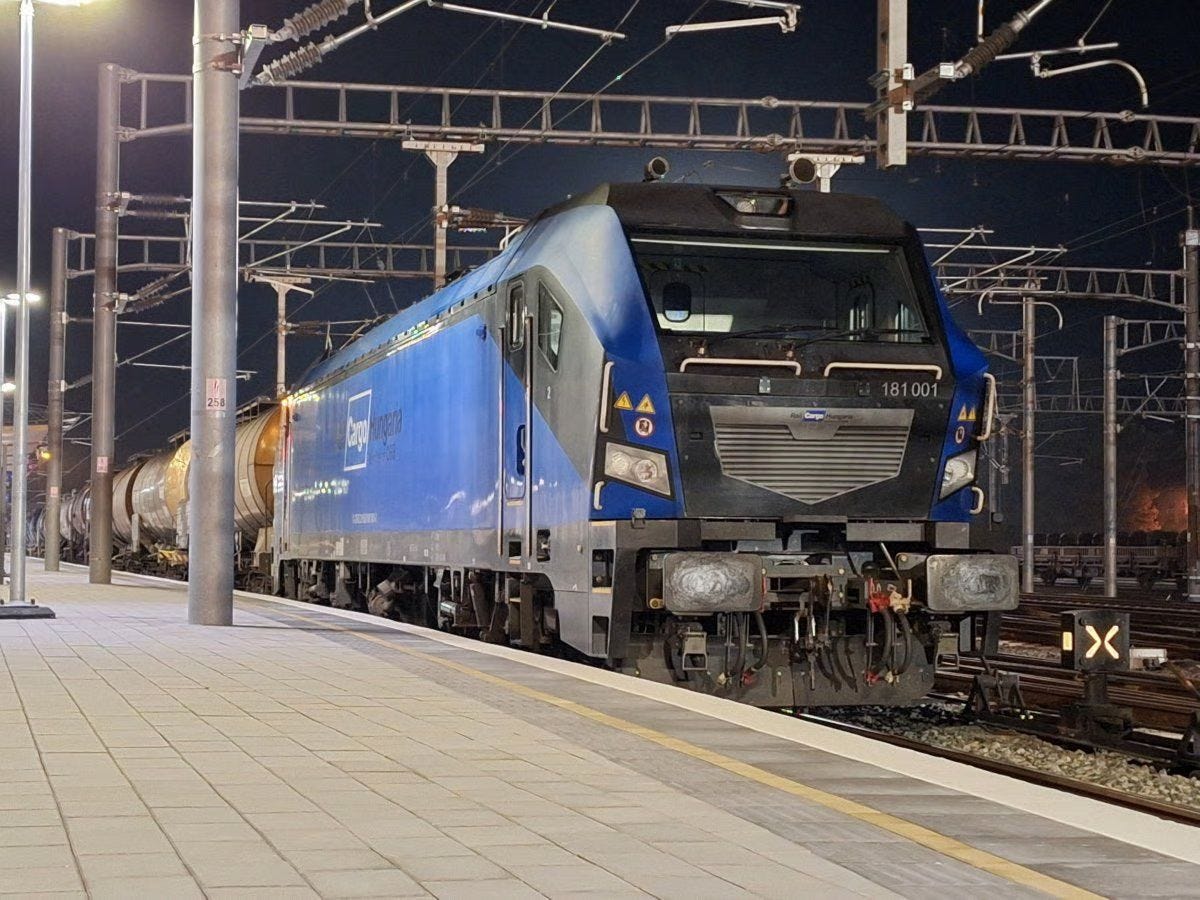
CROSS-BORDER: Three state freight operators have agreed to coordinate services on the newly opened Budapest–Belgrade line, aiming to restore cargo volumes not seen since the early 2000s.
Srbija Kargo, Rail Cargo Hungaria and North Macedonia’s ŽRSM Transport signed the memorandum of understanding on 8 April, targeting a synchronised freight service on the north–south corridor. The agreement follows the opening of freight traffic on the Hungarian section of the line on 27 February.
The three operators have committed to simplifying border and customs procedures, implementing electronic waybills and real-time tracking, and expanding container and semi-trailer services to compete with road haulage.
Corridor primed for China–Europe freight flows
The Budapest–Belgrade line forms a key overland link between the port of Piraeus in Greece and Central Europe. Goods entering Europe via Piraeus travel north through North Macedonia and Serbia — in that order — before reaching Hungarian connections to wider European markets.
ŽRSM Transport’s inclusion extends the coordinated service south of Serbia, integrating the North Macedonian segment into a single offering across all three networks.
The three operators have set a target of restoring freight volumes last recorded in the first decade of the 2000s. No timeframe has been attached to the target.
Operationalisation the next test
The corridor became available for freight on its full length when the Hungarian section opened in late February, completing a line whose Serbian section had opened in October 2025. Prior to the upgrade, the route’s outdated infrastructure had kept volumes well below its potential.
Commercial agreements between the three operators are not yet in place. Whether the MoU translates into scheduled joint services will depend on timetable coordination, slot allocation and take-up from freight customers on the corridor.