

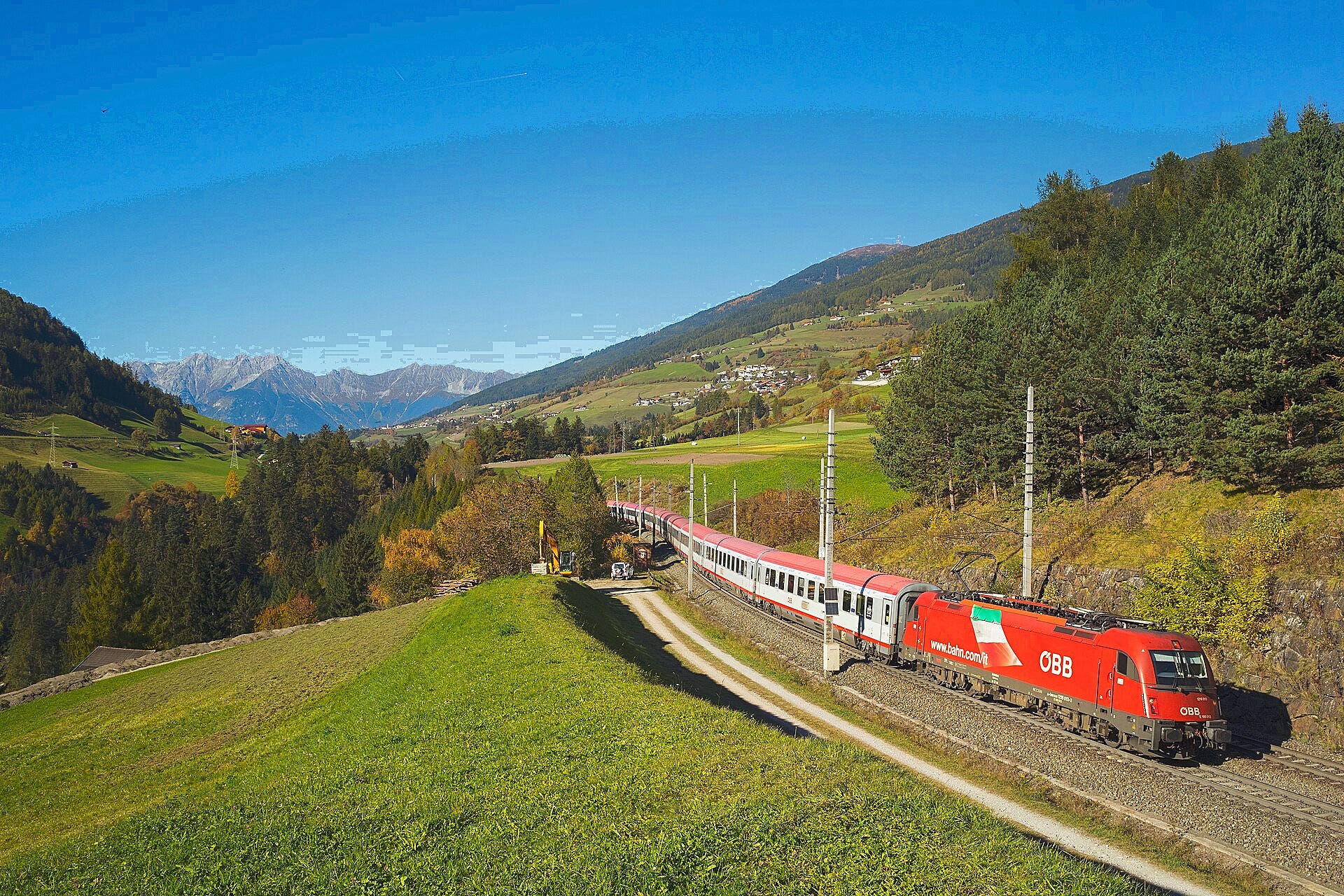
AUSTRIA: A EUR 19.5 billion rail investment plan for 2027–2032 has been approved by Austria’s government, delaying the Vienna airport rail link by two years to keep the Brenner Base Tunnel’s northern approach on schedule.
The Ministerial Council adopted the framework on 17 June. The Flughafenspange — the planned rail connection between Vienna Schwechat airport and Bruck an der Leitha — is delayed by two years. The Brenner northern approach in Tyrol (Unterinntaltrasse, Radfeld–Kufstein) stays in the programme, with construction starting 2030 and completion targeted for 2039.
The plan is EUR 1.6 billion smaller than the 2024–2029 framework. The decision ends weeks of confrontation between Vienna and the Tyrolean state government, which had pushed back hard against any delay to the Brenner approach.
Austria moves first, waits on Germany
Tyrol’s Landeshauptmann Anton Mattle made the stakes clear: if the Brenner northern approach came out of the plan, the Tyrolean government would block approval. Vienna backed down. The Unterinntaltrasse from Radfeld to Kufstein stays — construction starts 2030, delivery 2039.
What gets cut instead is the Flughafenspange. The Vienna airport link slides two years. The Semmering base tunnel opens 2029, unchanged. The Linz–Wels four-track expansion completes 2031, unchanged. ÖBB saves EUR 1.6 billion across the programme period as part of a broader federal budget consolidation. ÖBB CEO Andreas Matthä acknowledged the restraint directly: the company is easing off on some projects.
The German condition
The Brenner Base Tunnel opens in 2032. Full capacity on the corridor requires functioning northern approaches on both sides of the border — Austria’s, now confirmed, and Germany’s, still unresolved.
Austria is waiting for Bavaria and the Bundestag to make a binding decision on the German Nordzulauf from Munich through Rosenheim to Kufstein. No formal decision has been taken. The approved plan ties future Austrian framework programmes to Germany’s progress — without a fixed deadline. Bundeskanzler Christian Stocker and Mobility Minister Peter Hanke approved the plan in Vienna. The next move is in Berlin.